By clicking “Accept”, you agree to the storing of cookies on your device to enhance site navigation, analyze site usage, and assist in our marketing efforts. View our Privacy Policy for more information.
Compare Risk Ledger against Panorays, UpGuard, SecurityScorecard, BitSight, Prevalent, OneTrust and ProcessUnity on architecture, supplier evidence and monitoring - including where each one is the better fit.
Risk Ledger
|
Company
September 1, 2026
12
mins read
Share
Risk Ledger is a network-first third-party risk management (TPRM) platform. Suppliers maintain one security profile, shared across every client they connect with, instead of completing a new assessment for each one.
If you're weighing Risk Ledger against other options, this guide looks at which operating model actually fits how your team works: assessing suppliers one at a time, scoring them from the outside, or building visibility through a shared network.
Each approach has genuine strengths and real trade-offs, and feasibility matters as much as capability: implementation effort, whether suppliers will actually adopt it, internal resource, total cost.
The platforms covered in this guide:
Risk Ledger: best for security-led supplier assurance, reusable evidence and supply chain visibility
Panorays: best for combining assessments with attack-surface monitoring
UpGuard: best for external monitoring and supplier security ratings
SecurityScorecard: best for ratings combined with threat intelligence
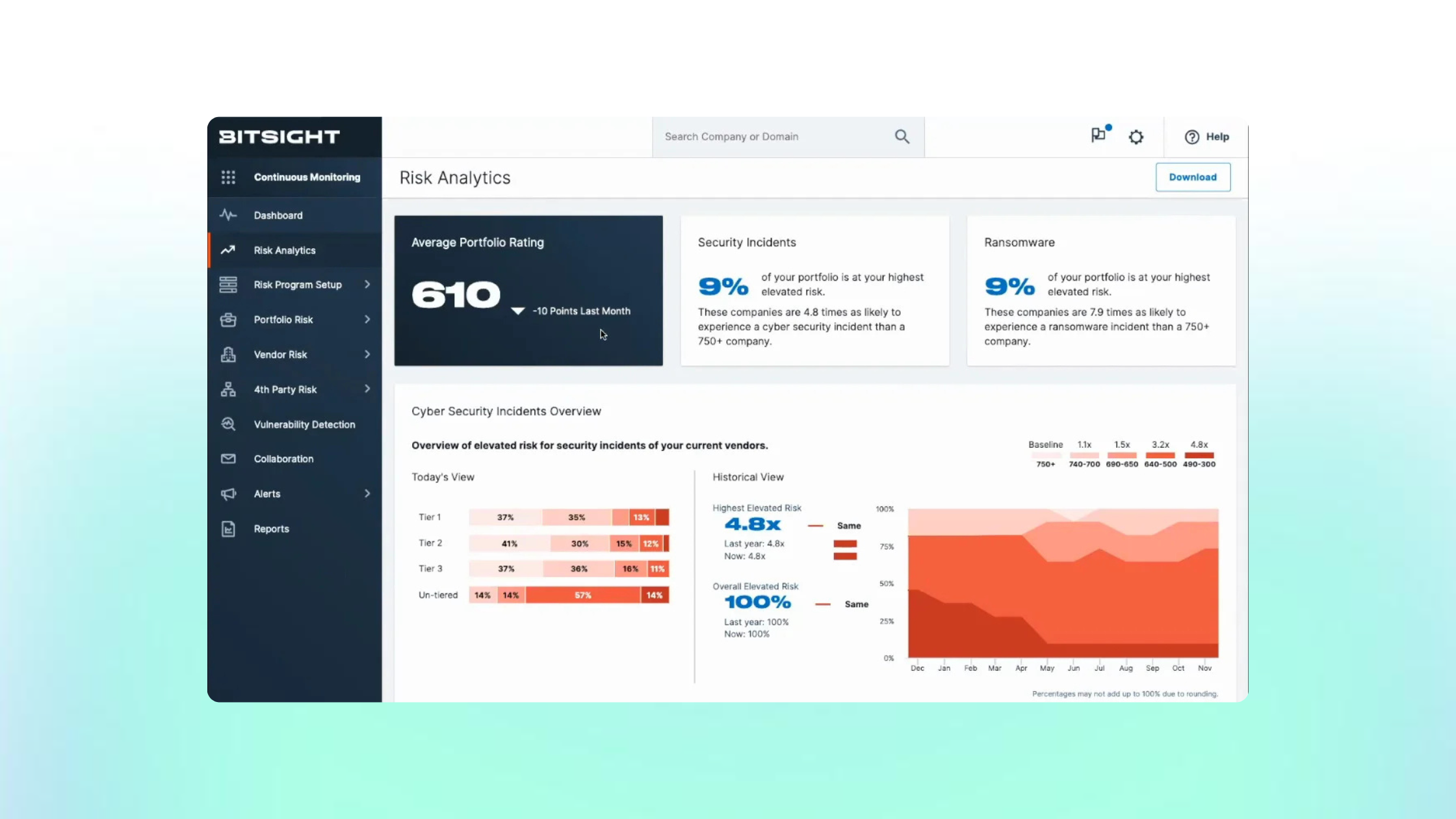
BitSight: best for portfolio-level security ratings at scale
Prevalent: best for configurable vendor risk workflows with strong support
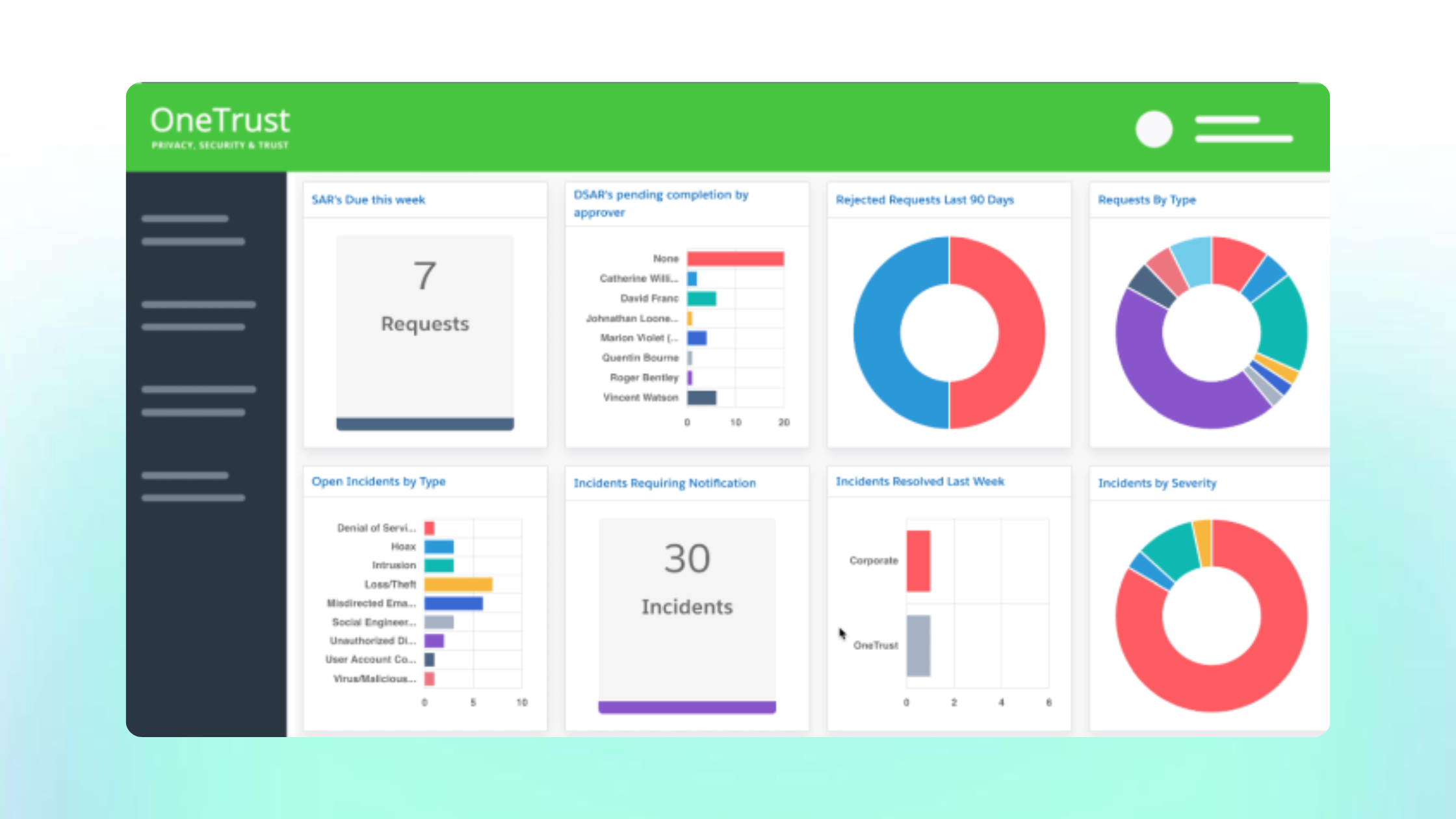
OneTrust: best for broad GRC and compliance programmes
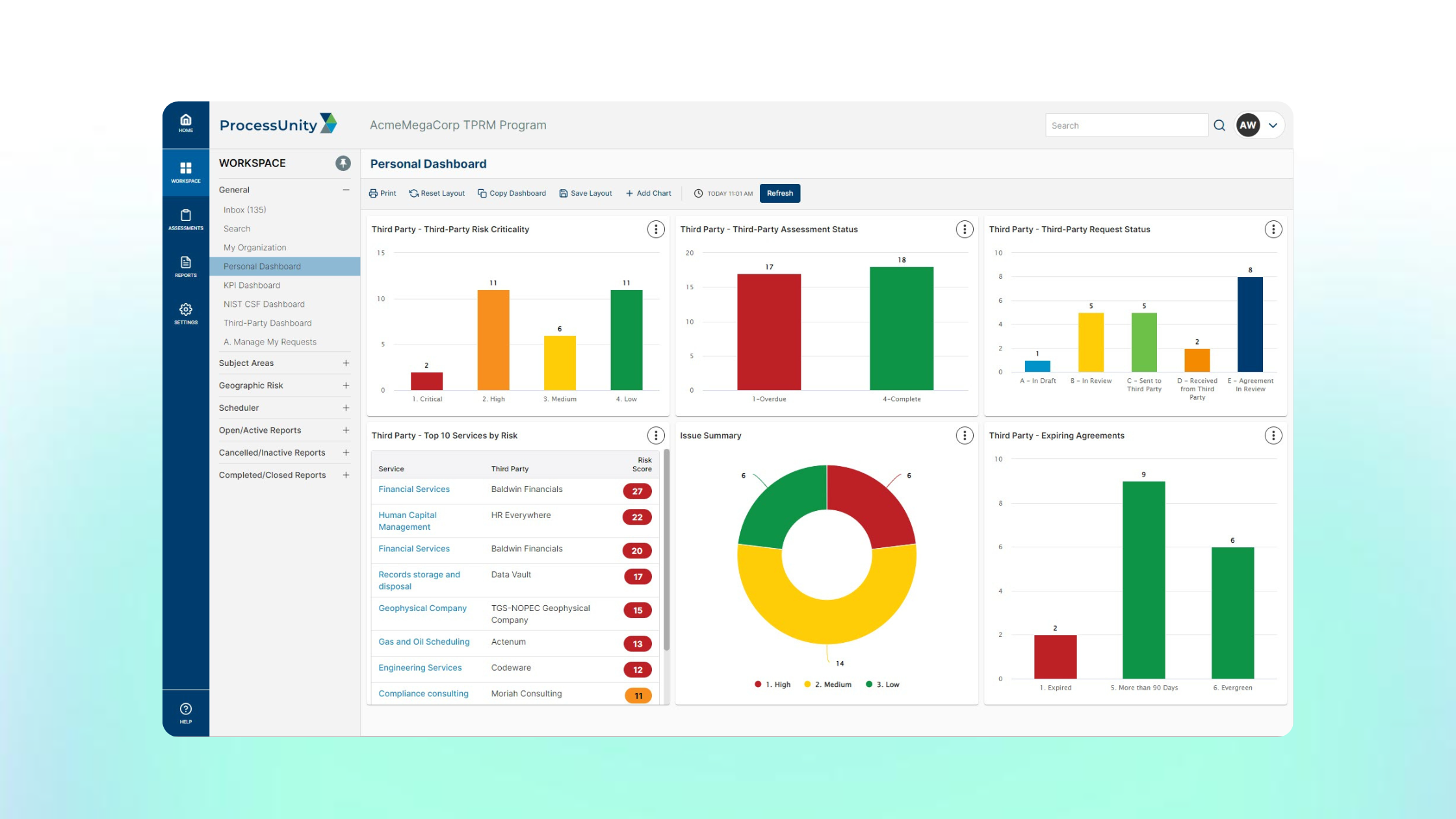
ProcessUnity: best for highly configurable enterprise TPRM
How we compared: this guide draws on current G2 and Gartner Peer Insights review data for each platform, including our own.
What actually separates these platforms
Every platform here manages third-party risk, but two different models sit underneath.
In a one-to-one model, each client assesses a supplier separately: their own questionnaire, their own scan, or both. In a network model, a supplier builds one profile and reuses it across every client connected to it.
Risk Ledger runs the second model. Everything else in this guide runs a version of the first.
What does that mean for a supplier? On a one-to-one platform, a new client means a new questionnaire, even if a near-identical one landed from a different client last month. On Risk Ledger, a supplier builds their profile once. When they fix a flagged issue or update their evidence, every client connected to them sees it, not just whoever happened to ask.
It also changes what a client can see. In one case, a Risk Ledger customer used their network view during a live incident to work out which of their suppliers relied on the same underlying provider, and got straight into impact conversations, because that supplier was already connected and confirming the relationship rather than turning up in a scan afterwards.
Scanning and questionnaire-led platforms aren't wrong for this. A ratings platform doesn't need a supplier to do anything, which is exactly why it scales across a large portfolio with zero onboarding effort.
A network only works if suppliers actually join in. So the real question isn't which model wins on paper, it's what's actually slowing your programme down: getting an accurate read on a supplier, or getting evidence that doesn't need redoing every time someone new asks for it.
One-to-one vs network
How the two models actually differ
One-to-one model
Client A→Questionnaire / scan→Supplier answers again
Client B→Questionnaire / scan→Supplier answers again
Client C→Questionnaire / scan→Supplier answers again
Same supplier, a fresh assessment for every client that asks.
Network model
Supplier — one profile
Client A
Client B
Client C
One profile, built once, reused across every connected client.
Risk Ledger and its alternatives compared
Risk Ledger alternatives comparison
Risk Ledger and its alternatives compared
Compare primary approach, monitoring depth, supplier participation
and supply chain visibility across Risk Ledger and the platforms
security teams evaluate alongside it.
How we compared:
Drawn from current G2 and Gartner Peer Insights review data for
each platform, including our own.
Risk Ledger
Network-first TPRM
Risk Ledger comparison
Best for
Security-led supplier assurance and supply chain visibility
Primary approach
A connected network where suppliers maintain one reusable security profile and each client applies its own policies, criticality and risk context.
Supplier evidence
Suppliers share security information once, reused across every connected client; suppliers also declare their own critical dependencies as part of the profile.
Monitoring
Tracks changes to supplier controls and evidence directly, supplemented by external monitoring across a narrower set of checks than dedicated scanning platforms.
Supply chain visibility
Nth-party visibility comes from suppliers declaring their own dependencies, feeding concentration-risk mapping across the network rather than inferred from scans.
Supplier participation
Free for suppliers to join and maintain. Reviewers note some suppliers are slower to engage, a fair limitation of any model that depends on participation.
Operating effort
Reviewers note setup takes real effort upfront, and question customisation is more standardised than fully bespoke, which is what keeps supplier data comparable across the network.
Key consideration
Not a broad GRC suite and not a standalone ratings product. Strongest where reusable evidence, supplier participation and visibility beyond direct suppliers are the priority.
Panorays
Assessments + monitoring
Panorays comparison
Best for
Combining assessments with attack-surface monitoring
Primary approach
Automated questionnaires combined with scheduled external scanning in one dashboard.
Supplier evidence
Automated, dynamic questionnaires plus AI-assisted document review; reviewers consistently praise ease of use.
Monitoring
Scheduled scanning combined with questionnaire data rather than fully continuous, real-time monitoring.
Supply chain visibility
Fourth-party discovery is included, inferred from scanning rather than supplier-declared.
Supplier participation
Vendors respond through structured workflows; role granularity for larger teams is a noted limitation.
Operating effort
Reviewers flag onboarding effort, per-API-call cost, and an API that requires updating whole supplier records rather than partial fields.
Key consideration
Strong combined workflow for teams wanting assessments and scanning together; cost scaling and role granularity are worth testing at enterprise scale.
UpGuard
Ratings + questionnaires
UpGuard comparison
Best for
External monitoring and supplier security ratings
Primary approach
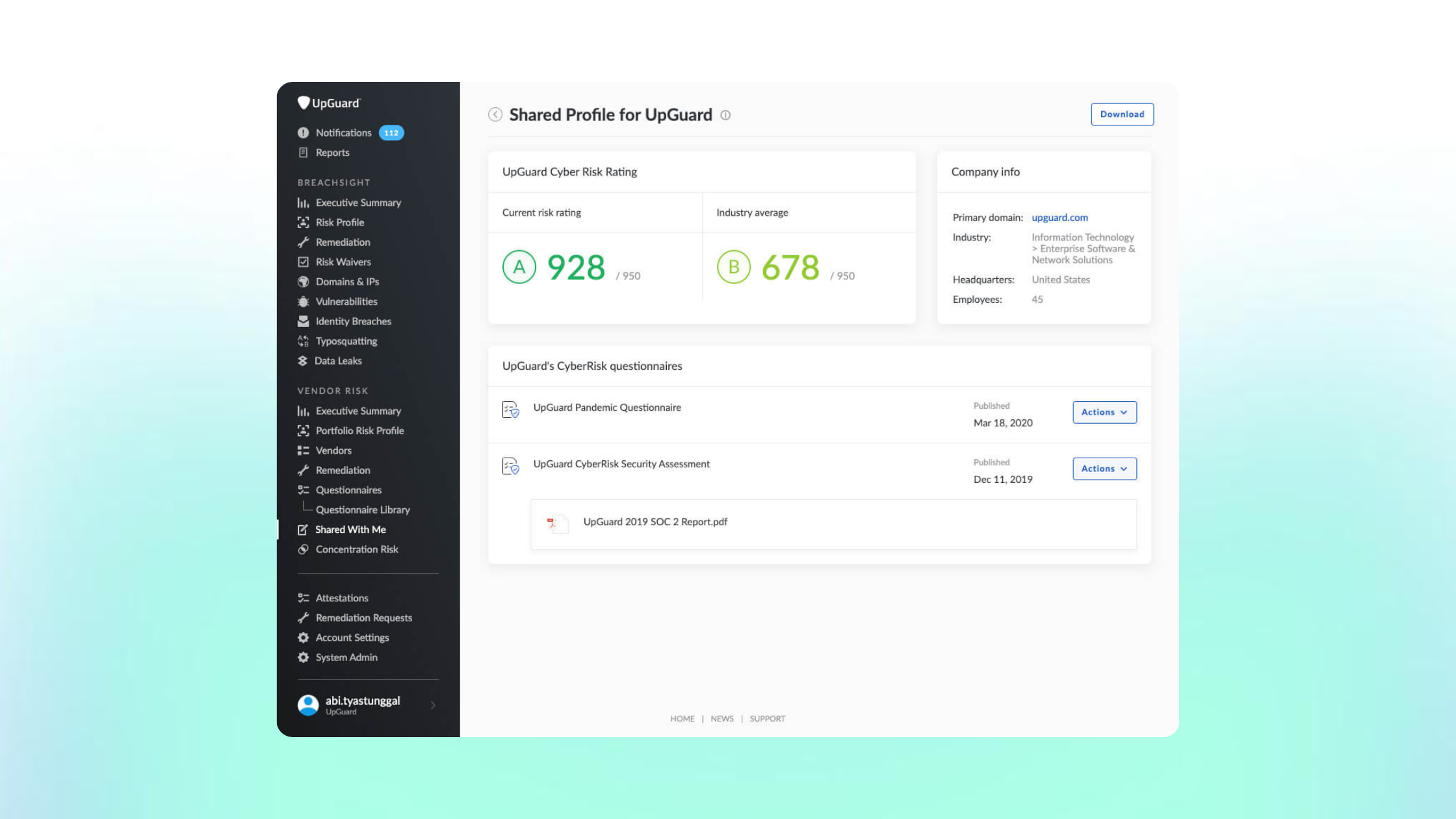
Outside-in security ratings combined with a questionnaire library, AI-assisted document review and remediation workflows.
Supplier evidence
Pre-built questionnaires covering NIST, ISO, SIG and regional regulations supplement externally observed findings.
Monitoring
Ratings update multiple times a day across attack surface, breach vectors and data leak signals.
Supply chain visibility
Automatic fourth-party detection, inferred externally rather than supplier-declared.
Supplier participation
Suppliers respond to questionnaires and remediation requests rather than maintaining a portable profile.
Operating effort
Reviewers consistently cite limited reporting customisation as the main ongoing friction.
Key consideration
Strong day-to-day usability and a genuine combined ratings-plus-questionnaire proposition; reporting depth is the recurring gap.
SecurityScorecard
Security ratings
SecurityScorecard comparison
Best for
Ratings combined with threat intelligence
Primary approach
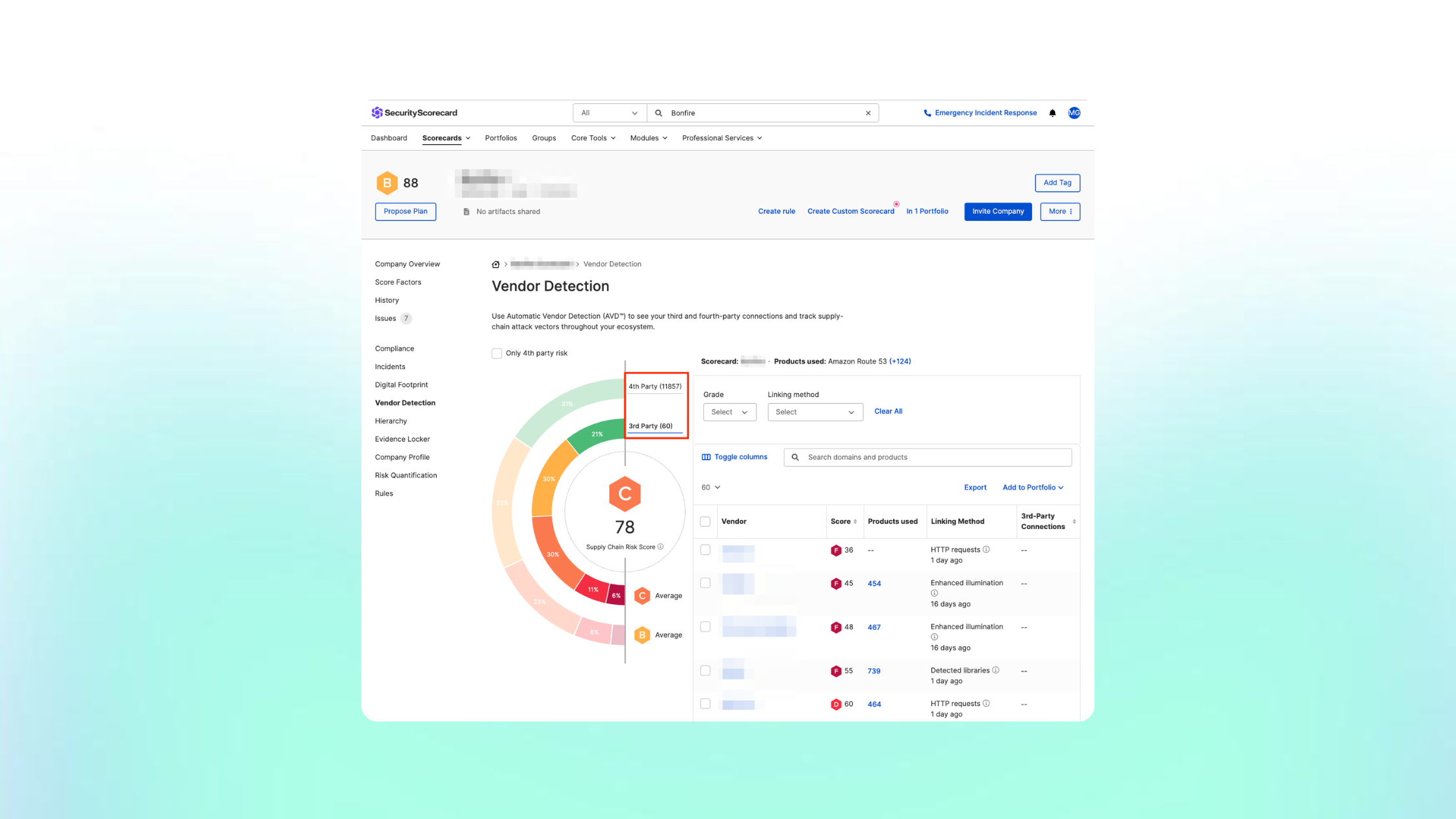
Outside-in ratings plus peer benchmarking and threat-informed risk quantification.
Supplier evidence
External findings can be supplemented through assessments and supplier-response workflows.
Monitoring
Continuous monitoring of network security, patching cadence, DNS health and leaked credentials.
Supply chain visibility
Indirect relationship discovery is included; reviewers note accuracy issues worth testing on your own domains.
Supplier participation
Suppliers can respond to findings and add context, similar to UpGuard's model.
Operating effort
Reviewers describe the interface as data-rich but occasionally overwhelming without a cybersecurity background.
Key consideration
Strong for peer benchmarking and board conversations; validate attribution accuracy directly before relying on it.
BitSight
Security ratings
BitSight comparison
Best for
Portfolio-level security ratings at scale
Primary approach
Daily-updated ratings with a strong enterprise skew and detailed technical findings.
Supplier evidence
Detailed findings on web headers, DMARC, DKIM and SSL configuration; ratings are the core evidence source.
Monitoring
Continuous scanning, with reviewers praising organisation of findings by severity and risk vector.
Supply chain visibility
Fourth-party assessment tools included; relationships inferred rather than supplier-verified.
Supplier participation
Rated organisations can dispute findings, but the correction burden sits with the vendor being scored.
Operating effort
Reviewers report score updates lagging behind fixes, and some note support responsiveness has slowed.
Key consideration
Strong enterprise fit and finding detail; timeliness of score changes after remediation is the recurring complaint.
Prevalent
Vendor risk workflow
Prevalent comparison
Best for
Configurable vendor risk workflows with strong support
Primary approach
Configurable assessment workflows built around a centralised digital risk register.
Supplier evidence
Standard and customisable questionnaires, with responses and evidence consolidated in one register.
Monitoring
A vendor threat monitor tracks reputational and external risk signals alongside assessment data.
Supply chain visibility
Fourth-party monitoring exists; independent review detail on dependency mapping is thinner than the larger ratings platforms.
Supplier participation
A vendor portal supports evidence submission; reviewers describe onboarding and navigation as straightforward.
Operating effort
Reviewers consistently praise customer support; extensive customisation can feel overwhelming to new users.
Key consideration
Strong for teams wanting configurable workflows with responsive support; dependency-mapping depth is worth testing directly.
OneTrust
Broad GRC suite
OneTrust comparison
Best for
Broad GRC and compliance programmes
Primary approach
Third-party risk management sits inside a much wider privacy, compliance and enterprise risk platform.
Supplier evidence
Configurable assessments span security, privacy, ethics and compliance domains, not just cyber risk.
Monitoring
Third-party monitoring integrations, including ratings data from other providers, can trigger reassessment.
Supply chain visibility
The platform's strength is governance breadth rather than network visibility.
Supplier participation
Vendors respond through structured, configurable assessment workflows.
Operating effort
Reviewers consistently cite a steep learning curve, a dated interface, and pricing that is opaque and can escalate.
Key consideration
Unmatched breadth for consolidating governance functions in one platform; that breadth is also the operating cost, per reviewers.
ProcessUnity
Configurable enterprise TPRM
ProcessUnity comparison
Best for
Highly configurable enterprise TPRM workflows
Primary approach
Configurable lifecycle workflows plus a shared risk data exchange with reusable vendor profiles.
Supplier evidence
Reusable assessment data through the exchange reduces some duplicate work across the ecosystem.
Monitoring
A threat and vulnerability response module ties external intelligence to fourth-party mapping.
Supply chain visibility
Reviewers highlight exchange data giving visibility into a vendor before a full assessment is completed.
Supplier participation
A vendor portal supports evidence submission and profile updates.
Operating effort
Reviewers consistently note configuration changes require careful planning, and advanced reporting can require specialist administrators.
Key consideration
Strong fit for mature programmes with dedicated resource; configurability is a genuine strength that comes with real administrative overhead.
Platform-by-platform breakdown
Risk Ledger: best for security-led supplier assurance and supply chain visibility
Risk Ledger is a network where suppliers maintain one security profile, reused across every connected client, rather than rebuilding an assessment from scratch each time someone new asks.
Strengths
Suppliers build a profile once and reuse it across every client relationship. Synectics Solutions cut supplier onboarding time by more than half after moving to this model, and the network median for connecting a supplier already on the platform is a single day.
Nth-party visibility comes from suppliers declaring their own critical dependencies, not from a scan guessing at relationships. During Log4j and MOVEit, ScotRail used that visibility to work out its supply chain's exposure directly, rather than piecing it together after the fact.
Free for suppliers to join, which reviewers point to as removing a common barrier other platforms run into when suppliers are asked to pay or register elsewhere first.
Drawbacks
Scanning is narrower than dedicated ratings platforms: web, email, DNS and port checks, rather than the dozens of risk vectors a pure scanner tracks.
Assessments follow a standardised framework rather than fully bespoke questionnaires, a trade-off for keeping supplier data comparable across the network.
Some suppliers are slower to engage than others, a limitation of any model that depends on participation.
Best use case: security-led teams who want suppliers actively involved, evidence that doesn't need rebuilding for every customer, and visibility into risk that goes beyond the direct supplier relationship.
Panorays: best for combining assessments with attack-surface monitoring
Panorays pairs automated vendor questionnaires with scheduled external scanning in one workflow.
Strengths
Ease of use is the single most consistent thing reviewers praise.
Questionnaires and scanning sit in one dashboard rather than two separate tools.
Fourth-party discovery is built in.
Drawbacks
Onboarding typically takes around a month, with setup effort flagged directly in reviews.
Costs can scale in ways that surprise buyers, including per-API-call charges.
Role granularity is limited for larger teams, and the API requires updating whole supplier records rather than individual fields.
Fourth-party connections come from scanning, not from suppliers confirming the relationship themselves.
Best use case: teams that want questionnaires and scanning combined in one product, and can absorb a longer setup to get there.
UpGuard: best for external monitoring and supplier security ratings
UpGuard combines outside-in security ratings with a questionnaire library and remediation workflows.
Strengths
Ratings update multiple times a day.
A pre-built questionnaire library covers NIST, ISO, SIG and regional regulations.
Automatic fourth-party detection is included.
Drawbacks
Reporting customisation is the most consistent complaint across reviewers.
Asset misattribution, a domain or IP wrongly tied to an organisation, comes up often enough to test against your own domains before relying on it.
Fourth-party relationships are inferred from scanning rather than confirmed by the supplier.
Best use case: teams that mainly want continuous, no-effort-required external monitoring alongside standard questionnaire workflows.
SecurityScorecard: best for ratings combined with threat intelligence
SecurityScorecard pairs outside-in ratings with peer benchmarking and threat-informed risk quantification.
Strengths
Peer benchmarking shows how a score compares to others in the same sector.
Setup is consistently described as fast, often a few days with no installation.
Useful for insurance and board-level conversations.
Drawbacks
Asset misattribution recurs here too, with the correction burden falling on the supplier.
Relationship and dependency data comes from external discovery rather than suppliers confirming it directly.
Some reviewers find the volume of metrics overwhelming without a security background.
Best use case: teams that want ratings combined with peer benchmarking, particularly for board reporting.
BitSight: best for portfolio-level security ratings at scale
BitSight offers daily-updated ratings with a strong enterprise skew and detailed technical findings.
Strengths
Detailed findings on SSL, DMARC, DKIM and web application headers.
Findings organised by severity and risk vector, which reviewers say makes reporting easier.
Fourth-party assessment tools built in.
Drawbacks
Score updates can lag behind an actual fix, sometimes by weeks.
Fourth-party relationships are inferred from external signals rather than declared by the supplier.
Limited transparency into how grades and risk-vector scores are calculated.
Best use case: enterprises that need portfolio-level ratings at scale with detailed technical findings.
Prevalent: best for configurable vendor risk workflows with strong support
Prevalent centres on configurable assessment workflows and a centralised digital risk register.
Strengths
Customisable questionnaires and risk ratings.
A centralised dashboard for tracking vendor performance.
Reviewers consistently praise customer support.
Drawbacks
Extensive customisation options can feel overwhelming to new users.
Export capabilities are noted as limited.
Independent review detail on dependency mapping is thinner than the larger ratings platforms.
Best use case: teams that want configurable workflows backed by responsive support, without needing deep nth-party mapping as a primary requirement.
OneTrust: best for broad GRC and compliance programmes
OneTrust sits third-party risk inside a much wider privacy, compliance and enterprise risk platform.
Strengths
Consolidates privacy, risk, vendor management and compliance in one place.
Covers 50-plus pre-mapped compliance frameworks.
A broad integration ecosystem.
Drawbacks
Steep learning curve and a dated interface, per reviewers.
Pricing is opaque and can escalate as more modules are added.
Best use case: organisations that want third-party risk managed inside a broader governance suite, not as a standalone priority.
ProcessUnity: best for highly configurable enterprise TPRM
ProcessUnity combines configurable lifecycle workflows with a shared risk data exchange.
Strengths
Highly configurable to match complex regulatory and policy requirements.
Its risk exchange gives visibility into a vendor before a full assessment completes.
Advanced reporting can require specialist administrators.
Best use case: mature enterprise programmes with dedicated resource to manage a highly configurable system.
Which alternative fits which team
"We spend too much time chasing suppliers for information they've already given someone else."
None of the pure ratings platforms solve this, since they score from outside rather than relying on supplier response. This is what Risk Ledger's model is built for: a supplier answers once, and every connected client sees it.
"We need continuous visibility without relying on suppliers to respond at all."
BitSight, SecurityScorecard and UpGuard all work whether or not a supplier engages, since the score comes from outside. That's also the trade-off: no way to tell whether a flagged issue is already fixed.
"We keep getting disputes over misattributed findings."
Reviewers raise this against every scanning-led platform in this guide. Risk Ledger sidesteps it differently: suppliers verify their own assets and add context directly, rather than a client team chasing down whether a flagged domain is even real.
"We can't see past our direct suppliers to who they depend on."
Panorays, UpGuard and BitSight infer fourth-party relationships from scanning. Risk Ledger's version comes from suppliers declaring their own critical dependencies, which is what powers concentration-risk visibility across the network rather than one supplier list at a time.
"Our board wants a recognised letter-grade score, and that matters more than anything else right now."
BitSight and SecurityScorecard both lead with this. It's a genuine strength of theirs, worth using even alongside Risk Ledger rather than instead of it.
"We need third-party risk sitting inside a wider compliance programme."
OneTrust is the clear fit here. The trade-off is complexity and cost for teams that don't need the rest of the suite.
"We need highly configurable workflows and dedicated support to manage them."
ProcessUnity and Prevalent both lead with configurability and reviewer-praised support, at the cost of administrative overhead.
"We want questionnaires and attack-surface scanning combined in one tool."
Panorays is built specifically for this combination.
Why organisations choose Risk Ledger
Every other platform in this guide treats third-party risk as one-to-one: a client assesses a supplier, that supplier gets scored or scanned, then the process resets for the next supplier and the next client who asks.
We built Risk Ledger around a different starting point: the same supplier is often being assessed by dozens of other companies at once, using slightly different questionnaires, for largely the same information.
A supplier builds one profile on Risk Ledger, once. That profile gets reused across every connected client relationship instead of being rebuilt from scratch each time someone new asks. When a supplier fixes a flagged issue or updates their evidence, every client they're connected to sees that update, not just the one who happened to ask.
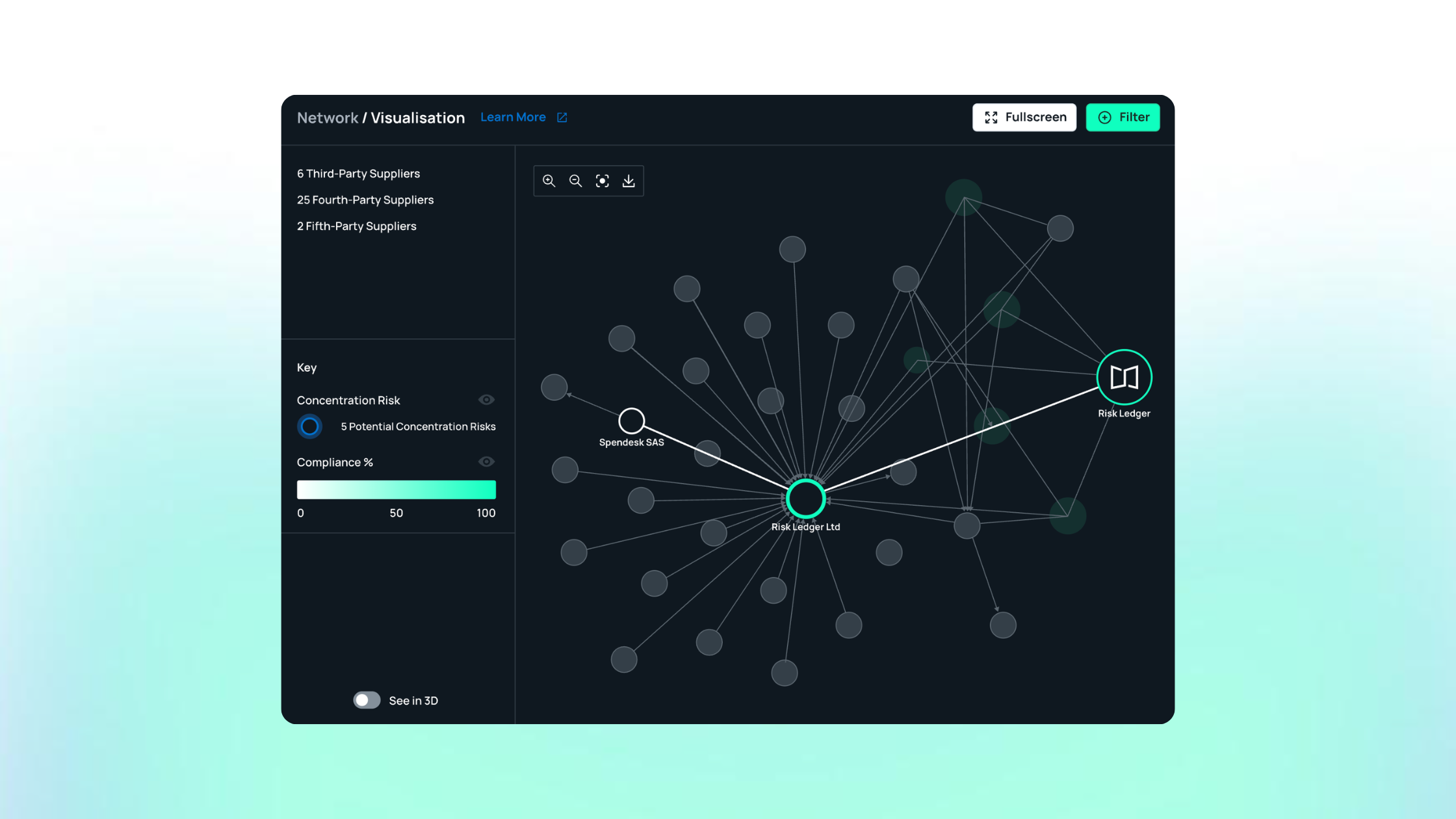
Suppliers also declare their own critical dependencies as part of that profile, which is what feeds nth-party visibility into the network map: dependencies you can see because the supplier told you about them, not because a scan guessed at them from public data.
The network structure surfaces one more thing individual assessments can't. If several of your suppliers depend on the same underlying provider, or an incident hits a widely-used supplier, the network view shows that exposure across your whole supply chain, not as scattered, disconnected findings. During Log4j and MOVEit, this is what let ScotRail understand its supply chain's exposure directly rather than piece it together afterwards.
We're not the right fit for every team. If your priority is broad outside-in scanning at scale, or a full GRC suite covering policy, audit and controls well beyond suppliers, something else on this list will serve you better.
Risk Ledger is strongest for security-led teams that want suppliers actively involved, evidence that doesn't need rebuilding for every customer, and visibility into risk that sits beyond the direct supplier relationship.
See how many of your suppliers are already on Risk Ledger
Many organisations find up to 60% of their suppliers are already on Risk Ledger. Upload your top 15 suppliers to get a supplier coverage report within 24 hours.
Questions worth asking any TPRM vendor, including us
If a scan flags something that isn't actually ours, what's the process to correct it, and does it keep affecting the score until that's resolved?
Not applicable in the same way on Risk Ledger. Suppliers verify and add context to their own findings directly inside their profile, rather than disputing an external score.
How much of what you show us is inferred externally versus confirmed by the supplier?
Nth-party relationships and critical dependencies are supplier-declared. External monitoring covers a narrower set of checks (web, email, DNS, ports) than dedicated scanners, and supplements the supplier-verified data rather than replacing it.
What does onboarding look like from the supplier's side, not just ours?
Free to join. If a supplier's already on the network from a different client relationship, connecting to a new one typically takes a day, against roughly a month for a platform like Panorays.
What does implementation actually take, in time and internal resource, not just licence cost?
Real setup effort upfront, reflecting the work of establishing a standardised framework rather than a lightweight rollout. Reviewers note this directly.
If a widely-used supplier has an incident tomorrow, how quickly could we identify which of our suppliers are exposed?
The network view surfaces shared dependencies directly. Risk Ledger customers used this during Log4j and MOVEit to understand its supply chain exposure without having to piece it together after the fact.
Is Risk Ledger a TPRM platform or a security-ratings platform?
A TPRM platform. Risk Ledger's core model is a network of supplier-maintained profiles rather than outside-in scanning. It includes external monitoring, but across a narrower set of checks than a dedicated scanner like BitSight or SecurityScorecard.
Does Risk Ledger replace external scanning tools?
Not necessarily. Several clients run Risk Ledger alongside a scanning platform: the scanner for continuous outside-in signal, Risk Ledger for supplier-verified evidence and network visibility. Which one you need most depends on whether accuracy or coverage is the bigger gap in your current process.
How does Risk Ledger compare with Panorays and UpGuard?
Panorays and UpGuard both combine questionnaires with external scanning, assessed per client. Risk Ledger's suppliers maintain one profile reused across every connected client, with dependencies declared by the supplier rather than inferred from a scan. A fuller head-to-head against each is coming as a dedicated comparison.
How long does it actually take to get suppliers onboarded?
Free for suppliers to join. If a supplier's already connected to a different client, joining a new one typically takes about a day. A supplier joining from scratch takes longer, and onboarding speed is one of the questions worth asking directly during evaluation.
Do I have to choose one platform, or can I run more than one?
Plenty of teams run two: a ratings platform for continuous scanning, and Risk Ledger for supplier engagement and nth-party visibility. They solve different parts of the same problem.
.png)

.png)
%20-%20thumb.png)

%20-%20thumb.png)


.svg)