September 14, 2026
・
4
mins read
.png)
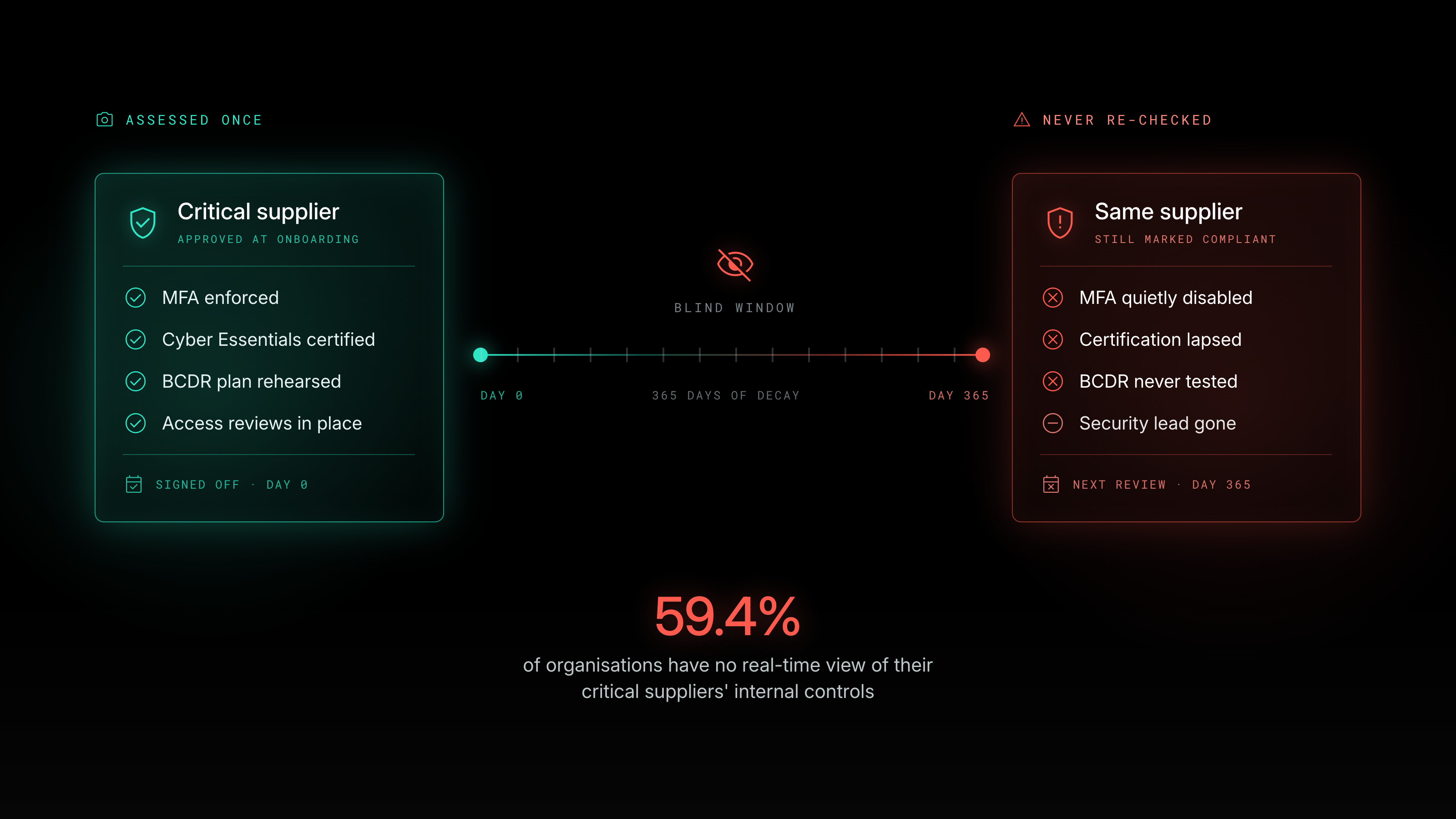
Point-in-time due diligence creates a dangerous illusion of security for executive leadership, as vendor postures inevitably erode between annual assessment cycles. Empirical network data reveals that across the UK's most critical sectors, dozens of systemically vital third-party suppliers actively lack foundational security controls such as Multi-Factor Authentication (MFA), Cyber Essentials certification, and rehearsed Business Continuity and Disaster Recovery (BCDR) plans. To eradicate these silent single points of failure and satisfy rigorous new regulatory regimes, Chief Information Security Officers (CISOs) must pivot beyond static compliance checklists and enforce continuous, control-level Active Supply Chain Security (ASCS).
The following insights from 500 UK cyber security and TPRM leaders, alongside real-world Risk Ledger platform analytics, highlight the prevalence of control weaknesses across critical vendor estates:
From a board and governance perspective, relying on traditional TPRM to verify supplier security posture creates an unquantified enterprise risk. While initial onboarding reviews may confirm that a vendor meets baseline security standards at the moment of signing, static methodologies are structurally incapable of monitoring control adherence over the lifecycle of the contract.
This visibility gap exposes executive leadership to three strategic vulnerabilities:
"External vulnerability scanning — which only assesses publicly visible signals about a supplier's perimeter — is often described as continuous monitoring. It is not, or at least not in full. It provides outside-in exposure data but gives no visibility into the internal security controls that determine a supplier's actual risk posture: access management, staff training, patch management, incident response capability."
— Every Link Matters: The State of Supply Chain Security 2026
When organisations move away from isolated, bilateral spreadsheets and connect on a collaborative, network-first platform like Risk Ledger, the true control posture of their shared suppliers is revealed. Analysing empirical data across three critical UK sectors unmasks a startling reality: many suppliers classified as critical concentration risks (vendors whose disruption would impair essential services across multiple organisations at once) actively lack foundational, elementary security controls.
The empirical data proves that criticality does not correlate with security maturity. In the Financial Services sector — an industry subject to stringent regulatory oversight — 41.62% of critical concentration third parties lack a basic Cyber Essentials certification. Across all three communities, platform visualisation identified critical suppliers that do not enforce Multi-Factor Authentication for remote network or cloud environments, as well as suppliers who do not regularly test or rehearse their Business Continuity and Disaster Recovery plans.
For a CISO, these figures represent an immediate, actionable priority: without network-level visibility, these foundational control weaknesses remain hidden behind annual compliance paperwork, leaving critical important business services exposed to preventable outages and breaches.
UK and EU regulators are rapidly closing the tolerance gap for basic control failures among systemically important suppliers. New statutory frameworks explicitly empower regulatory authorities to look past customer due diligence paperwork and inspect the operational control resilience of critical vendors directly:
To eliminate the illusion of assurance and eradicate elementary control weaknesses across critical supply chains, CISOs must transition from static compliance gatekeeping to Active Supply Chain Security (ASCS).
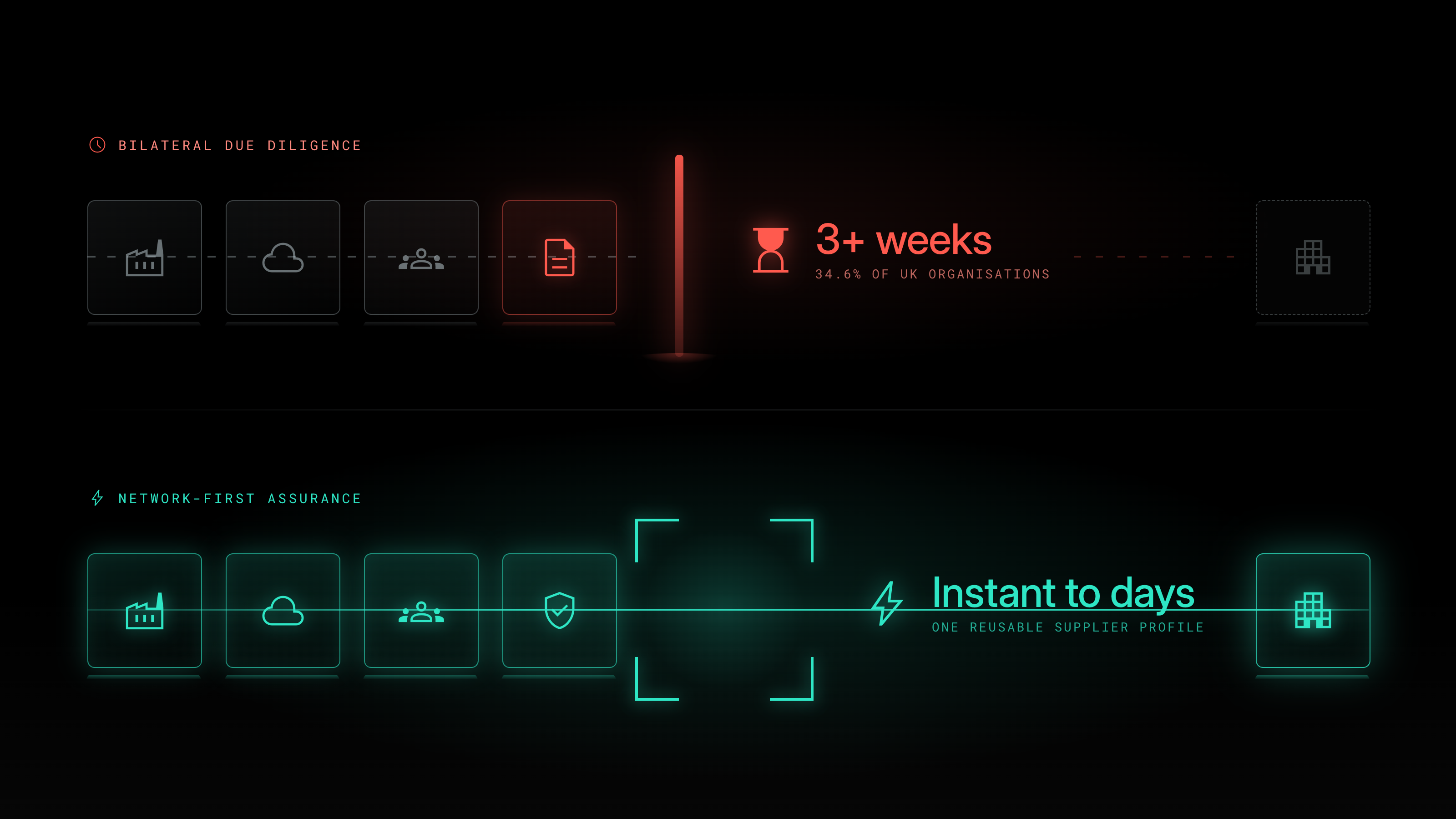
By adopting an interconnected, network-first platform like Risk Ledger, security leaders can combine objective external digital footprint analysis with genuine, continuous monitoring of internal supplier controls. When suppliers maintain a standardised, live profile on a shared network, CISOs receive real-time alerts whenever a vendor alters an internal control, fails a continuity test, or lets a certification lapse. This operational transparency allows security leadership to instantly pinpoint foundational control weaknesses among high-risk concentration vendors, target remediation efforts precisely where systemic risk clusters, and ensure their organisation Defends-as-One.
Stop relying on static spreadsheets to verify supplier security controls. Read the full Every Link Matters: The State of Supply Chain Security 2026 report to explore the empirical data, sector control benchmarks, and ASCS frameworks required to continuously secure your digital supply chain.

%20-%20thumb.png)

Monthly research, case studies and practical guides you won't find anywhere else.
Join thousands of security managers turning their TPRM programmes into success stories.


.svg)