September 10, 2026
・
4
mins read
.png)
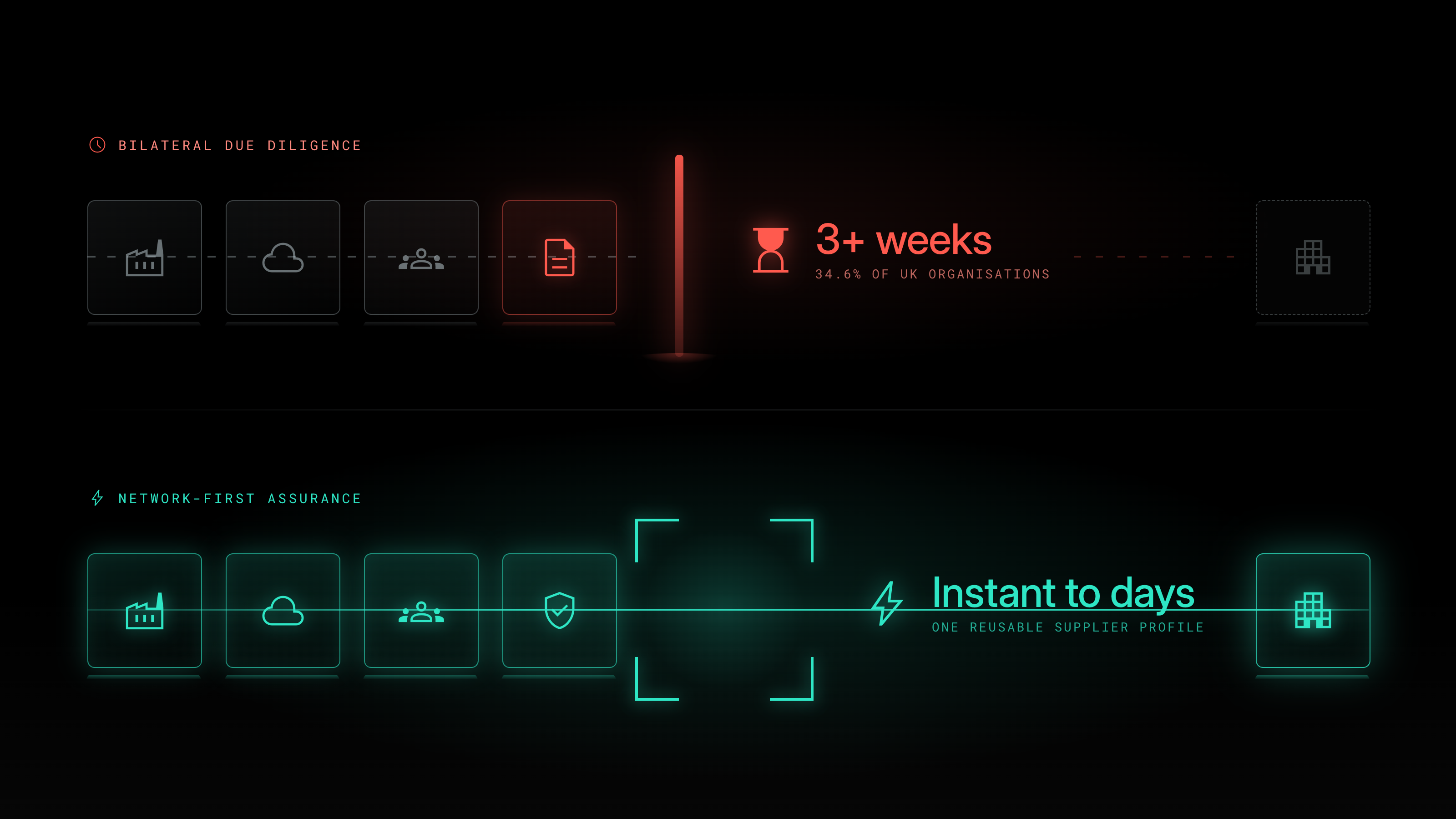
For UK Chief Information Security Officers (CISOs) and Enterprise Risk owners, third-party risk management (TPRM) has reached a strategic inflection point: traditional due diligence processes are moving too slowly for the speed of change and the complexity of modern supply chains and the risks emanating from these relationships . When onboarding a new supplier requires weeks or months of manual assessments, collection of evidence and reviews, security functions are routinely perceived as commercial bottlenecks, forcing executive leadership into dangerous trade-offs between commercial velocity and cyber assurance. To align cyber risk governance with organisational agility, CISOs must transition away from bespoke, bilateral gatekeeping and adopt a network-first Active Supply Chain Security (ASCS) model that leverages standardised, reusable supplier data to shrink onboarding timelines without diluting risk oversight.
Current survey data from 500 UK cyber security and TPRM leaders demonstrates the severe operational drag caused by traditional onboarding workflows:
From a board and executive governance perspective, a slow onboarding process represents far more than an administrative frustration. It constitutes a structural driver of enterprise risk. The prevailing TPRM model relies on bilateral, organisation-to-individual supplier communication, where each review requires bespoke documentation, manual follow-ups, and subjective interpretation. This resource-intensive methodology creates severe strategic vulnerabilities for executive leadership:
"When risk assessment processes take weeks or months, organisations are forced into difficult trade-offs between commercial urgency and security assurance. Slow due diligence can delay the adoption of critical suppliers, create friction with business teams, and encourage workarounds that weaken oversight."
— Every Link Matters: The State of Supply Chain Security 2026
The root cause of onboarding delays is the duplicated effort inherent in bilateral TPRM. Every time a vendor contracts with a new client, security teams on both sides waste significant human and financial resources generating and reviewing redundant questionnaire data.
In contrast, organisations operating within collaborative, network-first communities (such as UK Government bodies, Financial Services institutions, and Local Authorities using Risk Ledger) bypass this friction entirely. By replacing proprietary spreadsheets with a single, standardised supplier profile shared across an interconnected network, assurance data is pre-populated and already verified by numerous peers before the onboarding request is even initiated.
UK and EU regulators are shifting their focus from periodic compliance check-boxes to continuous operational resilience and sector-wide dependency mapping. For board members and Risk Directors, a slow onboarding workflow is a red flag to external auditors and regulators, indicating manual, unscalable internal processes that will struggle to meet stringent emerging regulatory deadlines:
To eliminate the onboarding bottleneck and justify TPRM program investment to the board, CISOs must evolve their strategy from periodic risk management to Active Supply Chain Security (ASCS).
By investing in a network-first platform centered on a Standardized Assessment Framework, CISOs can fundamentally realign security with business velocity. When suppliers maintain a single, continuously updated profile that is shared across multiple client relationships, onboarding teams gain instant access to standardized, trusted assessments. This structural shift shrinks due diligence timelines from weeks to days, eliminates commercial friction with executive peers, reduces the incentive for business units to deploy shadow workarounds, and ensures that the organization Defends-as-One.
Discover how UK leaders are cutting onboarding delays and streamlining board-level governance. Read the full Every Link Matters: The State of Supply Chain Security 2026 report to explore the data, network insights, and strategic frameworks for ASCS.
%20-%20thumb.png)



Monthly research, case studies and practical guides you won't find anywhere else.
Join thousands of security managers turning their TPRM programmes into success stories.


.svg)