Supply chain attacks are on the rise. Threat actors are exploiting obscure nth-party vulnerabilities. Your CEO and board are looking to you for answers.
Do you have confidence in the data you’re telling them? Is your third-party risk management process (TPRM) robust enough in the era of interconnected and AI-powered supply chain threats?
Security leaders are understandably worried. Ransomware attacks, supply chain resilience and exploitation of software vulnerabilities are the leading CISO concerns in 2026. 60% of cyber security leaders consider today’s third party supply chain risk "innumerable and unmanageable.”
The problem isn’t a lack of effort or lack of budget — it’s that traditional approaches were never designed for today’s interconnected threat landscape.
Traditional TPRM was not built for the modern day.
TPRM was created for a simpler world where suppliers were treated as isolated entities, risk was assessed periodically, and compliance was the primary objective. But today’s interconnected supply chains require continuous and coordinated defence, not static and siloed point-solutions. This isn’t a tooling gap – it’s an architectural limitation.
Forward-thinking CISOs, Heads of InfoSec, Directors of IT and Security Managers require a supply chain security approach that:
- Drives security team efficiency without increasing costs or headcount.
- Generates real-time risk data and security proof to show to the board, CEO and regulators.
- Provides continuous visibility, monitoring and insights over the whole supply chain network (beyond 3rd and 4th party connections).
- Optimises industry-wide resources and resilience through coordinated, collective ecosystem defence.
In other words, security leaders need to move beyond outdated and unfixable TPRM toward Active Supply Chain Security (ASCS).
ASCS: the modern security leader’s approach to supply chain security
Active Supply Chain Security (ASCS) represents the evolution of supply chain security beyond traditional TPRM. It is not a feature upgrade to traditional assurance tools, but a new operating model for supply chain security, built on continuous visibility, shared intelligence, and systemic risk reduction across an interconnected ecosystem.
The result? Security leaders can lead their organisations from reactive firefighting to proactively strengthening ecosystem resilience — because in supply chain security, every link matters.
“TPRM was built for a simpler world. ASCS reflects today’s interconnected and rapidly evolving threat landscape. Its unified network-first approach reveals hidden concentration risks, provides nth-party visibility, and enables collective defence across your entire supply chain.”
Haydn Brooks, Co-Founder and CEO, Risk Ledger
Architecturally flawed: 5 ways traditional TPRM fails modern Security Leaders
Traditional TPRM’s questionnaires, periodic assessments, and risk scoring no longer deliver the resilience security leaders urgently need - with only 37.2% of UK cyber security professionals considering TPRM "truly effective" in today’s threat landscape.
TPRM doesn’t fail because your security team isn’t trying hard enough. It fails because it was built for compliance in a disconnected world, not resilience in a connected one.
Here’s five ways that traditional TPRM is holding you back.
- Rising attacks, rising costs, falling effectiveness
85% of cyber security professionals reported at least one supply chain security incident in the past 12 months (46.2% faced two). 70% of organisations are increasing their TPRM budget - which can exceed the $1 million mark in enterprise - to handle this threat. But without a streamlined, standardised and automated assessment process, your security teams are simply chasing suppliers instead of actually focusing on supply chain threats.
- Blind to changing security risks deep in your supply chain
In a modern, hyper-connected economy, your security is only as strong as an obscure company deep in your supply chain. 96% of CISOs consider extended supply chain visibility essential for mitigating risks, but limited by TPRM tools, only 48% map their ecosystem and just 26.8% have full visibility into all tiers of their extended supply chains. This leads to invisible concentration risks and nth party vulnerabilities that could cascade to your perimeter without you knowing until it’s too late.
- Unable to update the board with accurate real-time security data
A supplier’s security posture is fluid, not static. A point-in-time questionnaire submitted in January is outdated in February, so basing your board updates on annual snapshots is like forecasting your budget on outdated cost figures. What’s more, TPRM’s non-standardised and error-prone data collection makes it impossible to prove to the board how you’re preventing breaches.
- Unscalable TPRM undermines strategic value of security leadership
IT Security is the foundation of your organisation's business - underpinning how every department operates. CISOs have become board mainstays as a result - with 83% now participating in board meetings more often than not. But TPRM undermines this new-found strategic influence by slowing down supplier onboarding and acting as a business blocker, rather than a business enabler.
- Check box compliance not ecosystem resilience
TPRM delivers ‘Compliance Theatre’. It’s a box-ticking performance to show regulators you’re ‘reducing risk’ rather than genuine defence. When it comes to actual security, the current TPRM model prioritises self-protection over network resilience, so you’re left trying to solve the exact same problem, at the exact same time as your supply chain partners, but in total isolation - when you should be working together to optimise security resources and resilience across the ecosystem.
The ASCS evolution: continuous, collective supply chain defence
Active Supply Chain Security is not:
- Another questionnaire-heavy TPRM tool
- A superficial external risk rating
- A static trust centre
- A compliance reporting system
Active Supply Chain Security is a continuous, network-first supply chain security model that connects organisations and suppliers into a living ecosystem of shared visibility and collective defence.
Just as modern cloud-based collaboration requires off-premises cyber security, today’s interconnected supply chains require collective, coordinated network defence. It’s no longer enough to treat suppliers bilaterally - you need to immunise the entire supply chain ecosystem from attacks.
That’s why Active Supply Chain Security (ASCS) moves beyond traditional TPRM's static, siloed and compliance-focused approach to deliver:
- Standardisation at scale. Share one supplier profile across many clients, creating a common language of risk, improving risk data and eliminating duplicated effort.
- Network-first visibility. See your supply chain as it truly exists - a living network of interconnected relationships - not a static list.
- Continuous monitoring & insights. Identify concentration risks, nth-party dependencies, and emerging threats in real-time.
- Collective defence. Enable security teams and suppliers to work together, sharing intelligence, responding as one ecosystem and building network-wide resilience.
Here’s the breakdown of each element in more detail.
- Standardising security assessments
- One common language of risk. Standardised assessments create a common language for the entire ecosystem, enabling seamless partner collaboration, efficient security reviews, simplified due diligence and streamlined regulatory reporting.
- One common profile. Suppliers maintain a single, standardised security profile, so you can access up-to-date, consistent and peer-validated supplier data at any time.
- Faster supplier onboarding. With all your suppliers on one network, your security team can assess suppliers instantly with pre-built workflows and standardised processes — reducing onboarding time by over 50%.
Synectics Solutions reduced onboarding time by over 50%
- Visualising the supplier network
- Network‑first supply chain mapping. With thousands of organisations sharing intelligence on one ever-growing network, you can stop guessing about supply chain dependencies and start mitigating risks.
- Nth‑party visibility. With the full picture of your nth tier connections, you can proactively uncover shared dependencies and take action to avoid cascading failures before they become board-level incidents.
- Concentration risk insights. A bird's-eye view of your entire network’s concentration risks enables you to make risk-based decisions to mitigate sudden disruptions (i.e. sanctions, policy changes).
96% of CISOs consider extended supply chain visibility essential for mitigating risks
- Continuously identifying threats
- Continuous risk monitoring. Receive continuous updates about changes in supplier risk profiles, including cyber security incidents or compliance lapses, so your security team can respond before any damage is done.
- Real‑time risk signals. With real-time risk signals, intuitive dashboards and simulated disruptions, you can assess the impact of potential threats, create solid response playbooks and make informed choices around supplier diversification.
- Emerging threat detection. By pinpointing emerging threats and potential vulnerabilities, you have time to execute your response plans and get ahead of incidents before they escalate.
Less than 50% of CISOs monitor risks beyond their direct, third-party relationships
- Collectively defending the ecosystem
- Secure collaboration. By creating a connected community of industry peers, you can share intelligence with network partners, identify common threats and reduce systemic risk across the ecosystem.
- Proactive incident response. By leveraging network-level insights, ecosystem mapping and emerging threat detection, your whole industry moves from reactive independent firefighting to proactive united response.
- Collective defence model. With your security team working together with industry counterparts, you optimise the entire ecosystem's resources and ensure every link in the chain is fortified.
80% of the UK water network use the same ASCS platform - improving collective defence
Benefits of Active Supply Chain Security for security leaders
Three in five cyber security leaders consider third party supply chain risk "innumerable and unmanageable”. But Active Supply Chain Security turns the ‘unmanageable’ into the ‘unthinkable’: a cyber security framework that bolsters resilience and delivers tangible benefits to security leaders. Above all, ASCS enables security leaders to shift the conversation from operational reporting to strategic risk leadership.
- Access board-ready supply chain intelligence on-demand
Easily demonstrate the value of the security programme to the board with up-to-date information on the entire supply chains’ security posture. Use network visualisations to show concentration risks and systemic threats beyond just individual supplier risks. Use the standardised frameworks aligned to regulations to provide defensible, up-to-date and audit-ready evidence for board presentations.
- Get continuous visibility into deep supply chain risks
Gain visibility into dangerous concentration risks and nth-party dependencies before they escalate into board-level insights. By mapping 3rd, 4th and nth-party relationships to identify single points of failure, you understand how supplier disruptions cascade through the ecosystem and can use sophisticated risk insight that positions you as a strategic leader.
- Drive security team efficiency without adding headcount
Vastly reduce the manual workload (and overheads) of your security team with pre-built assessment workflows and standardised processes. With suppliers completing and maintaining just one security profile, your security teams eliminate months of chasing down answers and can focus on meaningful risk analysis. What’s more, the network model enables your team to share insights with suppliers and partners, cutting out duplicated effort.
- Accelerate supplier onboarding to enable business growth
Reduce supplier onboarding time by over 50%, removing security as a bottleneck whilst maintaining rigorous standards. With ASCS, security teams support business velocity, instead of blocking it. Meanwhile, the enhanced collaboration with your supply chain partners and industry peers enables you to strategically grow the business from an InfoSec standpoint.
- Build credibility with regulators, auditors and industry peers
Leverage network-level evidence and audit trails to show regulators you're engaged in proactive risk management, not reactive compliance. The standardised assessment framework demonstrates consistent, repeatable processes that meet key cyber security regulatory expectations and the advanced security thinking assures industry stakeholders of your more-than-compliant risk management practices, leading to peer recognition as an industry thought-leader.
“Security leaders, analysts and suppliers working together across the ecosystem is one of the most powerful levers in supply chain security. ASCS supports this coordinated defence while strengthening operational resilience.”
Haydn Brooks, Co-Founder and CEO, Risk Ledger
5 signs you need Active Supply Chain Security
You’re no longer relying on static perimeter firewalls to protect your cloud-connected IoT devices, so why would you trust outdated and siloed TPRM to protect your organisation in an interconnected world?
As a security leader, you are responsible for protecting the organisation from
cyber threats and choosing the best approach to manage the organisation's cyber risk profile. If you’re experiencing any of the following problems, it’s a sign that you need ASCS - asap.
1. Cannot see your supply chain connections beyond 3rd or 4th parties
Are you basing your entire supply chain security on the security postures of your contracted Tier 1 suppliers?
Focusing on third-party suppliers leaves you blind to network concentration risks and exposed to nth-party vulnerabilities cascading through the ecosystem. But with ASCS, you map your supplier ecosystem as it truly exists to uncover your hidden nth-party dependencies, track changing supplier relationships, and identify concentration risks shared between your suppliers — at-a-glance.
Signs you need ASCS:
❌ Can’t name your suppliers’ suppliers
❌ Unaware of ecosystem concentration risks
❌ Not tracking suppliers’ changing connections
2. Can’t confidently prove your security posture to the board
Are you relying on data from point-in-time assessments when updating the board on cyber security?
Long gaps between assessments deliver quickly-outdated security data, leaving you on the back foot for the majority of the year. But with ASCS, your suppliers constantly update one security profile, so you receive real-time alerts to changes in their security posture, identify risks proactively and can inform the board about threats you've mitigated, not threats you’re facing.
Signs you need ASCS:
❌ Point-in-time assessments
❌ Using Q1 data in Q2 board meetings
❌ Outdated security questions not aligned to new regulations
3. Security team exhausted from reviewing suppliers manually
Are you security team drowning in manual assessment reviews and chasing suppliers for security updates?
Non-standardised assessments lead to duplicated effort, incomparable security data and onboarding delays - and prevent security risk analysts from doing what they do best: analysing security risks. But with ASCS’ standardised and centralised supplier assessment processes, your team can rapidly verify supplier profiles, continuously monitor suppliers’ security postures, and focus on mitigating emerging threats — at scale.
Signs you need ASCS:
❌ Spreadsheet-based questionnaires for new suppliers
❌ Security team manually reviewing assessments
❌ Security team chasing suppliers with endless emails
4. Satisfying compliance regulations but still suffering breaches
Are you achieving certifications and impressing the board with your compliance scores while your security team is still reporting breaches?
Even if you’re manually updating your security questionnaire for new regulations, point-in-time compliance audits do not offer sufficient protection for today's rapidly evolving supply chain threats. But with ASCS, you can continually detect real-time threats, free up your security team to remediate emerging risks, and streamline compliance reporting with up-to-date data.
Signs you need ASCS:
❌ Equating compliance with adequate protection
❌ Using outdated data for reporting
❌ Championing compliance results in board meetings
5. Reactively and independently operating in a regulation-heavy industry
Are you finding out about supply chain breaches from third parties and independently initiating defence mechanisms after attacks have occurred?
Waiting to find out about breaches from impacted suppliers is already too late - especially in heavily-regulated industries that share many of the same suppliers and adhere to the same compliance rules. But with ASCS’ continuous alerts and proactive threat management, you get immediate visibility into which suppliers are exposed, know where to prioritise action and have the means to respond collectively as an ecosystem.
Signs you need ASCS:
❌ No coordinated plan with supply chain partners for breaches
❌ Not sharing security intelligence with partners
❌ Waiting until threats reach your door to take action
Sectors most vulnerable to TRPM software limitations
Any sector with vast interconnected supplier networks can suffer from nth party and concentration vulnerabilities. But if you’re responsible for IT security in a heavily-regulated and highly-targeted sector - such as Financial Services, Critical National Infrastructure (CNI) and the Public Sector - then TPRM is leaving you dangerously exposed.
Financial Services
- Attacks are at an all-time high. 82% of UK financial firms were hit by supply chain attacks in the last 12 months (56% suffered 2+).
- Obscure nth parties are putting you at risk. E.g. The data breach at SitusAMC impacted 1000+ downstream financial institutions, including the likes of JP MorganChase and Morgan Stanley.
- Regulations are getting tougher. It’s your responsibility to adhere to the likes of the UK’s FCA and PRA Operational Resilience rules, NYDFS 500 and EU's DORA.
Critical National Infrastructure
- State-sponsored targeting. 95% of UK CNI organisations suffered a data breach in 2024-2025, with state-supported actors increasingly targeting critical infrastructure.
- Non-resilient supply chains. CNI relies on sub-contractors that are traditionally less cyber security-conscious and frequently targeted by cyber attackers (especially the construction industry).
- Tough new regulations. Regulators are applying increasing scrutiny to CNI's cyber security resilience, with the UK’s Cyber Security and Resilience Bill (2025/2026) raising non-compliance penalties to £17 million or 4% of global turnover.
Public Sector
- Public Sector in attackers’ crosshairs. The UK National Cyber Security Centre recorded a 130% rise in “nationally significant” cyber attacks in 2025.
- Complex supply chains. It only takes one weak link to bring down the entire interconnected Public Sector supply chain, such as CrowdStrike’s IT outage's impact on major transport operators.
- Increasing scrutiny. For governmental bodies, it’s not just regulations that are getting tougher, but also public scrutiny - with the National Audit Office claiming the government does not know how vulnerable its legacy systems are to cyber threats that are ‘severe and advancing quickly’.
Risk Ledger’s Active Supply Chain Security approach
In 2018, Risk Ledger pioneered the network-first approach to supply chain security. Now, we’re leading the shift to Active Supply Chain Security.
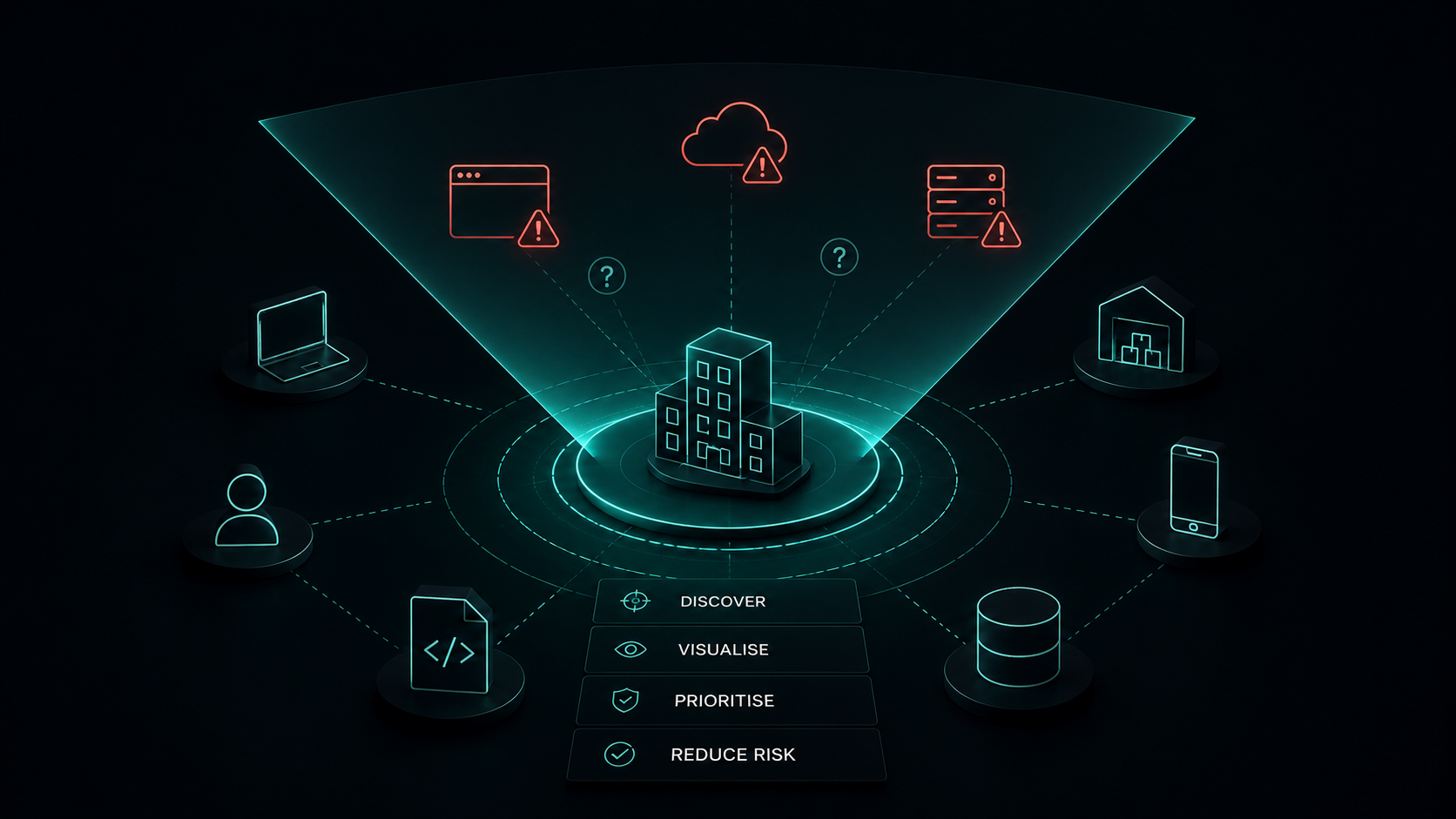
By standardising supplier data, connecting thousands of organisations onto a living network, and overlaying proactive threat intelligence, our four-stage approach is helping organisations move beyond fragmented TPRM toward a more connected and continuous supply chain security model.
- Standardised Assessment Frameworks - Suppliers complete one profile, keep it updated, and share it across the network, creating a common language of risk.
- Supply Chain Visualisation - We map thousands of organisations, enabling nth-party visibility, concentration risk detection, and shared intelligence.
- Proactive Threat Management - We overlay new vulnerabilities or attacks on the network map and database in real-time, highlighting impacted suppliers and cascading network exposure, enabling you to prioritise remediation.
- Defend-as-One - We enable collaboration and intelligence-sharing with the wider ecosystem, optimising resources and building network-wide cyber resilience.
Together, this approach helps deliver Active Supply Chain Security — continuous visibility, systemic risk reduction, and collaborative defence across Financial Services, Critical National Infrastructure and the Public Sector. Because in today's interconnected world, every link matters.
Customer Spotlight: Lloyds Wealth (formerly SPW)
Lloyds Wealth, formerly Schroders Personal Wealth, has over £13.3 billion in funds under management and serves its clients through 11 regional hubs and 270+ financial advisers around the UK.
Challenge: Lloyds Wealth relied on 200 suppliers for its infrastructure and daily operations, but the InfoSec Manager had no way of monitoring third-party data breaches or ensuring suppliers' security controls adhered to strict financial regulations.
Solution: Lloyds Wealth used Risk Ledger’s standardised assessment framework, adding specific security controls relating to ESG and financial risk. Risk Ledger’s network visibility also gave Lloyds Wealth deep oversight over their entire supply chain and sent real-time alerts on changing nth party connections.
Result
- Continuous monitoring visibility over 95% of its supply chain network, enabling an enormous reduction in cyber incident risk.
- Reduced workload for Lloyds Wealth’s risk management’s team from several FTEs to just one person, freeing up security experts to focus elsewhere.
- Live identification of critical dependencies ensured Lloyds Wealth was aware of non-compliance in real-time and well-prepared for new regulations.
“Risk Ledger gives us an instant snapshot of where risks lie in our supply chain. It is quite unbelievable that before Risk Ledger, the only third- party risk management programmes out there were still relying on manual onboarding and annual reviews – so outdated in a digital- first economy and not fit for purpose in light of much stricter financial regulations.”
Yohann Le Grand, Information Security Manager
Read more
Defend-as-One
Cybersecurity approaches evolve with the digital threat landscape.
Zero Trust Architectures now protect cloud-connected IoT devices. Endpoint Protection Platforms (EPP) combats today’s rapidly evolving zero-day threats. Active Supply Chain Security supports interconnected supply chains working together to Defend-as-One.
Find out how you can enhance your supply chain security with ASCS.
.png)






.svg)