October 9, 2026
・
23
mins read
.png)

The complexity of modern supply chains presents a significant challenge for security leaders. As organizations expand their networks of vendors, partners, and suppliers, their attack surface grows exponentially. While this interconnectedness drives innovation and efficiency, it also introduces hidden risks that traditional security measures can no longer adequately address. To navigate this landscape, leaders require a clear, data-driven understanding of the challenges and a strategic framework for action.
We are pleased to announce the launch of our new report: Every Link Matters: The State of Supply Chain Security 2026 – US Edition. Drawing on insights from 1,000 US CISOs and risk leaders, this report provides a definitive look at the current state of Third-Party Risk Management (TPRM) and offers a roadmap for building a more resilient and secure supply chain.
Our research reveals a significant disconnect between the recognized importance of supply chain visibility and the actual capabilities of most organizations. While security leaders understand the threat, their tools and processes have not kept pace with the evolving risk landscape. This creates a dangerous “visibility gap” that leaves organizations exposed.
Consider these key findings from the report:
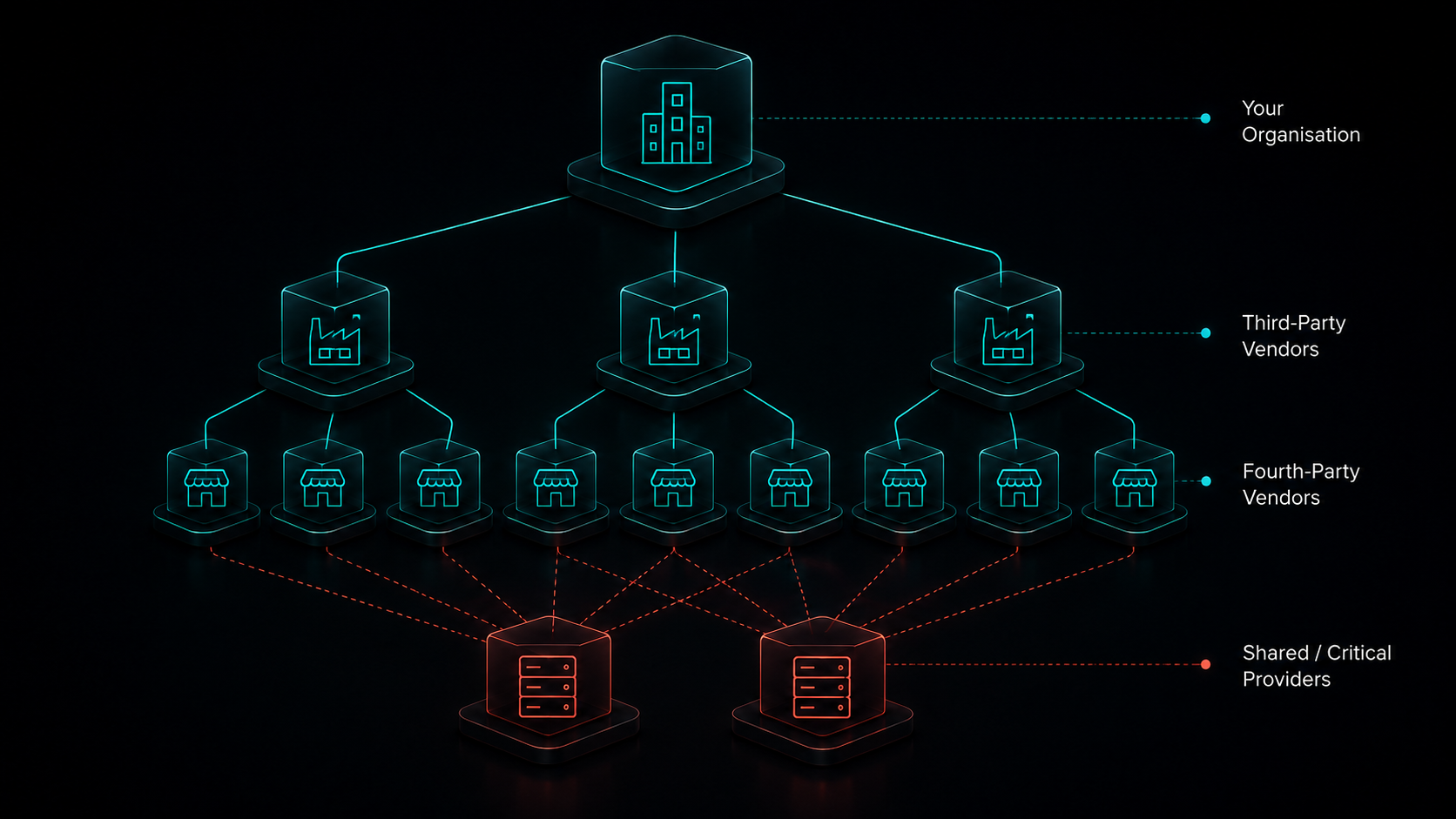
The data is clear: while supply chain security has captured the attention of executive leadership, the methods used to manage it are falling short. Manual processes and periodic assessments are insufficient for mapping the intricate web of fourth-party and even fifth-party dependencies where many of today's most significant threats originate.
For years, organizations have relied on questionnaires and static assessments to manage third-party risk. However, our report highlights a critical flaw in this approach. While these tools have their place, they fail to provide the continuous, real-time intelligence needed to defend against dynamic threats. The reality is that risk is not a point-in-time event; it is a constant, evolving condition.
The report also found that technology adoption lags behind strategic intent. A staggering 72% of organizations still rely on spreadsheets to manage their TPRM program, with only 28% having adopted a dedicated TPRM platform. This over-reliance on manual tools consumes valuable resources and makes it nearly impossible to scale security efforts effectively.
As James Alliband, Head of Marketing at Risk Ledger, explains:
"This report confirms what many security leaders have felt for some time: that traditional TPRM is no longer fit for purpose. The findings highlight a clear and urgent need to move from a static, compliance-driven mindset to an active, intelligence-led security posture. Our goal with this report is to provide organizations with the data and frameworks they need to make that transition, close the visibility gap, and build a truly resilient supply chain."
The "Every Link Matters" report is more than just a collection of statistics; it is a guide for action. It outlines a structured framework for transitioning from outdated compliance activities to a modern, active security model. This includes practical steps for:
By adopting an active security approach, you can transform your TPRM program from a reactive, compliance-focused cost center into a strategic function that enhances your organization's security posture and demonstrates measurable ROI.
Every link in your supply chain matters. The unseen weaknesses hidden deep within your network can become your most significant liabilities. Understanding and managing these connections is no longer optional—it is a strategic imperative.

Monthly research, case studies and practical guides you won't find anywhere else.
Join thousands of security managers turning their TPRM programmes into success stories.



.svg)