By clicking “Accept”, you agree to the storing of cookies on your device to enhance site navigation, analyze site usage, and assist in our marketing efforts. View our Privacy Policy for more information.
Best BitSight Alternatives for Third-Party Risk Management in 2026
Compare 7 BitSight alternatives on score transparency, dispute handling, and supplier participation, using verified G2 and Gartner Peer Insights data.
Risk Ledger
|
Company
August 17, 2026
|
9
mins read
Share
The strongest BitSight alternatives split into four groups: security-ratings peers (SecurityScorecard, Black Kite), broader assessment and monitoring platforms (UpGuard, Panorays), full-lifecycle TPRM suites (OneTrust, ProcessUnity), and network-based supplier assurance platforms (Risk Ledger).
Most teams evaluating this space are covering hundreds of suppliers with limited headcount, and need a rating or assessment result they can actually stand behind when a board member, an auditor, or a supplier questions it.
A score is only useful if it holds up under questioning. If you're spending more time explaining why a finding appeared than acting on it, or a supplier is asking why their rating moved for reasons neither of you can see, that's a structural limitation of the model, not a one-off glitch.
It's also worth being clear-eyed if this is the first time you're comparing BitSight against other options: you don't need to already be a BitSight customer for any of this to apply. The same pressures show up whichever rating or assessment tool a team currently runs, and BitSight itself has broadened its own language toward supply chain visibility and supplier-shared profiles in recent years, which makes it worth understanding exactly what sits behind those terms before assuming it solves the same problem every alternative here claims to.
Why teams look elsewhere
Why security teams look for a BitSight alternative
BitSight scores well on stability and finding depth. The friction reviewers name most often sits in how much a score, and the mechanism behind it, can actually be trusted and explained once someone questions it.
Why teams look for a BitSight alternative for TPRM
Friction point
What reviewers say
Worth testing
Score lag after a fix is made
Reviewers describe a rating staying flat for a period after the underlying issue has genuinely been resolved, which makes the score harder to trust as a live indicator.
How quickly a score actually reflects a fix you can demonstrate you've made.
Limited transparency in the scoring mechanism
More than one reviewer notes plainly that the way a score is calculated isn't clear from the outside.
How much the methodology is actually explained versus taken on trust.
False positives and occasional misattribution
Reviewers describe methodology errors and findings that don't hold up on closer inspection, with the correction burden typically falling on whoever is being scored.
The dispute process and how long a correction actually takes.
Support and documentation are inconsistent
Some reviewers praise BitSight's support responsiveness by name. Others, particularly at enterprise pricing, describe thin documentation and support responses that don't fully resolve the issue.
Support response times against your own account tier, not just the sales conversation.
Practical test
Before shortlisting, ask to see how a specific finding is explained and how quickly a score updates once you can prove a fix is live. If the answer relies on trusting the number rather than understanding it, that's the transparency gap showing up directly, not just in reviews.
BitSight alternatives at a glance
SecurityScorecard: best for ratings combined with peer benchmarking and threat intelligence
UpGuard: best for combined ratings and questionnaire workflows
Black Kite: best for financial-impact quantification alongside ratings
Panorays: best for combining assessments with attack-surface monitoring
OneTrust: best for broad GRC and compliance programmes
ProcessUnity: best for highly configurable enterprise TPRM
Risk Ledger: best for supplier-verified evidence and supply chain visibility
How we compared:this guide draws on real, verified G2 and Gartner Peer Insights review data for each platform, alongside each vendor's own published methodology where a claim needs checking against how the underlying data is actually collected.
Why security teams look for a BitSight alternative
BitSight scores well on stability and finding depth, but reviewers who rate it highly also point to a consistent set of gaps, specific enough to be worth naming directly.
Score lag after a fix is made. Reviewers describe a rating staying flat for a period after the underlying issue has actually been resolved, which makes the score harder to trust as a live indicator and harder to explain to a supplier who has already remediated.
Limited transparency in the scoring mechanism. More than one reviewer notes plainly that the way a score is calculated isn't clear from the outside, which becomes a problem the moment someone, a supplier, an auditor, a board member, asks why a number moved.
False positives and occasional misattribution. Reviewers describe methodology errors and findings that don't hold up on closer inspection, with the correction burden typically falling on whoever is being scored rather than the platform itself.
Support and documentation are inconsistent. Some reviewers praise BitSight's support responsiveness by name. Others, particularly at enterprise pricing, describe thin documentation and support responses that don't fully resolve the issue. Both are genuine, current reviewer sentiments rather than a single verdict either way.
None of this makes BitSight a weak product. It remains a well-reviewed, Forrester-recognised ratings platform. The gaps above are simply where reviewers say the model runs out of road, and where an alternative might close it.
What's worth testing against any alternative
Score responsiveness after a genuine fix, how much the scoring methodology is actually explained versus taken on trust, and how a shared vendor profile is reviewed on the other end, whether it's assessed against a standard every client applies the same way, or read individually by each client against their own criteria. Those are the three places BitSight's own reviewers, and its own published methodology, say it's worth looking closer.
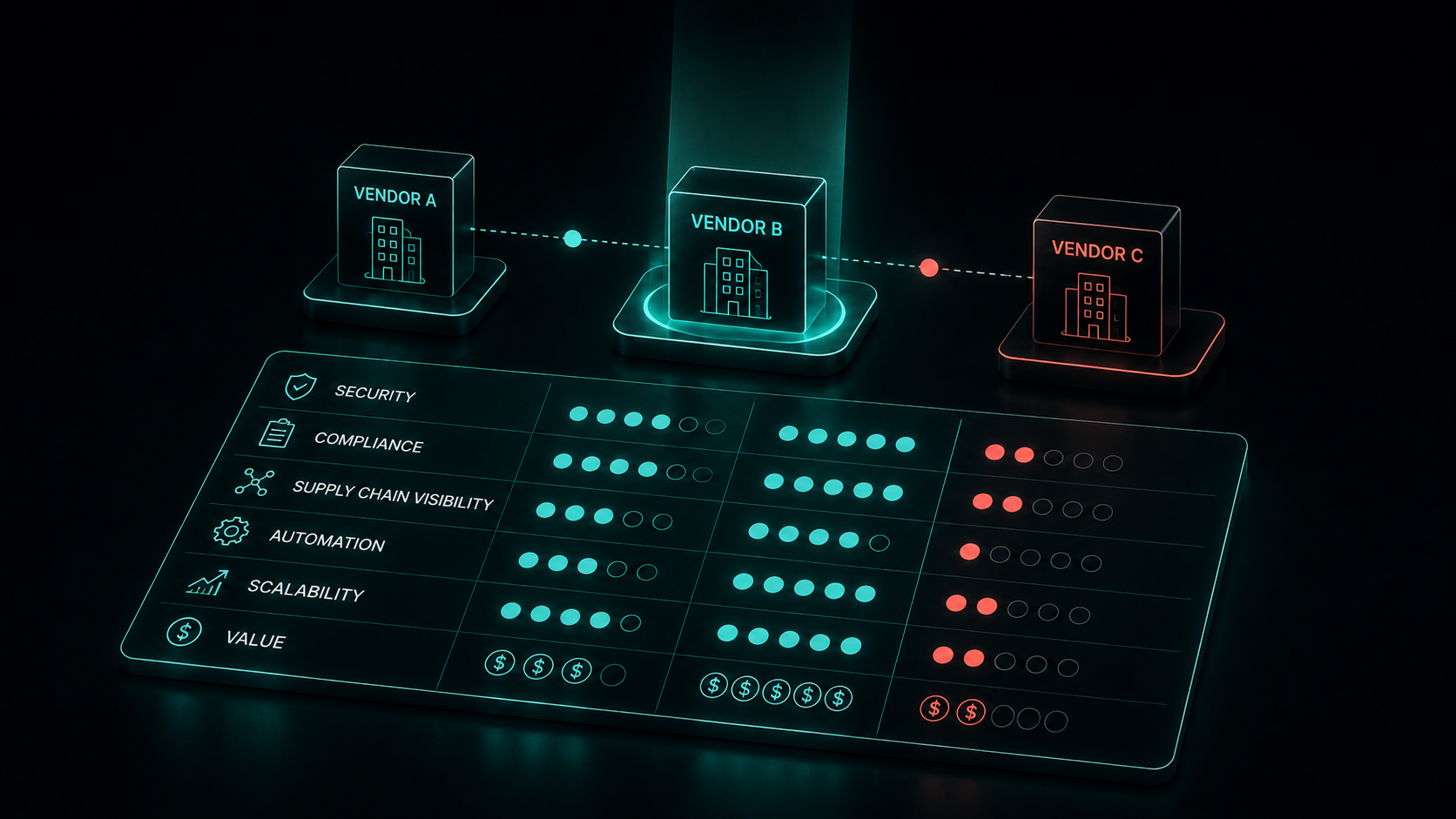
BitSight alternatives comparison
BitSight alternatives compared
Compare evidence model, supplier participation, monitoring and supply
chain visibility across the platforms security teams evaluate
alongside BitSight for third-party risk.
How we compared:
Drawn from current G2 and Gartner Peer Insights review data for each
platform, plus each vendor's own published methodology for how
supplier evidence and dependency mapping actually work.
Risk Ledger
Network-first TPRM
Risk Ledger comparison
Best for
Supplier-verified evidence and supply chain visibility built from real network connections
Primary approach
A connected network where suppliers maintain one profile assessed against a standardised control framework, reused across every connected client relationship.
Supplier evidence
One standardised assessment maintained once and reused across every client, applied the same way by every client rather than reviewed ad hoc against each client's own criteria.
Monitoring
Tracks changes to supplier evidence over time; suppliers now also name their own critical third parties directly as part of the assessment.
Supply chain visibility
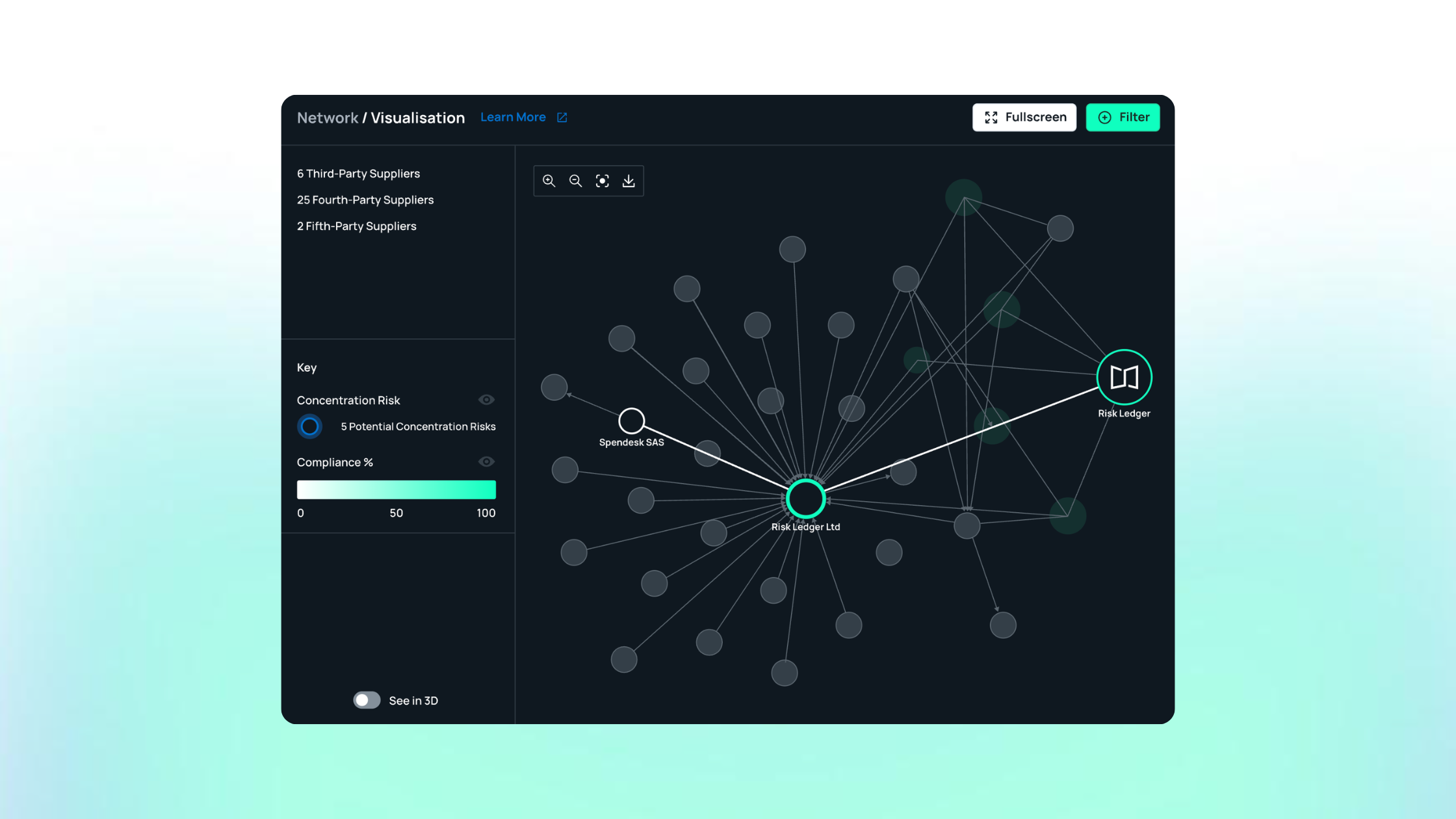
Built automatically from the network itself: because suppliers are frequently also clients assessing their own suppliers on the same platform, real chains of connection surface structurally rather than being inferred from external scanning.
Supplier participation
Free for suppliers to join and maintain, removing a common adoption barrier.
Operating effort
Reduces repeated collection and supplier chasing. G2's own head-to-head data shows reviewers rate Risk Ledger easier to use and administer than BitSight, though some note questionnaire flexibility has room to grow.
Key consideration
Built specifically for security-led supplier assurance; the standardised framework favours comparability across the network over fully bespoke, per-supplier questionnaires.
BitSight
Outside-in ratings
BitSight comparison
Best for
Portfolio-level security ratings with genuine technical finding depth
Primary approach
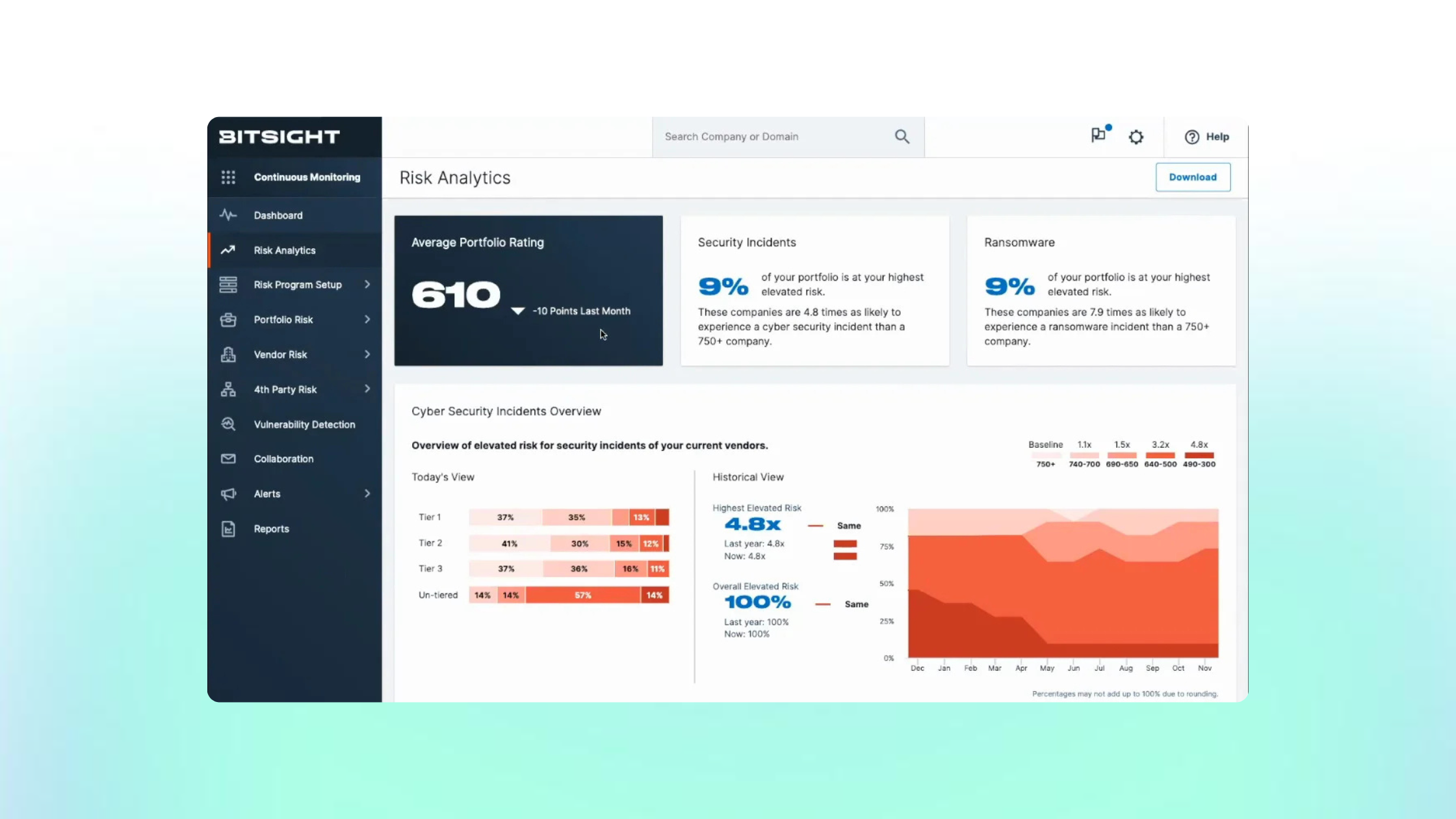
Outside-in daily scoring (250-900) through Bitsight Security Ratings, supplemented by a vendor document profile through Bitsight Third-Party Risk Management, formerly ThirdPartyTrust.
Supplier evidence
Vendors build one document set of questionnaires, certifications and attestations and share it; each client still reviews that set against its own criteria rather than a common standard every client applies the same way, closer to a trust centre than a standardised, comparable framework.
Monitoring
Daily rescanning across risk vectors organised by severity; reviewers describe a rating staying flat for a period after a genuine fix.
Supply chain visibility
Fourth-party mapping through the "rated entity graph," built from observable internet data rather than suppliers declaring their own dependencies.
Supplier participation
No cooperation required for the core rating; the document-profile layer needs supplier engagement to build and maintain.
Operating effort
Findings organised by severity and risk vector ease reporting. Reviewers flag limited scoring transparency and inconsistent support/documentation at enterprise pricing.
Key consideration
Strongest where portfolio-wide, no-cooperation-required coverage matters more than a standardised, comparable supplier framework.
SecurityScorecard
Ratings + benchmarking
SecurityScorecard comparison
Best for
Ratings combined with peer benchmarking and threat intelligence
Primary approach
Outside-in A-F grading plus likelihood reports and industry benchmarking.
Supplier evidence
External findings supplemented through assessments and supplier-response workflows.
Monitoring
Continuous monitoring of network security, patching cadence, DNS health and leaked credentials.
Supply chain visibility
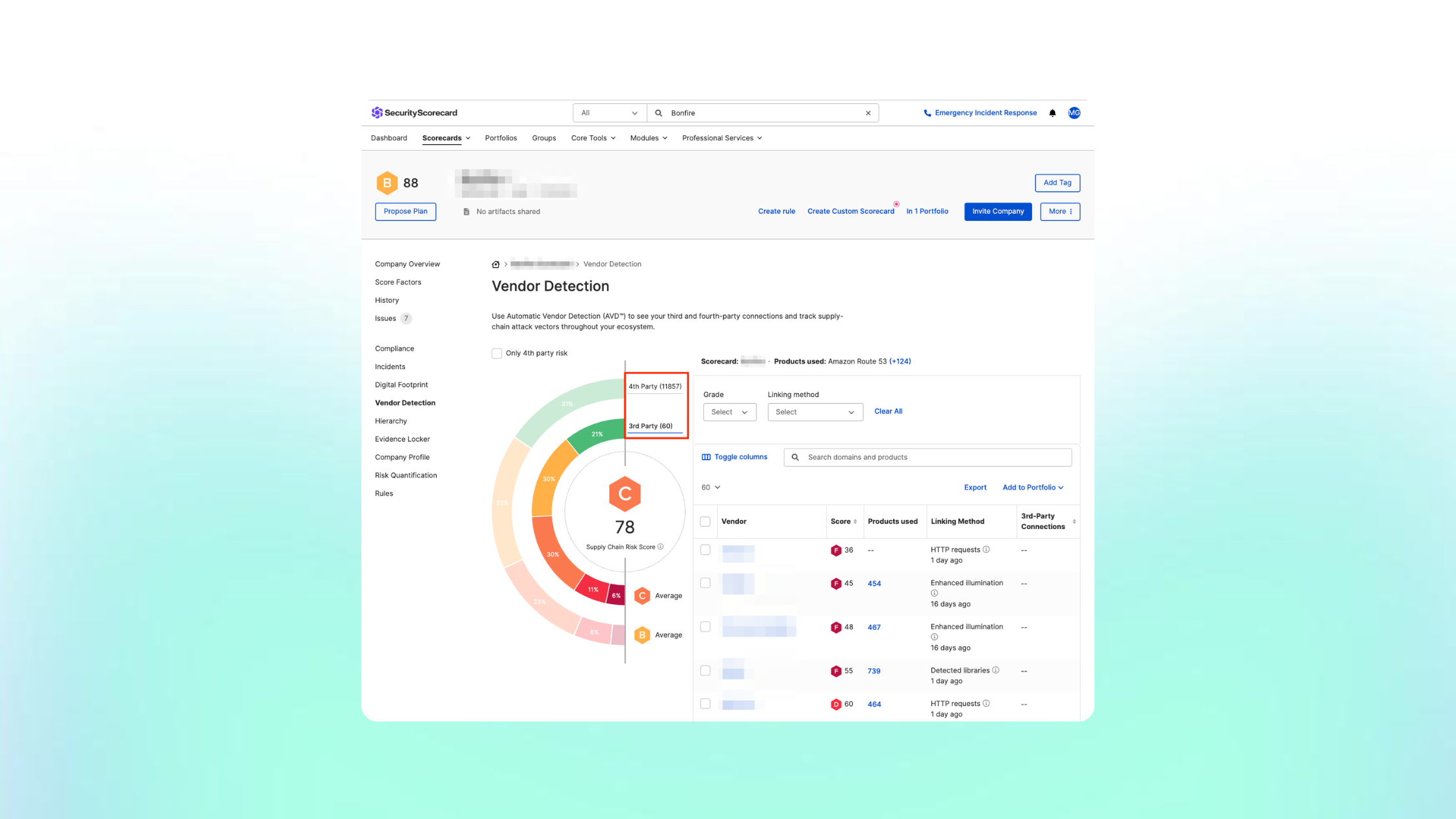
Indirect relationship discovery, inferred from external signals.
Supplier participation
Suppliers can respond to findings and add context.
Operating effort
Reviewers cite false positives and asset misattribution as the most consistent complaint. One reviewer described reporting as "a little simple."
Key consideration
Strong for peer benchmarking and board or insurance conversations; attribution accuracy is worth testing directly first.
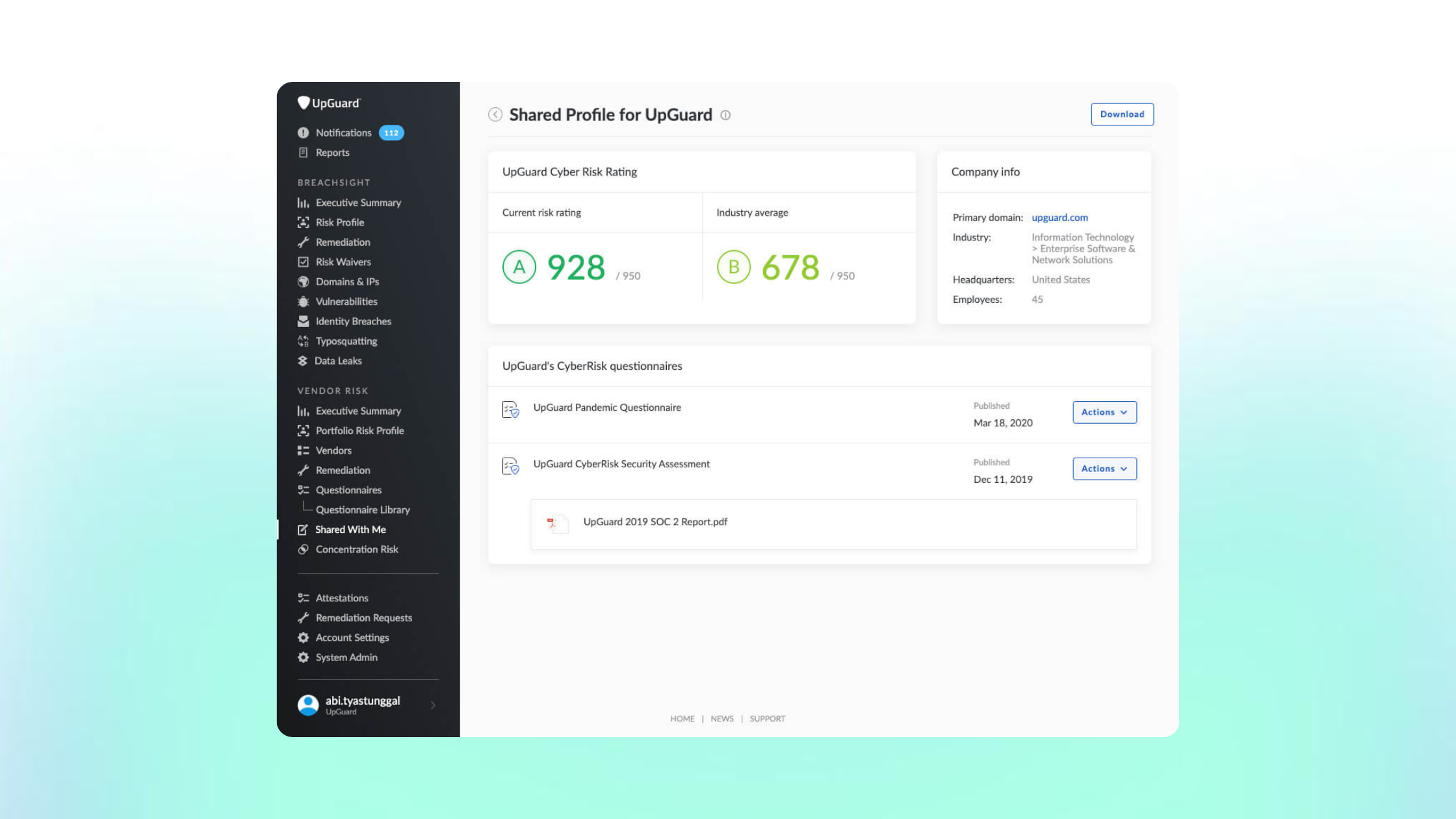
UpGuard
Ratings + questionnaires
UpGuard comparison
Best for
Combined ratings and questionnaire workflows
Primary approach
Outside-in ratings plus a built-in questionnaire library.
Ratings update multiple times a day across attack surface, breach vectors and data leak signals.
Supply chain visibility
Automatic fourth-party detection, inferred from scanning.
Supplier participation
Vendors respond through a pre-built questionnaire library covering NIST, ISO, SIG and regional regulations.
Operating effort
Reporting customisation is the most consistent complaint. One Gartner reviewer noted: "Some domains are associated with our company which don't appear to be true."
Key consideration
Good where ratings and questionnaires in one product matter more than heavily customised reporting.
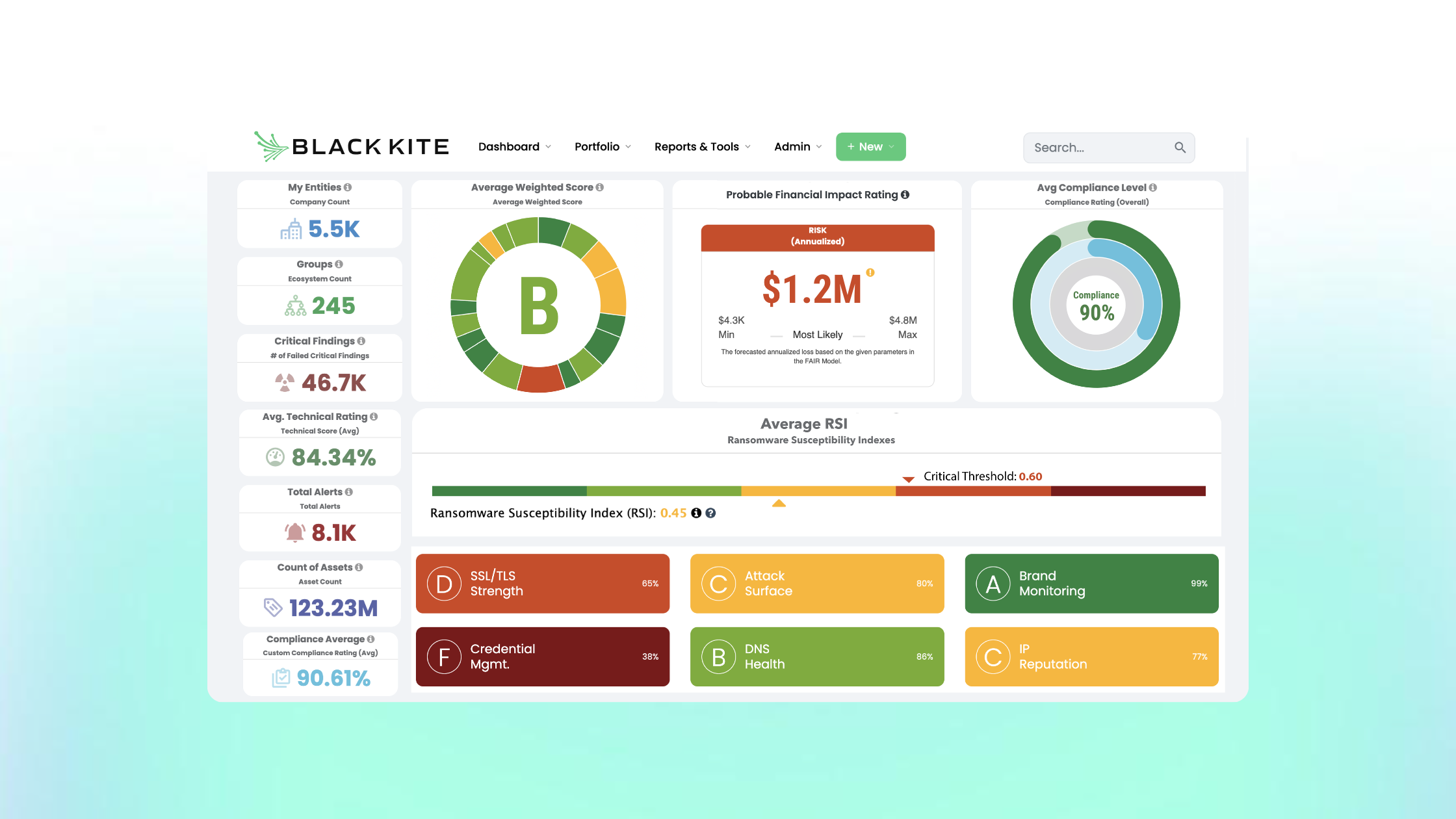
Black Kite
Financial risk quantification
Black Kite comparison
Best for
Financial-impact quantification alongside ratings
Primary approach
Outside-in ratings plus Open FAIR-based financial impact modelling.
Supplier evidence
External findings plus AI-assisted questionnaire and gap-analysis tools.
Monitoring
Named risk indices, including a Ransomware Susceptibility Index, Adversary Susceptibility Index and Data Breach Index.
Supply chain visibility
Explicit fourth, fifth and nth-party mapping, built from external discovery.
Supplier participation
Vendors can respond via questionnaire and gap-analysis workflows.
Operating effort
Independent review volume is thinner than BitSight or SecurityScorecard. One reviewer noted the scorecard has "remained unchanged over the past three years."
Key consideration
Best for teams that need to justify supplier risk decisions in financial terms to a board or insurer.
Panorays
Assessments + monitoring
Panorays comparison
Best for
Combining assessments with attack-surface monitoring
Primary approach
Automated supplier questionnaires plus continuous attack-surface scanning in a single dashboard.
Best for mature enterprise programmes with dedicated TPRM resource that need deep configurability more than out-of-the-box simplicity.
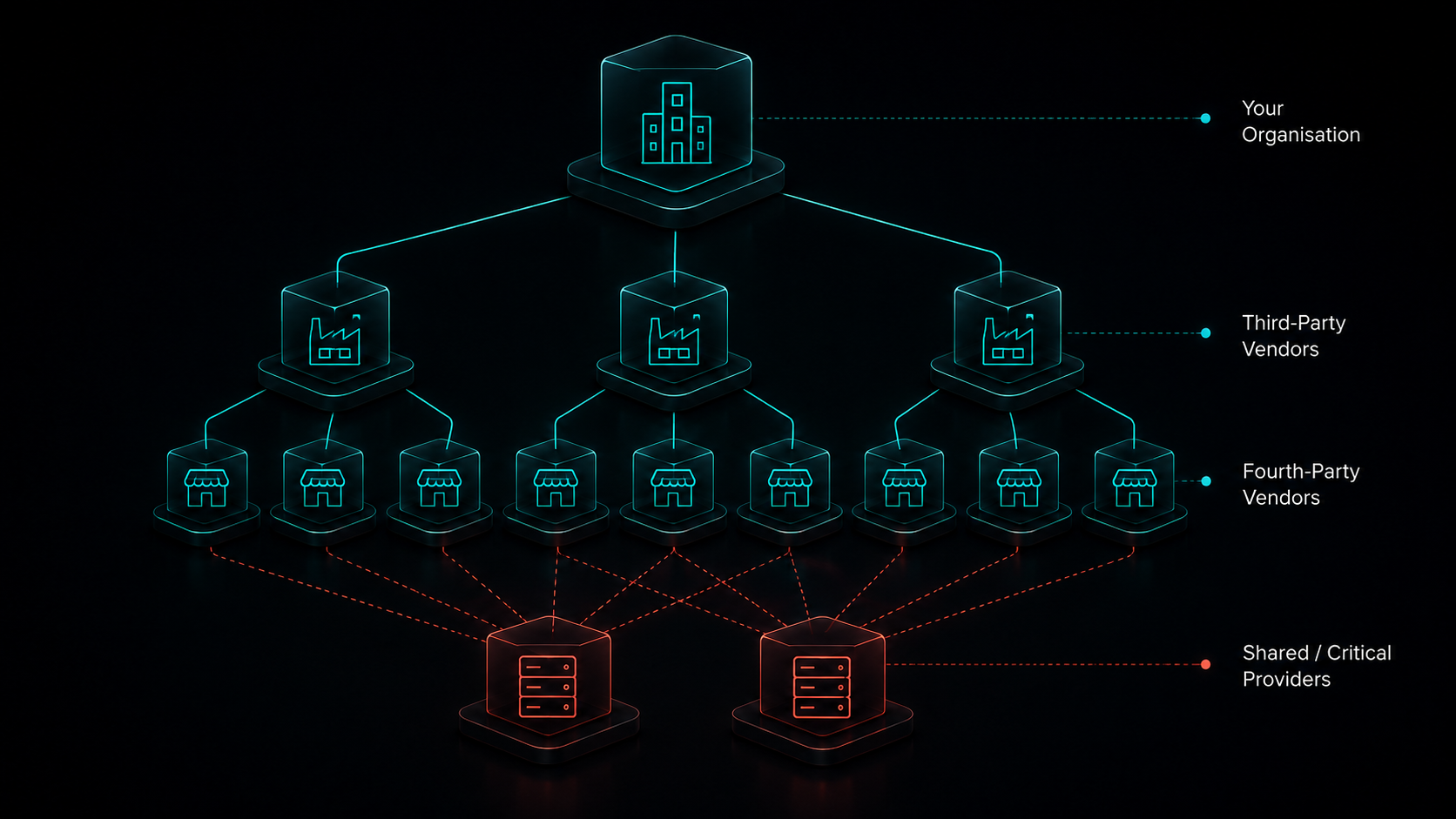
The row worth pausing on is supply chain visibility. Every ratings-led platform in this table, BitSight included, builds its fourth and nth-party view from external, observable data. Risk Ledger's map works differently. The primary driver is structural: when a supplier is also a client running its own assessments of its own suppliers, that relationship becomes a real, traceable link the network surfaces on its own. Suppliers now also name their own critical third parties directly within the assessment, which reinforces that automatic map rather than replacing it.
BitSight: best for portfolio-level security ratings at enterprise scale
BitSight is first and foremost an outside-in security ratings platform that scores organisations on a 250–900 scale from externally observable data, with a supplementary vendor profile layer for questionnaires, certifications and attestations added through its 2022 acquisition of ThirdPartyTrust, and now named Bitsight Third-Party Risk Management (TPRM).
Strengths
Named a Leader in The Forrester Wave™: Cybersecurity Risk Ratings Platforms, Q2 2026, with the highest possible scores across 11 evaluation criteria
Detailed findings on SSL, DMARC, DKIM and web application headers, which reviewers say makes remediation and reporting easier
Findings organised by severity and risk vector
Strong, frequently-named support responsiveness in several reviews, though this isn't universal (see below)
Worth knowing
Reviewers describe a rating staying flat for a period after an underlying issue has genuinely been fixed, which makes the score harder to rely on as a live signal
The scoring mechanism itself has limited transparency, according to G2 reviewers
The vendor profile layer (via ThirdPartyTrust) lets a supplier build one document set of questionnaires and certifications and share it, but each client still reviews that document set against its own criteria rather than a common standard every client applies the same way, closer to a trust centre than a standardised, comparable assessment framework
Fourth-party mapping is built from BitSight's own external "rated entity graph", relationships inferred from observable internet data rather than from suppliers declaring their own dependencies
At enterprise pricing, some reviewers describe thin documentation and support responses that don't fully resolve the issue, alongside other reviews praising support by name
Best use case
Large enterprises that need portfolio-wide ratings with genuine technical depth, and have the internal capacity to interpret a scoring methodology that isn't fully disclosed.
Common misconception
BitSight's "answer once, share many" profile
A shared vendor profile and a supplier-declared, standardised assessment sound similar on a feature list. They behave differently the moment two different clients look at the same supplier.
Feels likeA reusable, standardised assessment
Through Bitsight TPRM, a vendor builds one profile of questionnaires, certifications and attestations and shares it with every client that asks, which reads as the same "complete once, share many" model as a supplier network.
Actually missesWhether every client is assessing the same thing
The profile is a document set each client reviews individually against its own criteria, not a common framework every client applies the same way. Two clients can read the same profile and reach different conclusions, because there's no shared standard behind it, only a shared filing cabinet.
Practical test
Ask whether two different clients reviewing the same supplier's BitSight profile would be assessing that supplier against the same standardised set of controls, or against their own separate criteria applied to the same documents.
SecurityScorecard: best for ratings combined with peer benchmarking and threat intelligence
SecurityScorecard is an outside-in security ratings platform that pairs an A–F grade with peer benchmarking and threat intelligence, aimed at teams needing a quick, board-legible read on supplier posture.
Strengths
Peer benchmarking shows how a score compares to others in the same sector
Fast setup, often a few days, with no installation required
Likelihood reports are useful for insurance and board-level conversations
Suppliers can respond to findings and add context
Worth knowing
Asset misattribution recurs across reviews, including domains attributed incorrectly to an organisation, with the correction burden falling on the supplier being scored
Relationship and dependency data comes from external discovery rather than suppliers declaring it directly
Some reviewers find the volume of metrics overwhelming without a security background
Reporting depth is a related complaint: "The reporting feature seems a little simple."
Best use case: teams that need a fast, externally-verifiable rating for board or insurance reporting, and are prepared to test attribution accuracy directly.
UpGuard: best for combined ratings and questionnaire workflows
UpGuard combines outside-in security ratings with a built-in questionnaire library, positioning itself as a single tool for both external monitoring and supplier assessment.
Strengths
Ratings update multiple times a day across attack surface, breach vectors and data leak signals
A pre-built questionnaire library covers NIST, ISO, SIG and regional regulations
AI-assisted document review speeds up questionnaire assessment
Automatic fourth-party detection
Worth knowing
Reporting customisation is the most consistent complaint across reviewers
Asset misattribution comes up often enough to test directly against your own domains, a recurring theme across scanning-led platforms
Asset misattribution comes up often enough to test directly against your own domains, a recurring theme across scanning-led platforms. One Gartner reviewer put it directly: "Some domains are associated with our company which don't appear to be true."
Questionnaire scoring can weight a small number of failed controls heavily, making scores harder to defend to a supplier who disagrees
Best use case: teams that want ratings and questionnaires in one product rather than two, and don't need heavily customised reporting.
Black Kite: best for supply chain risk quantification alongside ratings
Black Kite pairs security ratings with Open FAIR-based financial impact modelling, aimed at teams that need to translate a supplier's technical risk into a monetary figure.
Strengths
Financial impact modelling is a genuine differentiator in this category
Named risk indices give specific, actionable framing rather than a single blended score
Explicit fourth, fifth and nth-party mapping
AI-assisted questionnaire and gap-analysis tools
Worth knowing
Its nth-party mapping, like BitSight's, is built from external discovery rather than suppliers declaring their own dependencies
Independent review volume is thinner than BitSight or SecurityScorecard, so weight this data proportionately
One reviewer put it plainly: "the overall security view and scorecard have remained unchanged over the past three years."
Best use case: teams that need to justify supplier risk decisions in financial terms to a board or insurer.
Panorays: best for combining assessments with attack-surface monitoring
Panorays combines automated supplier questionnaires with continuous attack-surface scanning in a single dashboard, aimed at teams that want assessment and monitoring data together rather than in separate tools.
Strengths
Ease of use and an intuitive interface are the most consistently praised features
Automated questionnaires reduce manual follow-up
Continuous posture scanning sits alongside assessment data
Fourth-party discovery is built in
Worth knowing
Fourth-party connections are surfaced through scanning, not declared by suppliers, so it's worth checking how those map to real business dependencies
Onboarding effort and cost come up together in reviewer feedback
Role granularity is limited for larger teams managing multiple user groups
Best use case: mid-sized teams that want assessments and scanning combined in one workflow, without a large internal admin function.
OneTrust: best for broad GRC and compliance programmes
OneTrust is a broad governance, risk and compliance platform where third-party risk is one module inside a much wider privacy and compliance suite.
Strengths
Consolidates privacy, risk, vendor management and compliance in one platform
Covers 50-plus pre-mapped compliance frameworks across many jurisdictions
Strong automation for reminders, workflows and reassessment triggers
A broad integration ecosystem across enterprise tools
Worth knowing
Third-party risk depth, like nth-party mapping or supplier-maintained profiles, isn't the product's centre of gravity
Reviewers consistently describe a steep learning curve
Pricing is opaque and can escalate as more modules are added
Best use case: organisations that need third-party risk to sit inside a much wider governance and compliance programme.
ProcessUnity: best for highly configurable enterprise TPRM
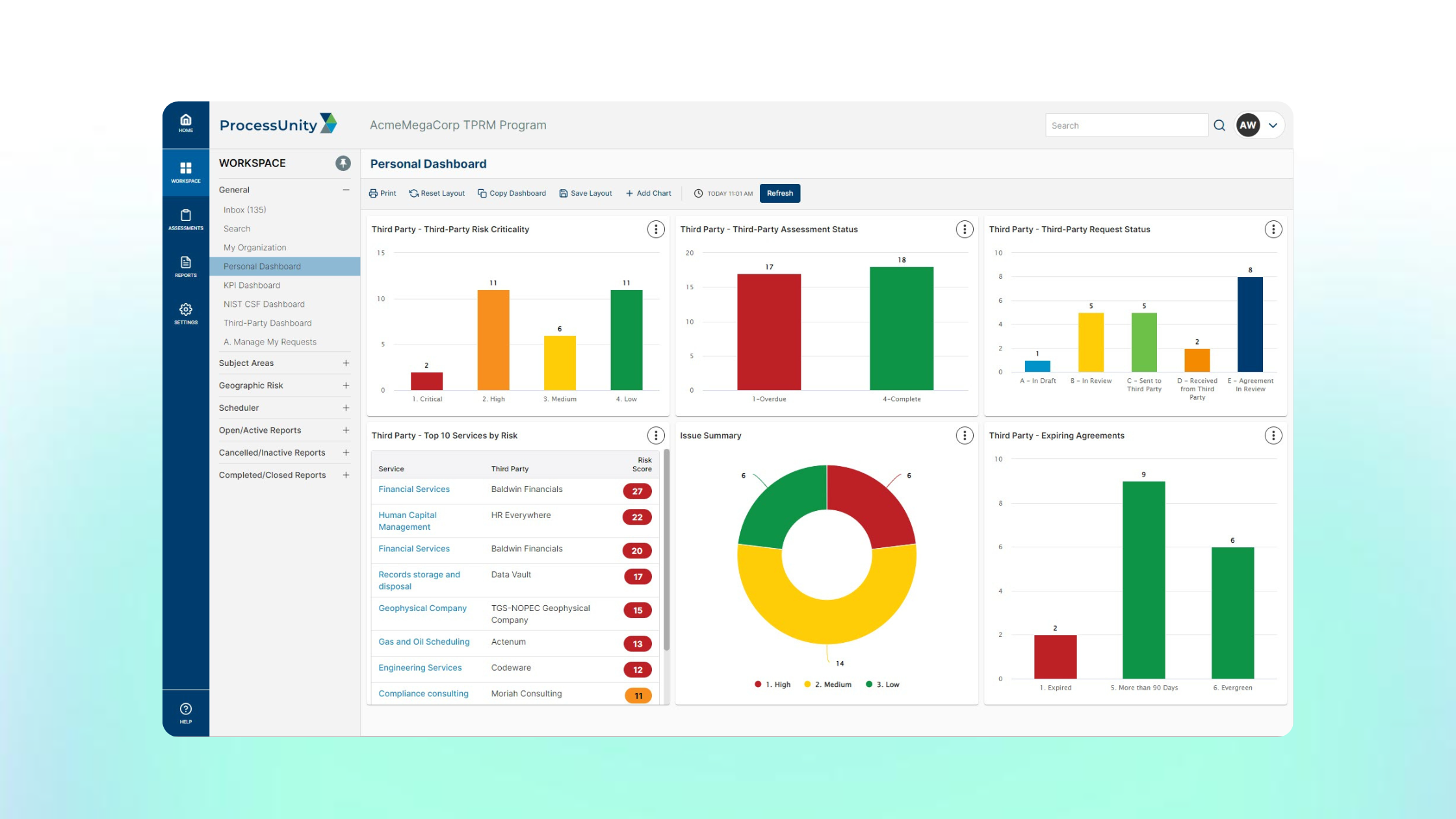
ProcessUnity is a configurable enterprise TPRM platform built around a shared risk data exchange that gives some visibility into a vendor before a full assessment is run.
Strengths
Configurability lets programmes match complex regulatory and internal policy requirements
The shared exchange gives visibility into a vendor before a full assessment completes, reducing some duplicate work
Reviewers consistently praise support quality and response times
A threat and vulnerability response module ties external intelligence to fourth-party mapping
Worth knowing
The exchange is closer to a shared data pool than a profile any one supplier actively owns and keeps current
Advanced reporting can require specialist administrators
Best use case: mature enterprise programmes with dedicated TPRM resource that need deep configurability.
Risk Ledger: best for supplier-verified evidence and supply chain visibility
Every scanning-led platform above shares the same structural limit in one form or another: dependency and fourth-party data is inferred from the outside, and where a vendor profile exists, it's typically a document set one supplier maintains and each client reviews individually against its own criteria. Risk Ledger starts from a different premise. Suppliers complete one assessment against a standardised control framework, that same assessment is reused across every connected client relationship, and because clients and suppliers sit on the same network, and many suppliers are themselves clients running their own supplier assessments, real chains of connection emerge structurally rather than being inferred from external scanning.
Strengths
Suppliers maintain one profile assessed against a common framework, applied the same way by every client, rather than reviewed ad hoc against each client's own criteria
Supply chain mapping is built automatically from the network itself: because suppliers are frequently also clients assessing their own suppliers, genuine chains of connection surface without relying on external inference, reinforced further by suppliers now also naming their own critical third parties directly within the assessment
Suppliers can join and maintain profiles free of charge, removing a common barrier to participation
Peer communities let groups of organisations in the same sector collaborate on shared supply chain visibility, not just individual client-supplier pairs
Worth knowing
Built specifically for security-led supplier assurance, so teams whose main need is consolidating privacy, audit and enterprise risk into one platform may find a broader GRC suite a better core fit
The assessment framework is standardised to keep supplier data comparable across the network, so fully bespoke, per-supplier questionnaires aren't the model
G2's own head-to-head data shows reviewers rated Risk Ledger easier to use and administer than BitSight, but still preferred doing business with BitSight overall, worth weighing alongside the rest of this guide rather than taken as a single verdict
Best use case
Security-led teams that need supplier-verified evidence, reduced duplicate assessment work, and visibility into nth-party dependencies built from real network connections rather than external inference.
See how Risk Ledger compares in practice
If reusable supplier evidence, direct network-derived dependency mapping and reduced supplier fatigue are priorities for your programme, see how Risk Ledger would support your requirements.
Most often compared: BitSight vs SecurityScorecard
These are the two platforms most often compared directly, since both lead with daily-updated outside-in ratings and sit at the top of Forrester's Cybersecurity Risk Ratings Wave.
BitSight
Its strength is finding depth. SSL, DMARC and DKIM configuration issues get flagged with real specificity, and reviewers consistently praise how findings are organised by severity.
Its weak point is timing and transparency: reviewers report a score staying flat for a while after the underlying issue is actually fixed, and the scoring mechanism itself has limited transparency.
SecurityScorecard
Its strength is peer benchmarking, seeing a score against others in the same sector, plus a faster setup with no installation.
Its weak point is accuracy: asset misattribution is the most consistently cited complaint, and disputed findings can take time to resolve.
One pattern carries across both. Fourth-party relationships are inferred from external signals in both platforms, not confirmed by the supplier itself, and where each offers a shared vendor profile layer, it's a document set reviewed individually by each client rather than a standard every client applies the same way.
If score transparency or an unexplained rating change is part of why you're comparing these two, test that directly with whichever one you shortlist. Switching from one to the other doesn't automatically solve it, since the underlying method is the same.
Where Risk Ledger takes a different approach
Both platforms score what a scan can see from the outside, and neither knows whether a flagged issue is already fixed or how critical that supplier actually is to your business specifically. Risk Ledger's supply chain map works differently too: because clients and suppliers sit on the same network, and suppliers are frequently clients in their own right, dependencies emerge from real connections rather than external inference.
Which BitSight alternative fits which team?
"Our score keeps getting dinged by things that aren't ours."
This is the misattribution problem, and it shows up across every ratings platform in this guide, not just BitSight. SecurityScorecard, UpGuard and Black Kite all infer external findings the same way, so switching between them won't fix it.
Risk Ledger is the fit here: suppliers verify their own assets and complete their own assessment directly, so a client team isn't left chasing down whether a flagged finding is even accurate.
"We need portfolio-wide coverage and don't want to rely on supplier cooperation."
BitSight and SecurityScorecard are both built specifically for this. Neither needs a vendor to participate for a score to exist, which is the point if your priority is instant, universal coverage over depth on any one supplier.
"We need to see past our direct suppliers, to who they actually depend on."
BitSight, SecurityScorecard, UpGuard, Black Kite and Panorays all infer fourth-party relationships from scanning. Risk Ledger's map is built differently: because suppliers and clients sit on the same network, and suppliers are often clients assessing their own suppliers, connections surface structurally rather than being inferred, and suppliers now also name their own critical third parties directly.
"We spend too much time chasing suppliers for information they've already given someone else."
None of the pure ratings platforms solve this, since they score from outside rather than relying on supplier response. Risk Ledger was built specifically for this: a supplier maintains one profile reused across every connected client, so there's less chasing and faster responses because the supplier isn't starting from zero.
"We want to translate supplier risk into a financial figure for the board."
Black Kite is the clear fit, with Open FAIR-based modelling and named risk indices built specifically for that conversation.
"Third-party risk needs to sit inside a much wider compliance or GRC programme."
OneTrust or ProcessUnity, depending on how much configurability you need versus how much breadth. Test both on reporting depth and admin overhead before committing.
"We just want a fast, board-legible rating and nothing more complex than that."
BitSight or SecurityScorecard, both built primarily for this. Neither is trying to be a full TPRM lifecycle tool, which is a reasonable thing to want if it's genuinely all you need.
Why organisations choose Risk Ledger
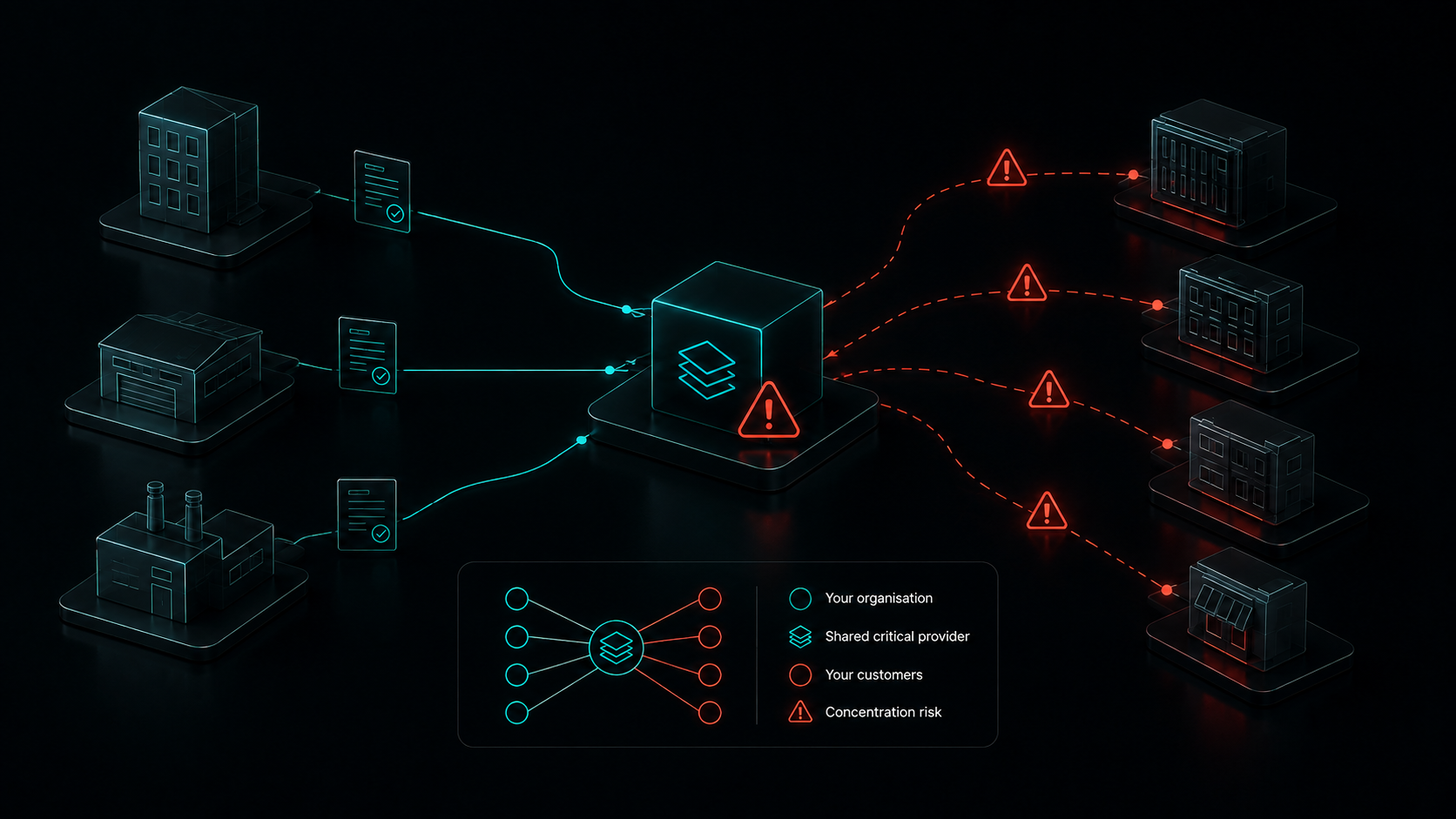
Every platform in this guide, ratings or GRC, treats supplier risk as one-to-one. A team assesses a supplier, that supplier gets scored or scanned, then the process resets for the next supplier and the next client who asks the same questions again.
Risk Ledger starts from a different fact: the same supplier is very often being assessed by dozens of other companies at the same time, using slightly different questionnaires, for essentially the same information.
We built a network so a supplier does that once. A supplier builds one profile on Risk Ledger, and that profile gets reused across every connected client relationship, instead of being rebuilt from scratch each time someone new asks.
That single design choice changes two things a scan-based rating can't touch. When a supplier updates their evidence, every client they're connected to sees that update, not just the one who happened to ask. And because clients and suppliers sit on the same network, and many suppliers are themselves clients assessing their own suppliers, the platform surfaces real chains of connection automatically, reinforced further by suppliers now naming their own critical third parties directly within the assessment. That's a structurally different source of dependency data to a scan guessing from public internet signals.
"We're the data pipe. We're not the ones making the judgement, we're devolving that down to each organisation on the platform to judge for themselves how secure they want their suppliers to be." - Haydn Brooks, CEO, Risk Ledger
A rating platform hands down a single grade, whereas Risk Ledger hands over the supplier's verified evidence and lets each client apply their own policy and criticality on top of it, which is a genuinely different model, not a stricter version of the same one.
Risk Ledger combines supplier-maintained evidence with network-derived dependency mapping, helping security teams understand both supplier controls and where wider supply chain exposure may sit. See how it works here.
How to shortlist and switch without starting from scratch
Picking a platform is the easy part. What actually determines whether a switch works is the same for every option in this guide: how much effort it takes to get there, and whether your suppliers come with you.
Map what you're actually trying to fix first
Score transparency, missing nth-party visibility, board reporting gaps and supplier fatigue each point to a different platform above. Trying to fix all four at once with one tool is how teams end up disappointed six months in.
Test the specific complaint, not the demo
If score lag or transparency was your trigger, ask to see how a ratings platform explains a specific finding, not just the headline score. If supplier fatigue was the trigger, ask how long it takes a supplier who's new to the platform to complete their first assessment, not how fast your team can send a questionnaire.
Plan for supplier migration, not just data migration
Moving your own records is the easy part. Getting suppliers to actually engage with a new platform, especially ones who've already filled in a dozen versions of the same form for other clients, is where switches stall. Ask any vendor what onboarding looks like from the supplier's side, not just yours.
Check what happens to historical assessment data
Some platforms let you import prior questionnaire responses; others don't. If your suppliers have already answered these questions somewhere, losing that on switch is its own hidden cost.
Run a small pilot before a full rollout
Pick a handful of suppliers, a mix of easy and difficult ones, and run the full assessment cycle before committing your whole portfolio. This surfaces onboarding friction faster than any sales conversation will.
No platform solves every one of these at once. The right choice is the one that solves your actual bottleneck without introducing a new one somewhere else.
At a glance
BitSight alternatives: best for, evidence model, watch for
Every ratings platform here shares the same structural limit in one
form or another. This table is the fastest way to see where.
BitSightBest forPortfolio-level ratings at enterprise scaleEvidence modelInferred (outside-in), plus a client-reviewed vendor profileWatch forScore lag after a fix; limited scoring transparency
SecurityScorecardBest forRatings with peer benchmarking and threat intelligenceEvidence modelInferred (outside-in)Watch forAttribution disputes and resolution time
UpGuardBest forRatings and questionnaires in one productEvidence modelInferred + supplier questionnaireWatch forLimited reporting customisation
ProcessUnityBest forHighly configurable enterprise TPRMEvidence modelShared pool, not one owned profileWatch forOngoing configuration overhead
Risk LedgerBest forSupplier-verified evidence and network-derived nth-party visibilityEvidence modelSupplier-declared, standardised frameworkWatch forStandardised framework, not fully bespoke
Practical decision rule
If "evidence model: inferred" is the recurring line above, that's the
structural limit every ratings platform shares, switching between
them won't change it. Supplier-declared evidence built on real
network connections is the row that answers that specific gap; the
rest of the choice comes down to scope and appetite for admin
overhead.
Practical decision rule
If "evidence model: inferred" is the recurring line above, that's the structural limit every ratings platform shares, switching between them won't change it. Supplier-declared evidence built on real network connections is the row that answers that specific gap; the rest of the choice comes down to scope and appetite for admin overhead.
BitSight alternatives FAQs
What are the most common BitSight alternatives security teams evaluate?
SecurityScorecard comes up most often as a direct comparison, since both platforms lead with daily-updated outside-in ratings and sit at the top of Forrester's Cybersecurity Risk Ratings Wave. UpGuard, Black Kite, Panorays, OneTrust, ProcessUnity and Risk Ledger tend to enter the conversation when a team wants a different operating model entirely, not just a different ratings provider.
Why does a BitSight score sometimes lag behind a fix that's already been made?
Reviewers report that BitSight's rating can stay flat for a period after the underlying issue has genuinely been resolved. This is a common limitation of scan-based scoring generally, since a rating depends on when and how frequently the platform re-scans, rather than updating the moment a fix goes live.
Is a security rating enough on its own, or do I need a full TPRM programme too?
A rating is a useful signal, not a complete programme. It tells you what an external scan can see, not whether a supplier's internal controls are sound or how critical that supplier actually is to your business. Most mature programmes pair a rating or monitoring signal with structured assessment and supplier engagement rather than relying on either alone.
Can I see risk beyond my direct suppliers with BitSight, or do I need another platform?
BitSight's Fourth-Party Risk Management module does map relationships beyond direct suppliers, but it builds that map from external, observable data rather than suppliers declaring their own dependencies. Some platforms take a different approach, using real client-supplier connections already on their network, or suppliers naming their own critical third parties directly, as the source of that visibility instead.
Do vendor risk platforms reduce supplier fatigue, or just digitise the same process?
It depends on the model. Platforms built around individual client-supplier assessments, and most ratings and GRC tools, still mean a supplier fills in broadly similar information for every client that asks. Platforms built around a supplier-owned profile reused across client relationships are designed specifically to reduce that repetition.
.png)




.svg)