October 22, 2026
・
mins read
.png)
Most teams arrive here with a specific trigger, such as a supplier disputing their grade, findings pinned on assets that aren’t theirs, or a renewal date coming up. The same pressures apply whether or not you run SecurityScorecard today, and each one points to a different type of tool.
The alternatives covered in this guide
Rating tools
Combined questionnaire-and-scanner tools
TPRM and GRC suites
Supplier network
How we compared: we drew on G2, Gartner Peer Insights and Trustpilot reviews for each platform, and on each vendor’s own product pages for capability claims.
Security ratings score a supplier from externally visible signals, whereas full third-party risk management also gathers evidence about a supplier’s internal controls and manages the work of assessing, tracking and remediating risk. Ratings alone suit light-touch reviews and board reporting. They cannot see controls beyond what is visible from the internet, so many teams pair them with supplier-assessed evidence.
A security rating is an automated grade built from what a scan can observe about an organisation from outside, such as email and certificate configuration, exposed services, patching signals and leaked credentials. That makes it fast and repeatable across hundreds of suppliers, and it needs nothing from the supplier.
The limit sits in the same place as the strength. A scan only sees the internet-facing estate it can attribute to a supplier, and that is often a marketing site rather than the applications your teams actually use. It can’t see access control, backup testing, incident response or how a supplier manages its own suppliers.
A questionnaire covers part of that blind spot, because the supplier describes its internal controls directly. It’s still a declaration, not proof. Public sector buyers we speak to make the same point, describing a better questionnaire as something different from validation. The distinction matters more now that AI tools draft answers on the supplier side and review them on the customer side. When both ends are automated, it's best to check is whether a supplier’s answers line up with independent evidence, such as certifications, policy documents, test results and what external monitoring shows.
To weigh the wider category, we broke down the difference between external scanning and continuous assurance here.
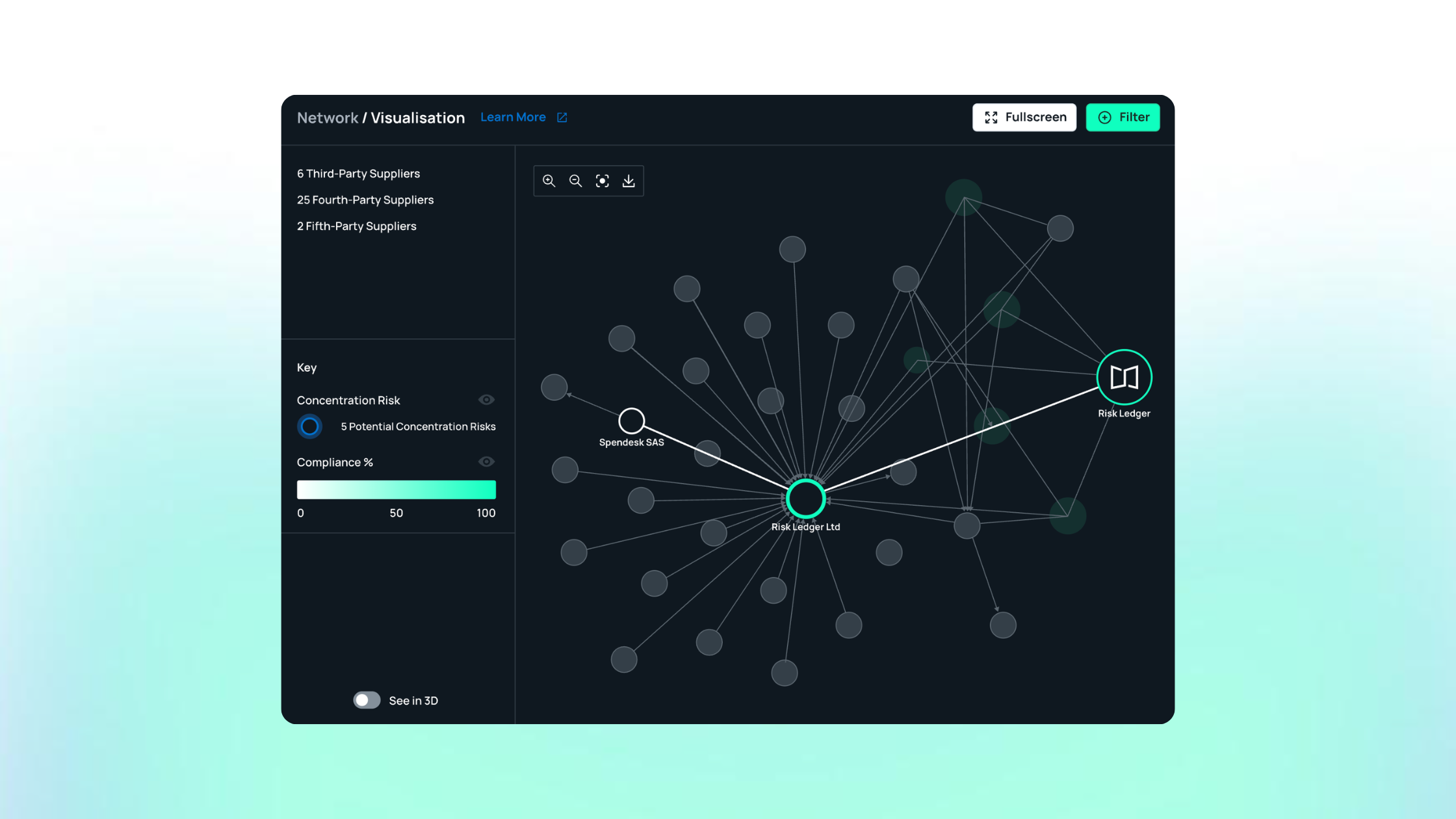
Visibility beyond direct suppliers comes from two sources. Inferred dependencies are worked out from external signals, such as which hosting, email or software providers a supplier’s internet-facing assets appear to use. Declared dependencies are stated by the supplier, which names the providers its service actually relies on.
Each has a trade-off.
Dependencies two steps away cause real damage. When the MOVEit Transfer vulnerability was exploited in 2023, staff data at British Airways, the BBC and Boots was exposed through their payroll provider Zellis, which used the software. None of the three needed to run MOVEit themselves.
Both sources feed concentration risk, the exposure created when many of your suppliers rely on the same provider. Financial services teams we speak to describe seeing nothing past their direct suppliers until that map exists, which leaves concentration risk invisible.
SecurityScorecard competitors differ most in where their evidence comes from. Rating tools score suppliers from outside-in scans, combined tools add supplier questionnaires, TPRM suites manage assessment workflows around supplier answers, and a supplier network relies on profiles suppliers maintain themselves. The table below compares all ten platforms on those terms, with what to test in a trial.
The most common reasons are false positives, findings pinned on assets a supplier doesn’t own, score changes that arrive with little explanation, and suppliers who dispute the grade instead of fixing the issue. Most of these come from otherwise satisfied users, so they describe day-to-day friction rather than a broken product.
SecurityScorecard remains a widely used ratings platform, and many of the same reviewers praise its ease of use and support.
A rating is only as accurate as its asset attribution, the step that decides which domains, IP addresses and hosts belong to which organisation. Users trace attribution errors to the same handful of causes: parked domains, cloud IP ranges that change hands, shared hosting and guest Wi-Fi. One Trustpilot reviewer evaluating vendors described “probably thousands of false positives” from cloud platforms.
The knock-on effect is easy to picture. A parked domain on shared hosting gets attributed to a supplier, and its grade drops. The supplier disputes it, but by the time the dispute is settled, the lower grade is already in the board pack.
Most outside-in ratings attribute assets in a similar way, so test this on your own domains with any vendor you shortlist.
A single grade is easy to report and hard to act on. When it moves, teams need to know which signal changed and why. G2 reviewers say some scoring factors feel subjective, with limited evidence behind them. Security leaders we speak to put it in practical terms: a number with no explanation behind its movement doesn’t tell a CISO what to do next.
Once a supplier disagrees with a finding, the conversation turns to the score instead of the fix. It gets harder when different tools grade the same supplier differently, which G2 reviewers say creates competing priorities and awkward conversations with third parties. Fixes move faster when both sides look at the same evidence, the supplier adds context, and you agree the remediation together.
Continuous monitoring means a continuous stream of changes, and each one needs someone to judge whether it matters. One G2 reviewer said following up every variation would take a dedicated person. Others describe struggling to manage portfolios of hundreds of suppliers, and where licensing scales with supplier count, coverage tends to stop at the top tier.
Ratings tools have three real advantages over our approach. They score any organisation without that organisation doing anything, they give boards a simple grade, and the leading vendors go deeper on external scanning and asset discovery than we do. For light-touch reviews and board snapshots, a score is often all a team needs.
This is the strongest case for a ratings tool, and the objection we hear most often. A rating needs no questionnaire, no login and no response from the supplier. Coverage starts on day one and can include suppliers you haven’t signed yet. Our network model works differently because it depends on suppliers taking part. Asking for one shared profile is lighter than sending another questionnaire, but that participation still has to be earned supplier by supplier. [Customer proof needed: supplier network coverage figure and how it’s counted]
For light-touch reviews, many teams want an easily reportable external metric, and a letter grade travels well into a board pack or an insurance conversation. It’s quick to compare across a portfolio, and you don’t need a security background to read it. Its value holds for as long as nobody needs to ask why it changed.
Buyers who chose Black Kite, Bitsight or UpGuard over us often cited better scanning, and that’s a fair comparison today. Dedicated ratings vendors put their engineering into finding and testing internet-facing assets. Our focus is the supplier evidence and dependency data a scan can’t reach. If external scanning depth is your main criterion, a ratings tool belongs on your shortlist.
A score is enough when the decision depends only on external hygiene. That covers:
It falls short for critical suppliers. There you need evidence about internal controls, a record of findings and fixes, and a view of who the supplier depends on. External scanning tells you when something on the internet changes. It doesn’t tell you whether a supplier’s controls still work, which is why many teams run a rating alongside supplier assessment rather than choosing one.
SecurityScorecard is a security ratings company that grades organisations from A to F using externally visible data, and it now sells a wider third-party risk platform built on those ratings. In March 2026 it relaunched that platform as TITAN AI, which adds questionnaire workflows and threat-informed remediation alongside its ratings.
It’s an established, widely used provider, and many reviewers rate it highly for ease of use and support. Whether it suits you depends on whether a rating, even with questionnaires added, gives you the evidence you need.
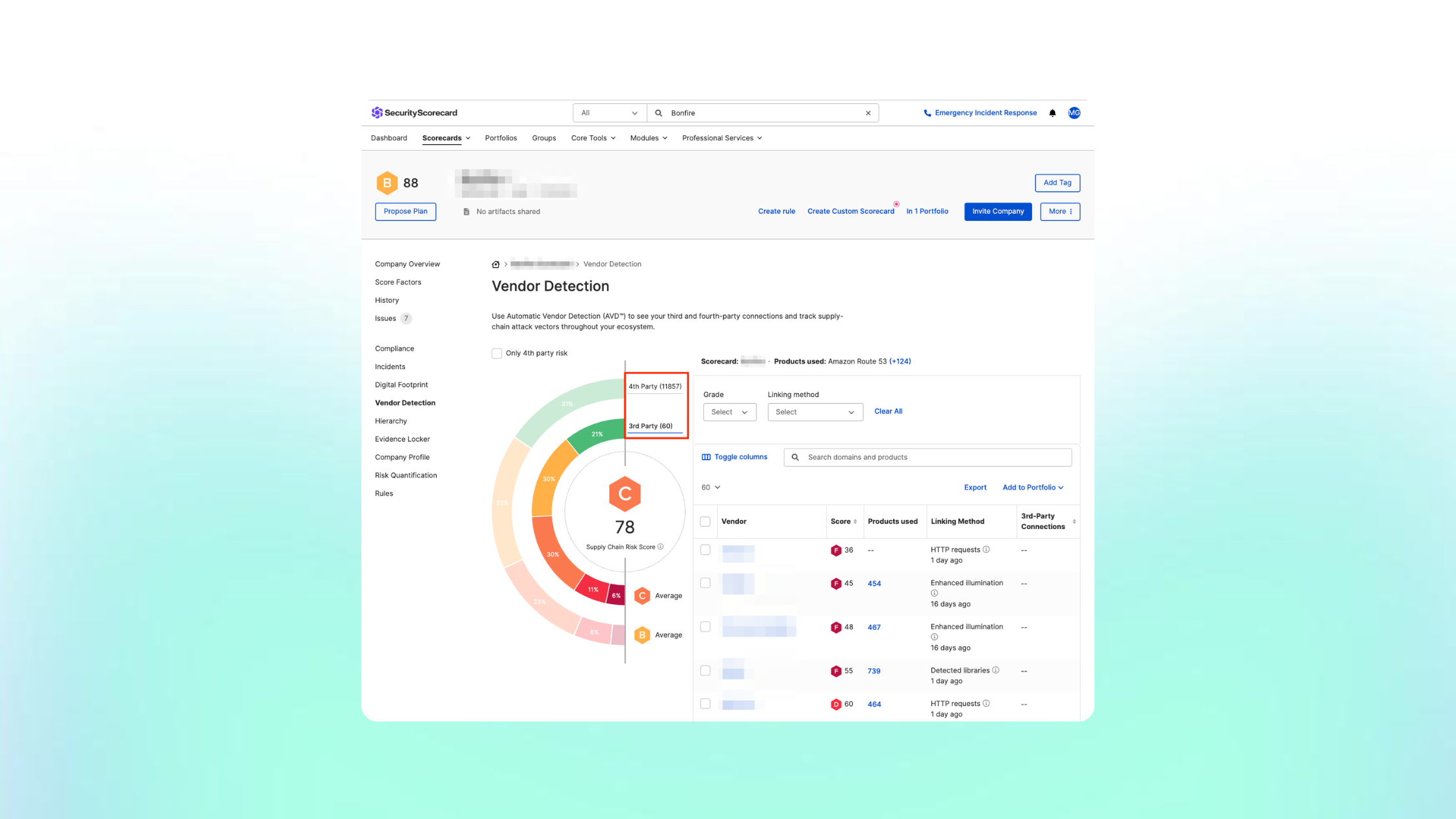
SecurityScorecard suits teams that want a fast, board-legible external rating with peer benchmarking, and may want to add questionnaires in the same platform later. Test attribution accuracy on your own domains before relying on the grade.
Bitsight is a security ratings platform that, like SecurityScorecard, scores suppliers from outside-in scanning without needing their cooperation. The most visible difference is presentation: Bitsight rates on a 250 to 900 numeric scale, where SecurityScorecard uses an A to F grade. Buyers who have chosen between them often cite Bitsight’s scanning depth.
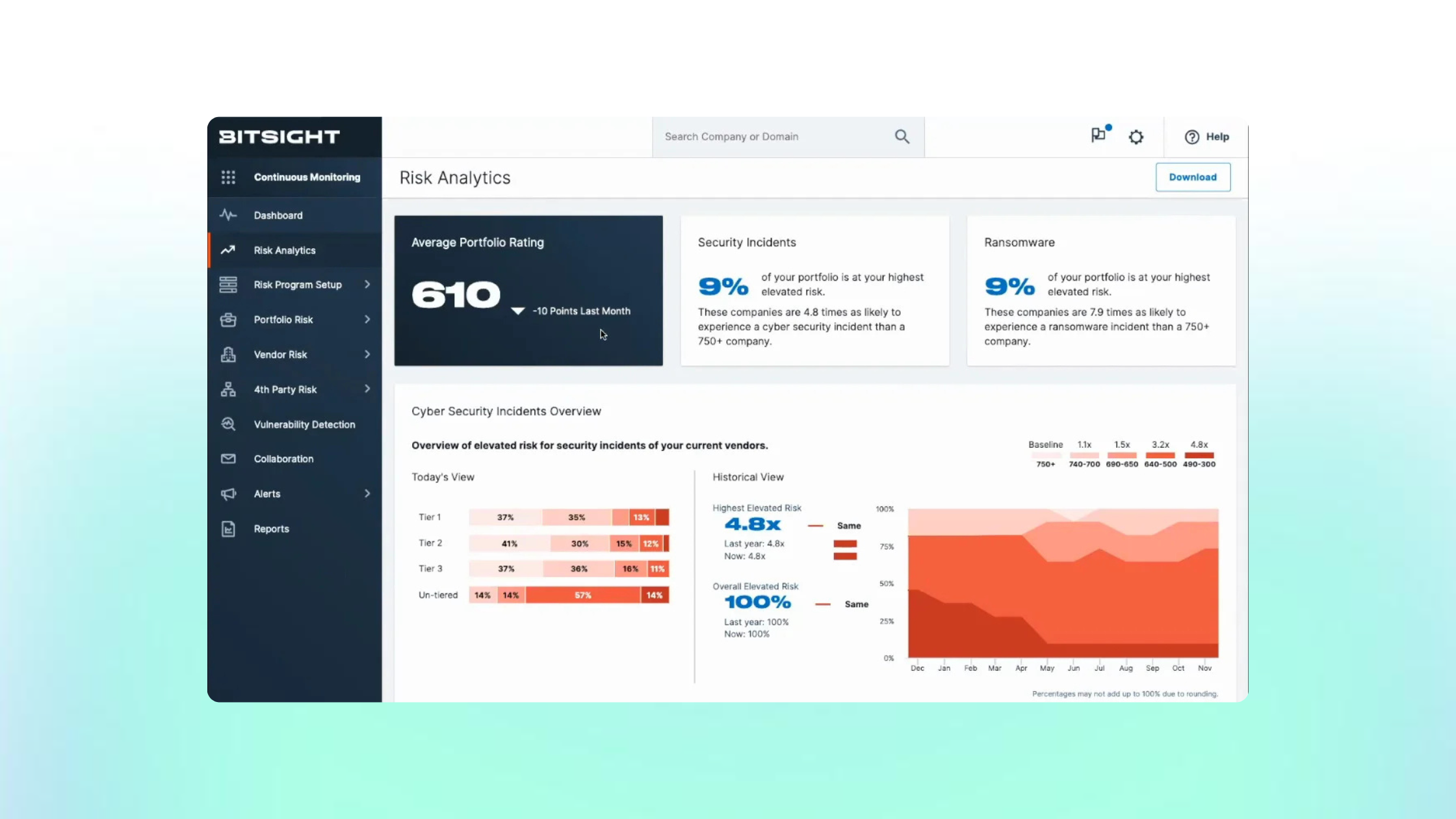
Large enterprises that need portfolio-wide ratings with genuine technical depth behind each score, and have the internal capacity to interpret a less board-intuitive numeric scale.
For more options, see Bitsight alternatives compared.
UpGuard is a vendor risk platform that combines external security ratings with a questionnaire module in one product. Now that SecurityScorecard sells questionnaires through TITAN Assess, the two overlap more than they used to. The comparison comes down to reporting, questionnaire depth and how each handles attribution.
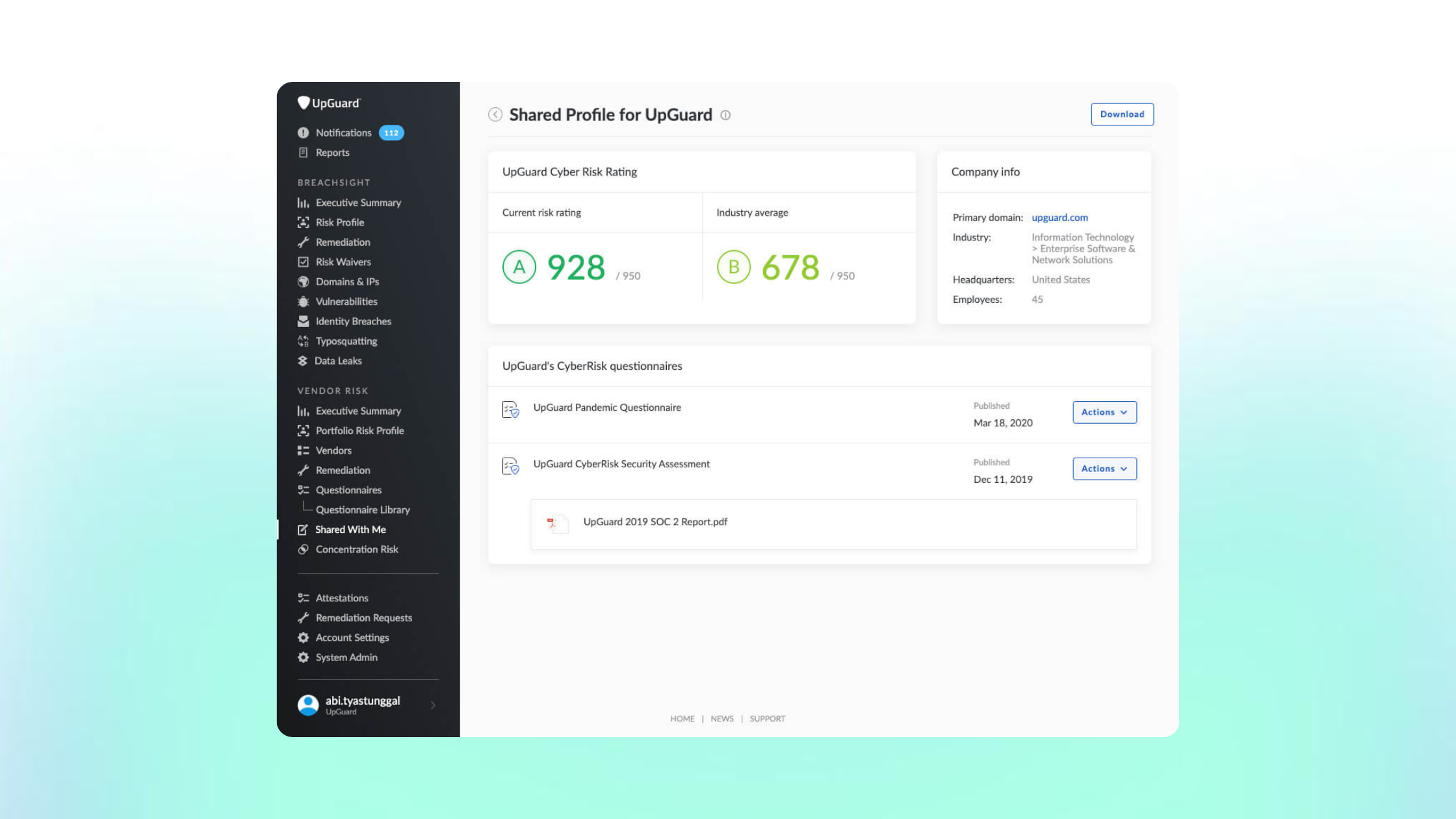
Teams that want ratings and questionnaires in one product rather than two, and don't need heavily customised reporting.
For more options, see UpGuard alternatives compared.
Black Kite is a third-party cyber risk platform that pairs outside-in ratings with automated financial-impact modelling based on the Open FAIR methodology. Teams that need to put a monetary figure on supplier risk tend to shortlist it for that, and some buyers have chosen it for its scanning.
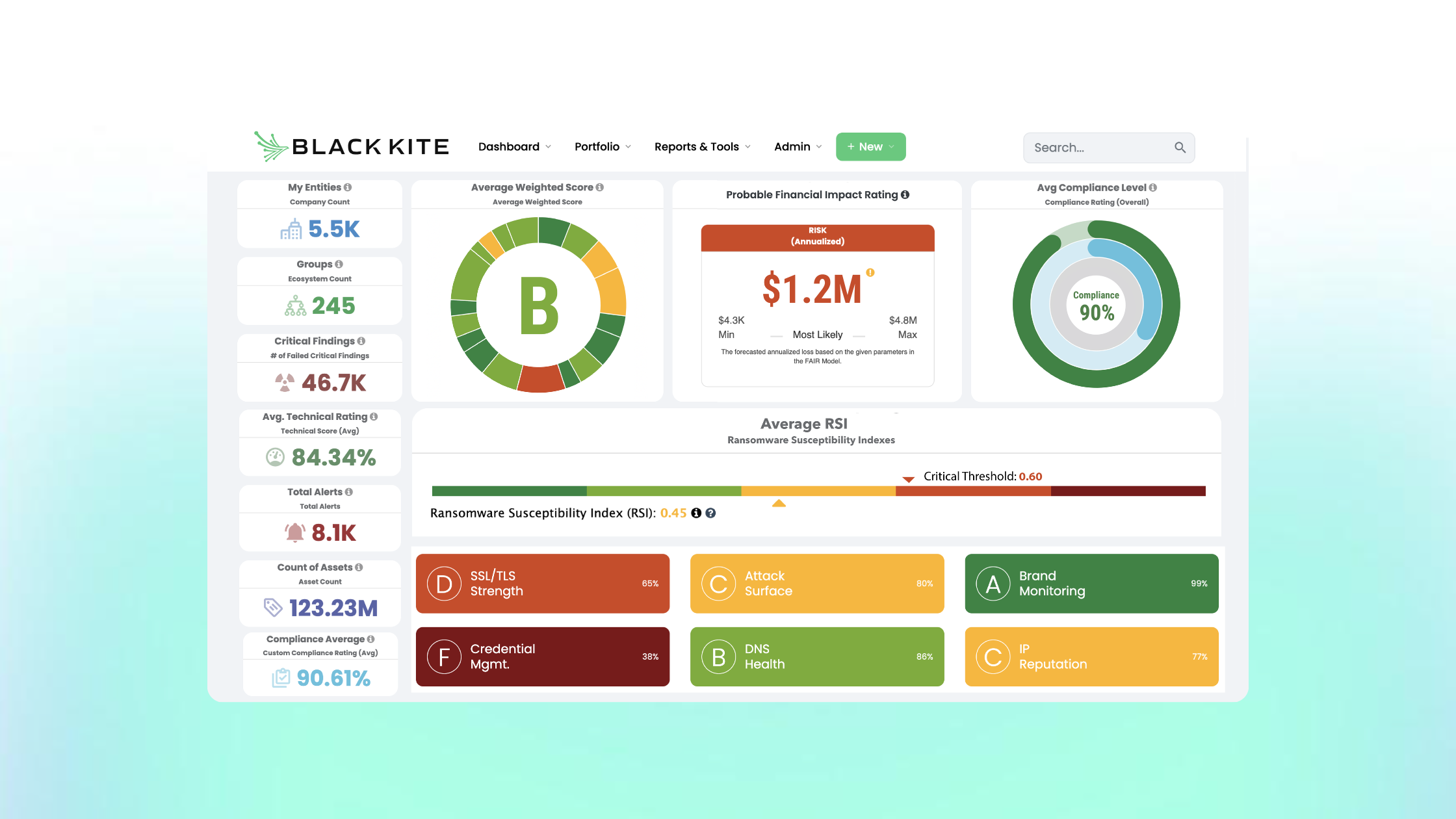
Teams that need to justify supplier risk decisions in financial terms to a board or insurer, more than teams whose main need is day-to-day monitoring depth.
Panorays is a third-party risk platform that combines automated supplier questionnaires with external attack-surface scanning, and it often appears on shortlists alongside SecurityScorecard. Whether it suits you depends on whether you want a rating alone or a workflow that also covers supplier assessment.
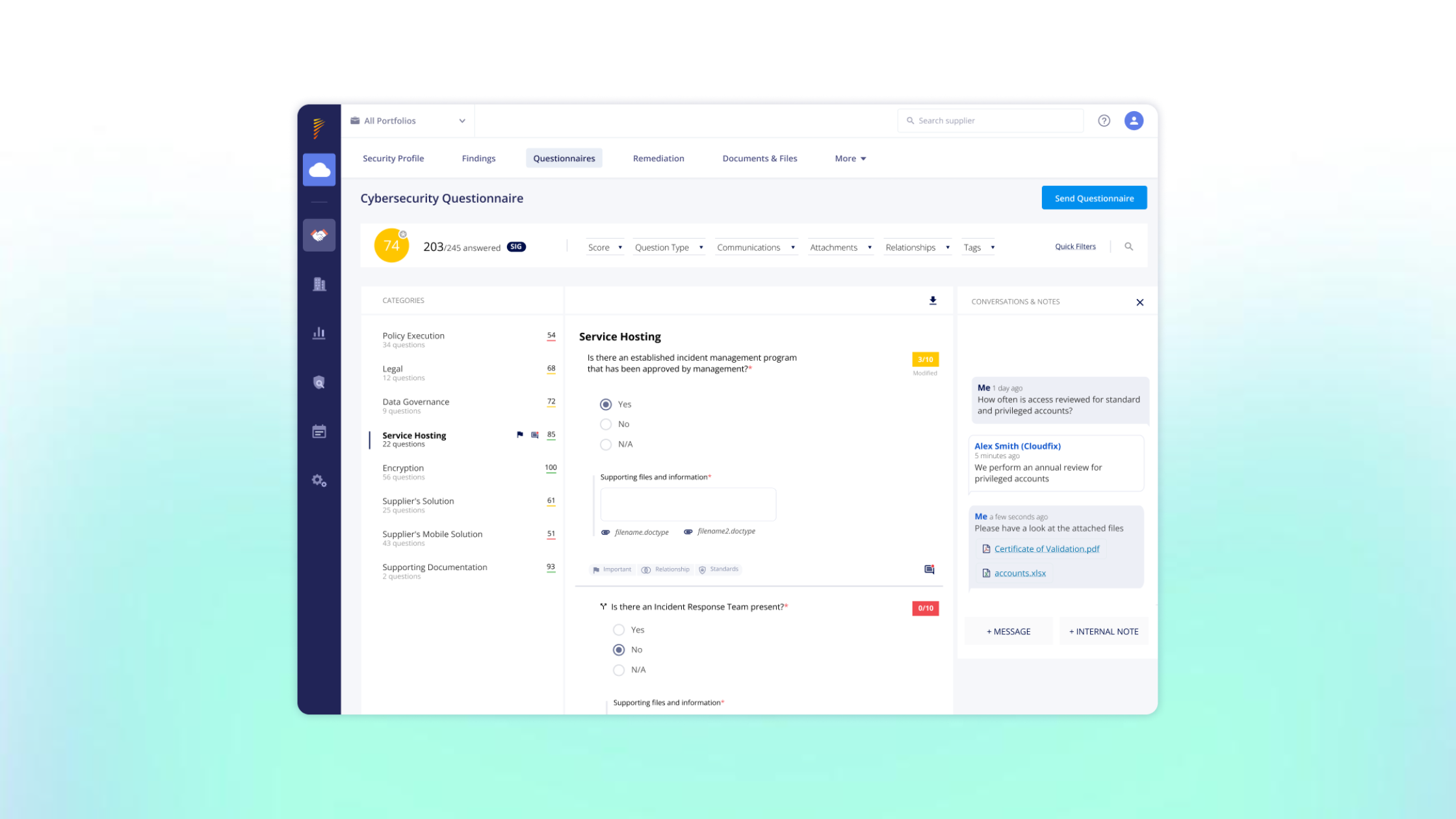
Mid-sized teams that want assessments and scanning combined in one workflow, without a large internal admin function to manage role complexity.
OneTrust is a broad governance, risk and compliance platform rather than a dedicated security ratings tool. Teams usually evaluate it alongside SecurityScorecard rather than as a like-for-like replacement. It fits best where third-party risk has to sit inside a wider privacy and compliance programme.
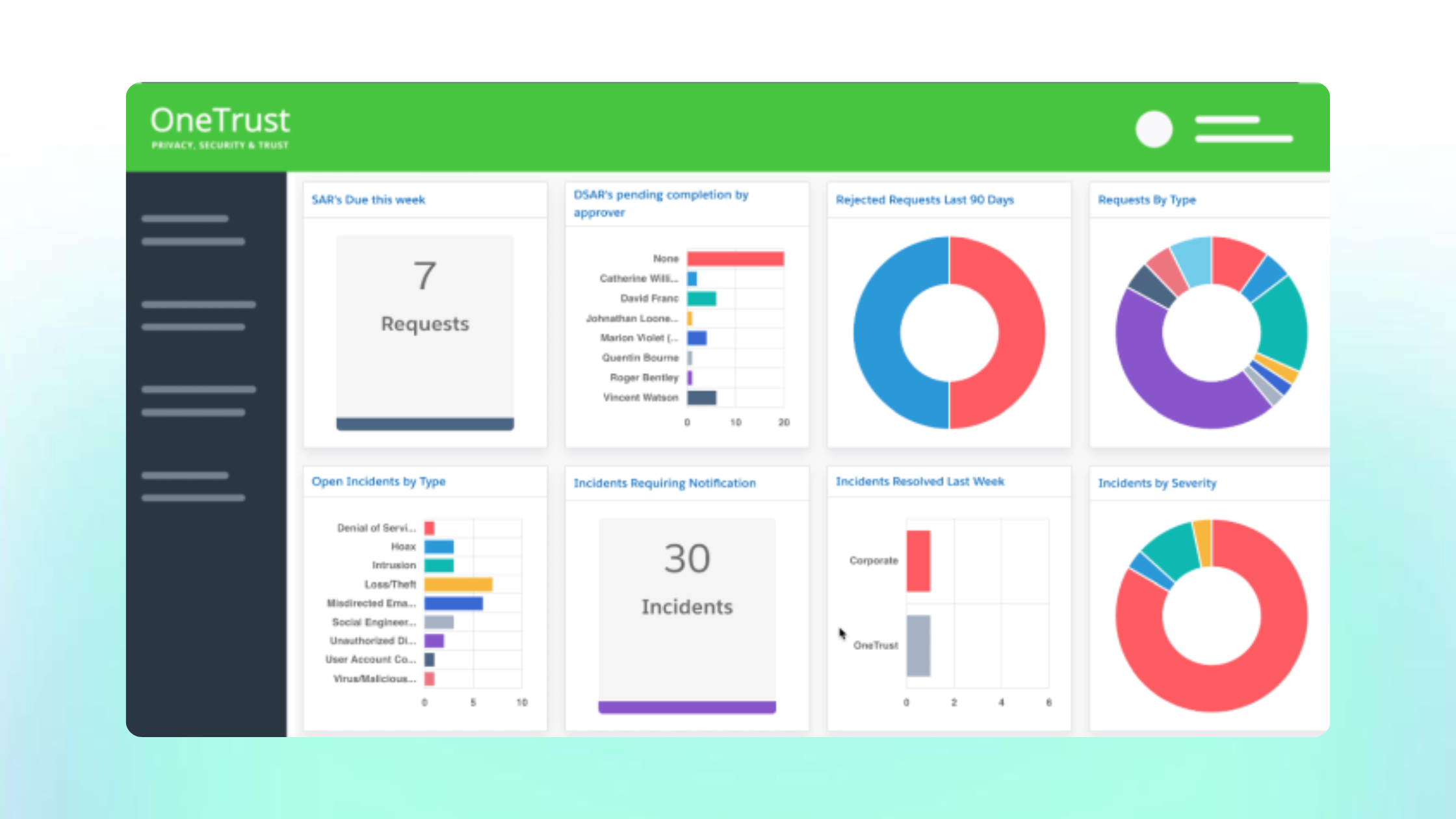
Organisations that need third-party risk to sit inside a much wider governance and compliance programme, and have the resource to manage that scope.
ProcessUnity is a third-party risk management workflow platform, so it solves a different problem from a ratings tool like SecurityScorecard. It acquired CyberGRX in 2023 and runs the Global Risk Exchange, a shared library of completed vendor assessments, alongside its configurable workflows. Teams replacing an incumbent TPRM system often consider it.
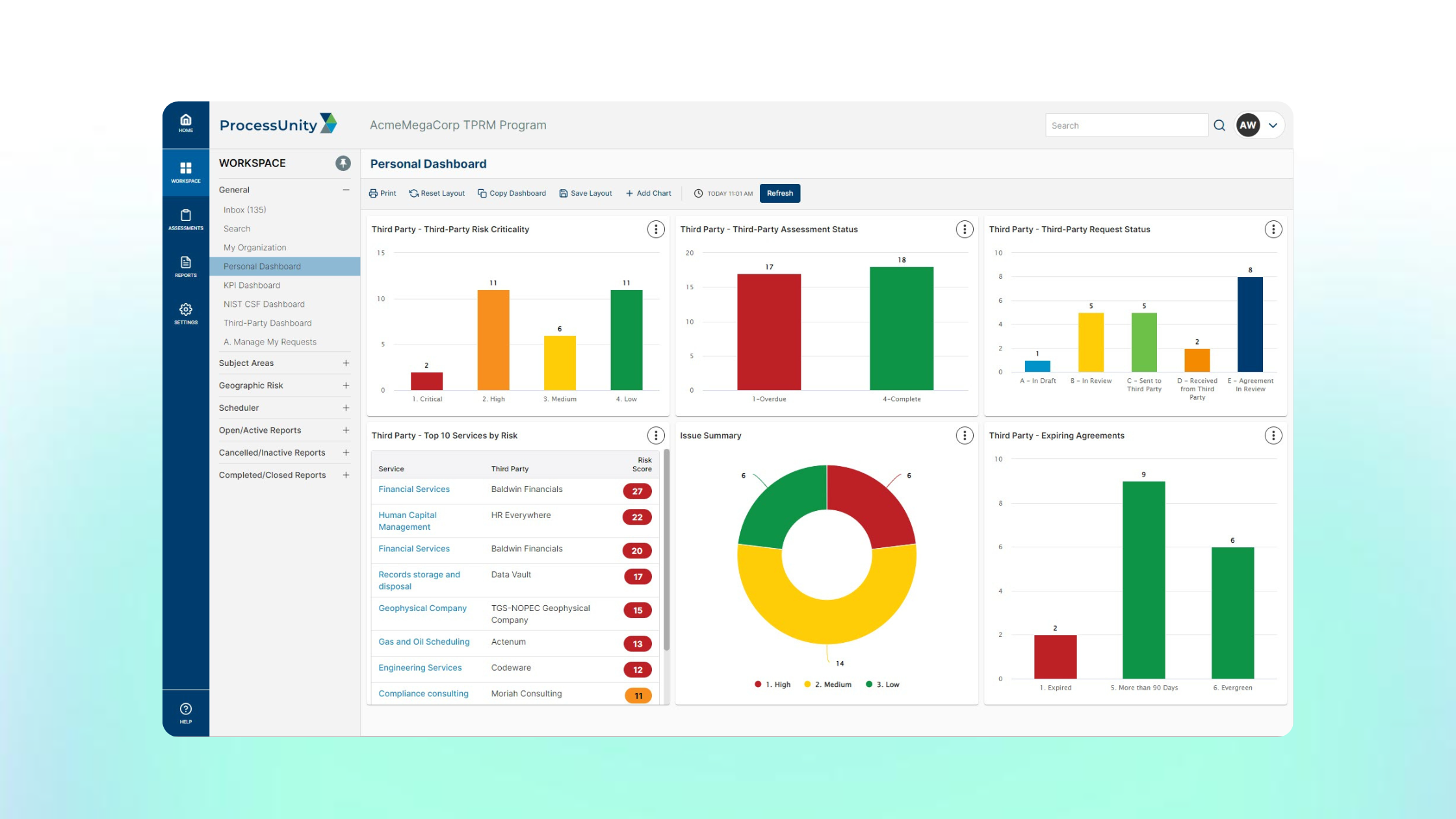
Mature enterprise programmes with dedicated TPRM resource that need deep configurability more than out-of-the-box simplicity.
RiskRecon is an external security ratings and asset discovery tool, so it competes directly with SecurityScorecard on outside-in scanning. Buyers raise it mainly as a scanning-depth comparison. Like other ratings tools, it can’t see a supplier’s internal controls.
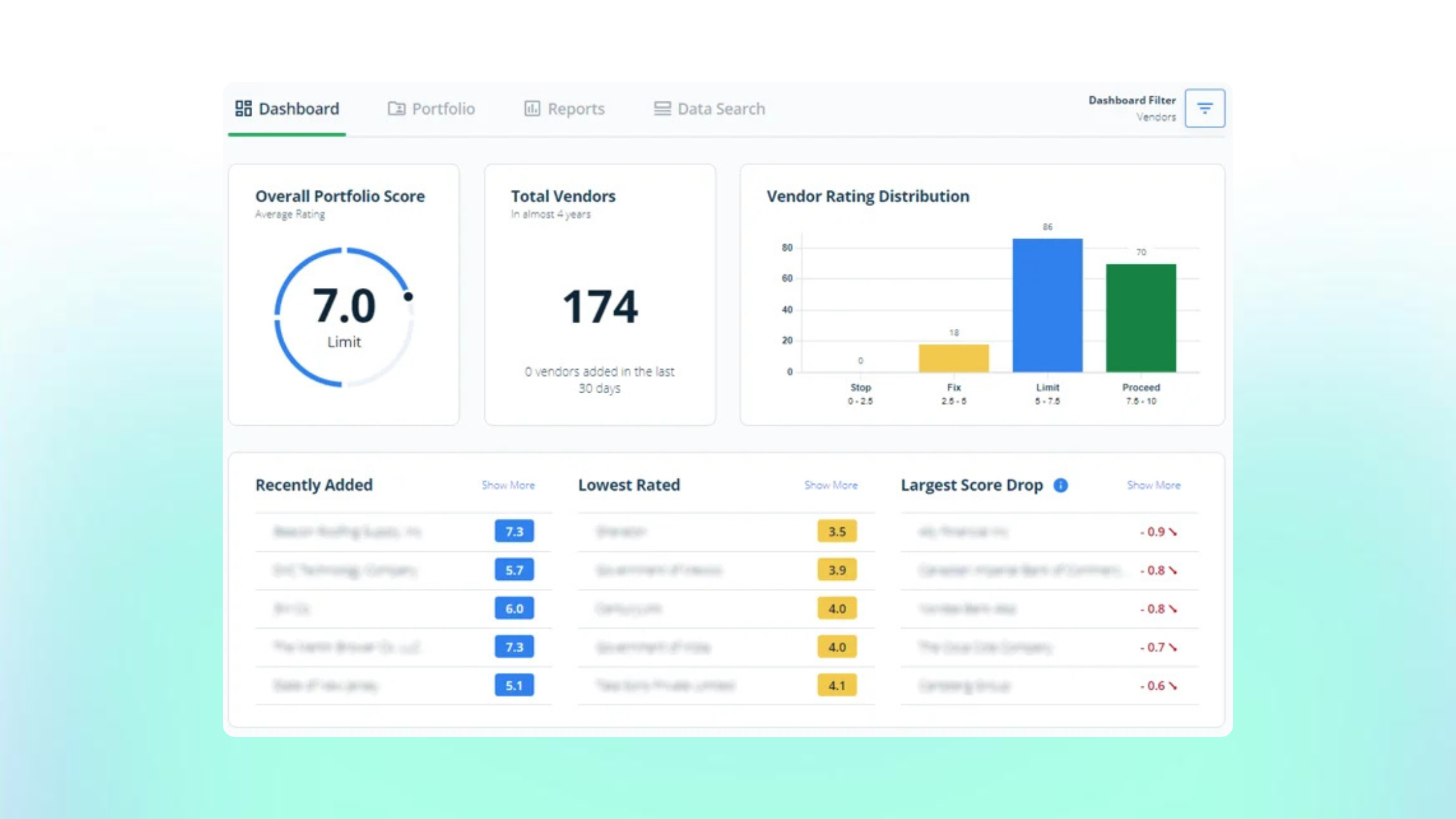
RiskRecon suits teams that want accurate external findings, ranked by what matters most to them, and already have a separate workflow or GRC tool for assessments. Its ServiceNow integration makes it a natural fit where findings are tracked as issues there.
Mitratech Prevalent is a third-party risk management platform that appears regularly on the same shortlists as SecurityScorecard. It covers the full supplier lifecycle rather than ratings alone. Prevalent combines standardised assessments, continuous monitoring and remediation management from onboarding to offboarding, with managed services available for teams short on headcount.
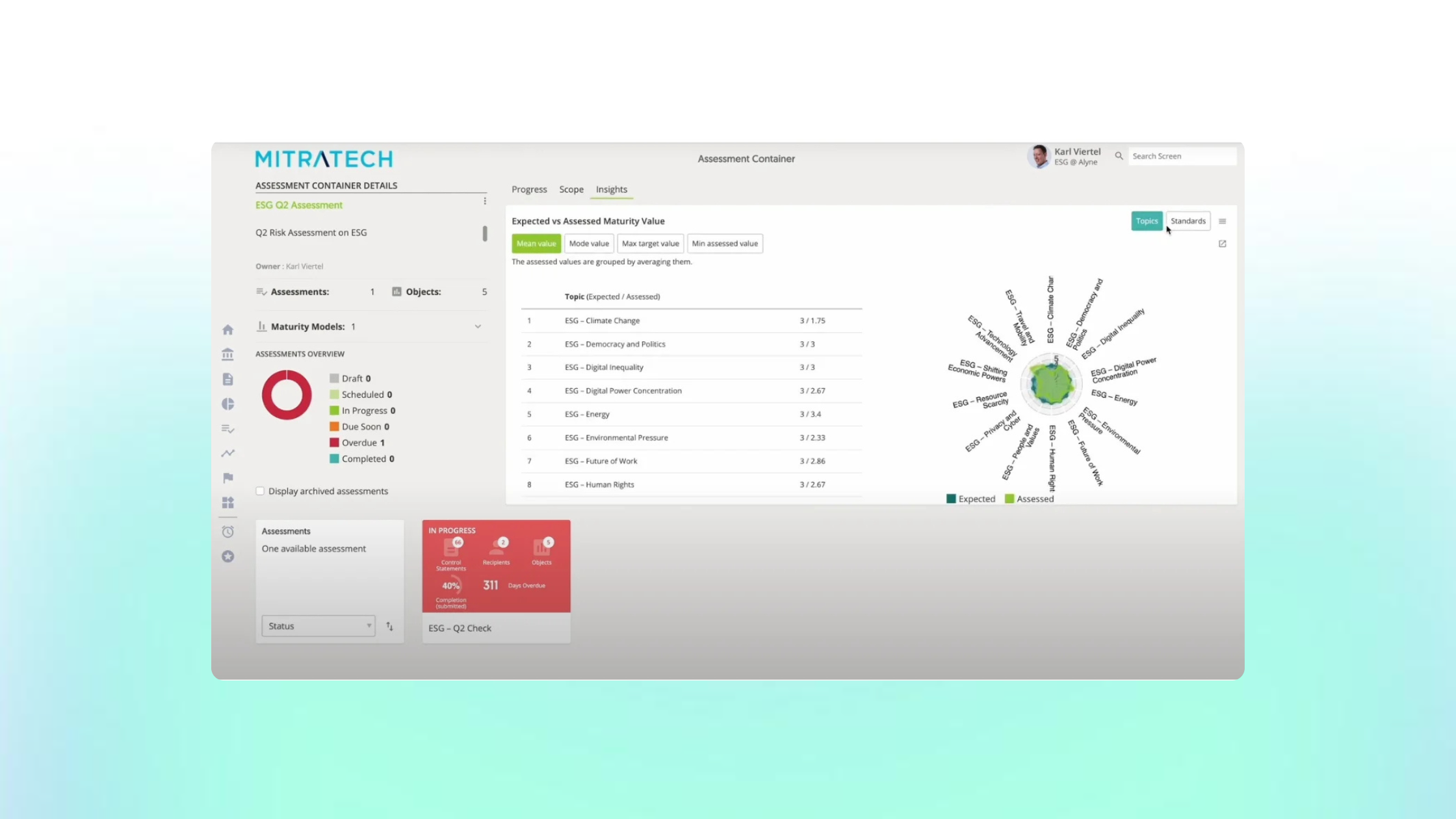
Prevalent suits teams that want assessments, monitoring and outsourced assessment capacity from a single vendor. It fits best where third-party risk covers more than cyber.
Risk Ledger is a supply chain security network in which suppliers maintain one security profile and share it with each of their customers. SecurityScorecard starts from an outside-in rating and adds questionnaires on top. The practical differences are evidence about internal controls that suppliers keep current themselves, and visibility of who your suppliers depend on. The trade-off is that our model needs suppliers to take part.
We built it this way because the questions that matter most for critical suppliers can’t be answered from outside. How does a supplier control access? Who are its own critical providers? What changed since the last review? A rating tells you when something on the internet moves. A supplier’s own profile tells you what sits behind it, and lets you apply your own policy and criticality to that evidence rather than someone else’s grade.
If the question is “does this supplier look exposed from the outside?”, a rating answers it.
If the question is “can this supplier evidence its controls, and who does it depend on?”, you need the supplier’s own information.
Many teams use both, with ratings across the long tail and supplier evidence for the suppliers that matter most.
We're the data pipe. We're not the ones making the judgement, we're devolving that down to each organisation on the platform to judge for themselves how secure they want their suppliers to be.
 Haydn Brooks
CEO, Risk Ledger
Haydn Brooks
CEO, Risk Ledger
Risk Ledger suits security-led teams that need evidence of internal controls from their critical suppliers, want to see who those suppliers depend on, and are tired of collecting the same answers one questionnaire at a time. For a feature-level comparison, see the Risk Ledger vs SecurityScorecard head-to-head.
If reusable supplier evidence, direct supplier participation and visibility beyond direct suppliers are priorities for your programme, see how Risk Ledger would support your requirements.
Most security ratings and TPRM platforms don’t publish full pricing. Quotes are usually built around how many suppliers you monitor or assess, which tier or modules you need, and any services on top. The licence fee is only half the cost. The other half is the internal time it takes to run the tool.
Three things tend to move the price. The first is supplier count, and vendors define it differently. Some count every supplier you monitor, others only the ones you actively assess, so two quotes for “500 suppliers” may not cover the same work. The second is tier. Capabilities such as visibility beyond direct suppliers, questionnaire workflows, integrations and advanced reporting often sit in higher tiers or separate modules. The third is services, such as managed assessments or remediation support, which are typically priced on top.
Total operating cost is the licence plus the effort needed to get value from it. That includes:
It also includes the effort you ask of suppliers, because a heavy ask slows responses and erodes goodwill. A tool with a lower licence fee can cost more overall if it generates more work than your team can absorb.
The right shortlist depends on the problem that sent you looking. A team that needs a quick board metric and a team that can’t see past its direct suppliers need different tools. Start with the statement below that sounds most like your situation, and shortlist from that row.
Many teams make this decision at renewal, so give yourself 90 days to test properly.
90 days out
60 days out
30 days out
Analysts often run the shortlist. This block is written to paste straight into an email.
To see where your own supply chain exposure sits before you shortlist, run the Supply Chain Risk Exposure Assessment.
Picking a platform is the easy part. Whether a switch works depends on how much effort it takes to get there, and whether your suppliers come with you.
Misattribution, missing nth-party visibility, board reporting gaps and supplier fatigue each point to a different type of tool. Trying to fix all four at once with one platform usually means none of them gets fixed properly.
If misattribution was your trigger, ask to see how a ratings platform handles a domain that’s genuinely not yours. If supplier fatigue was the trigger, ask how long a supplier new to the platform takes to complete their first assessment, not how fast your team can send a questionnaire.
Moving your own records is straightforward. Getting suppliers to engage with a new platform is where switches stall, especially suppliers who have already filled in a dozen versions of the same form for other customers. Ask every vendor what onboarding looks like from the supplier’s side, not just yours.
Some platforms let you import prior questionnaire responses and others don’t. If your suppliers have already answered these questions somewhere, losing that history on switch is a hidden cost.
Pick a handful of suppliers, a mix of easy and difficult ones, and run the full assessment cycle before committing your whole portfolio. A pilot surfaces onboarding friction faster than any sales conversation.
Switching rarely means replacing everything. Many teams keep a rating tool for light-touch monitoring across the long tail and add supplier evidence for critical suppliers. Others fold ratings data into a GRC suite they already run. Agree which tool owns which suppliers and which decisions before the pilot starts, so you don’t end up paying twice for the same coverage.
UK financial regulators expect firms to understand and evidence the risk in their material third parties, including concentration risk across shared providers. A security rating is useful supporting data. On its own, though, it rarely gives a supervisor what they look for: evidence of a supplier’s controls, the firm’s own materiality assessment, and a record of what was found and fixed.
Concentration risk is the hardest of these to evidence from outside, because it depends on knowing who your suppliers depend on. That’s why we ask suppliers to declare their critical dependencies as part of their profile. For more on supervisory expectations, read continuous monitoring of third-party risk in financial services.
Ratings tools are a common starting point in public sector supplier assurance. Buyers we speak to make a further point: a better questionnaire isn’t validation either. What assessors want is evidence that holds up after contract signature. For more on that, see what CAF A4 asks about suppliers.
SecurityScorecard: Vendor Reviews - G2, Pros and Cons - G2
BitSight: Reviews, Pricing, & Features - G2, Pros and Cons - G2, vs. SecurityScorecard - G2
UpGuard: Vendor Risk Reviews - G2, Pros and Cons - G2, vs. SecurityScorecard - G2
Black Kite: Reviews - G2, Reviews, Competitors and Pricing - PeerSpot
Panorays: Reviews - G2, Pros and Cons - G2
OneTrust: Tech Risk & Compliance Reviews - G2, Pros and Cons - G2, Third-Party Management Reviews - Gartner Peer Insights
ProcessUnity: Reviews & Ratings - Gartner Peer Insights, vs. BitSight - G2
Risk Ledger: Reviews - G2



Monthly research, case studies and practical guides you won't find anywhere else.
Join thousands of security managers turning their TPRM programmes into success stories.

.svg)