You can vet your direct suppliers until the cows come home, but your risk doesn't stop there. In a modern, hyper-connected economy, your security is only as strong as a company you’ve likely never heard of, four layers deep in your supply chain. If you only see your third parties, you are effectively blind to all the sources of risk you face.
The Problem: A Lack of Visibility Beyond the Direct Horizon
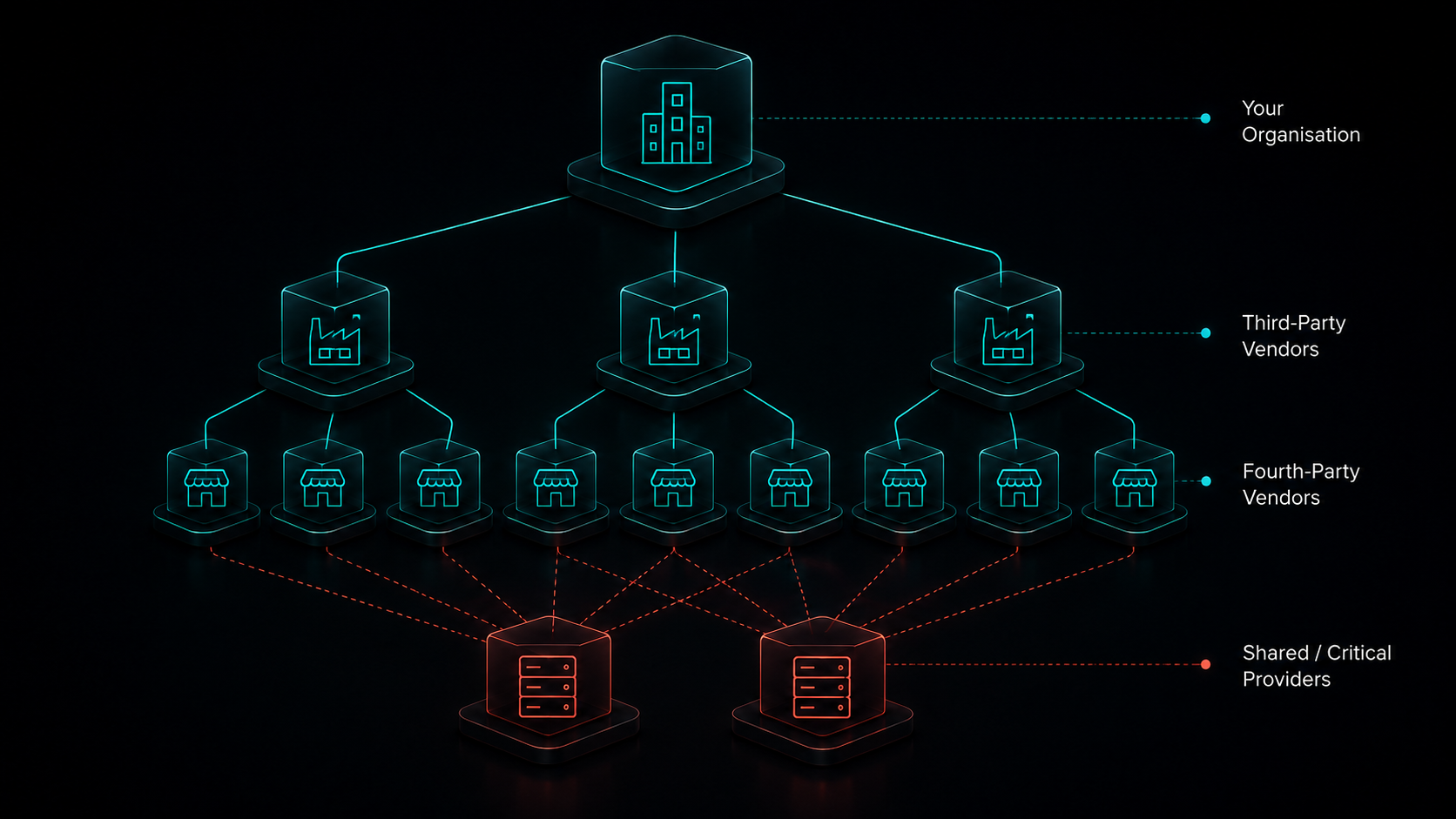
Current TPRM methods are designed for a linear world that no longer exists. Most organisations focus exclusively on "Tier 1" or direct third-party relationships, ignoring the vast, invisible web of 4th, 5th, and "Nth" parties that those suppliers rely on to deliver their services.
Key Reasons Why the Nth Party Blind Spot Represents a Problem:
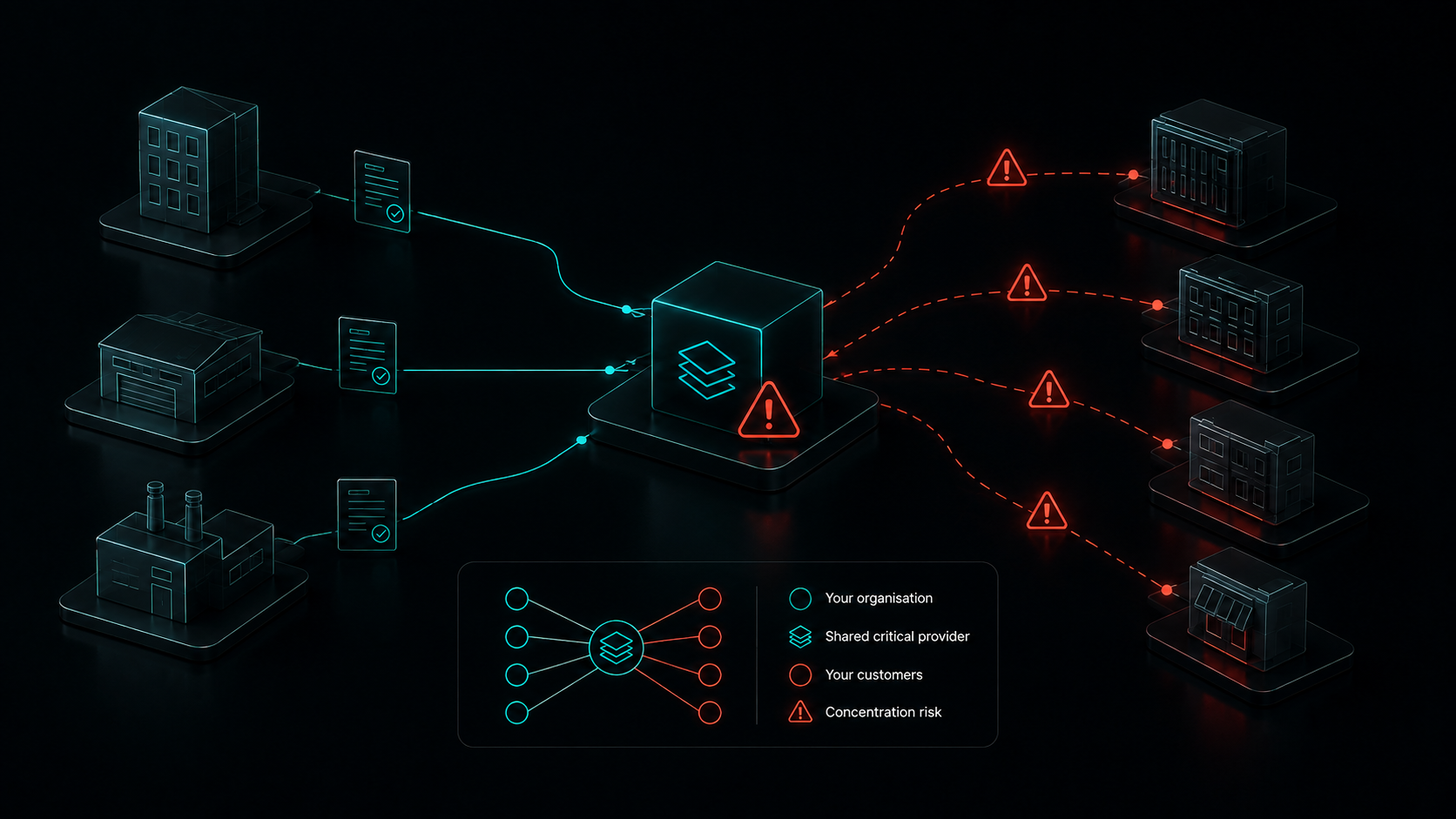
- The Concentration Risk Trap: You may have ten different suppliers who all, unbeknownst to you, rely on the same single sub-processor for data storage or code management. If that one Nth party fails, all ten of your "diverse" suppliers fail simultaneously.
- Transitive Vulnerability: A breach doesn't care about your contract boundaries. A vulnerability in an Nth party’s software library or infrastructure can move upstream, eventually compromising your direct supplier and, ultimately, your own environment.
- The Compliance "Glass Ceiling": Most TPRM questionnaires ask: "Do you manage your sub-processors?" A "Yes" box satisfies the auditor, but it provides you with zero visibility into how those risks are managed or what the security posture of those sub-processors actually looks like.
- Legal vs. Technical Reality: While contracts often include "right to audit" clauses that extend to sub-processors, these are almost never exercised due to the sheer complexity and cost. You are left relying on a chain of trust that is often broken at the first link.
- The "Black Box" Ecosystem: Modern services are built on a stack of APIs, cloud providers, and managed services. When you buy from one vendor, you are implicitly inheriting the risk of an entire ecosystem that you have no direct way to monitor or influence.
- Incident Response Paralysis: When a major global vulnerability (like Log4j) hits, organizations spend weeks asking their third parties if they are affected. Those third parties, in turn, have to ask their fourth parties. This "cascading inquiry" model is too slow to stop an active exploit.
.png)





.svg)