Product News
Improving Supplier Invites
Step into the "Age of Isolated Fortresses," a time when the London Insurance Market relied on stout walls and venerable Watchmen to guard the Great Loom of Prosperity. Discover why traditional, siloed security is no longer enough to protect the myriad threads of modern commerce. Read Part 1 of the Risk Ledger chronicle.
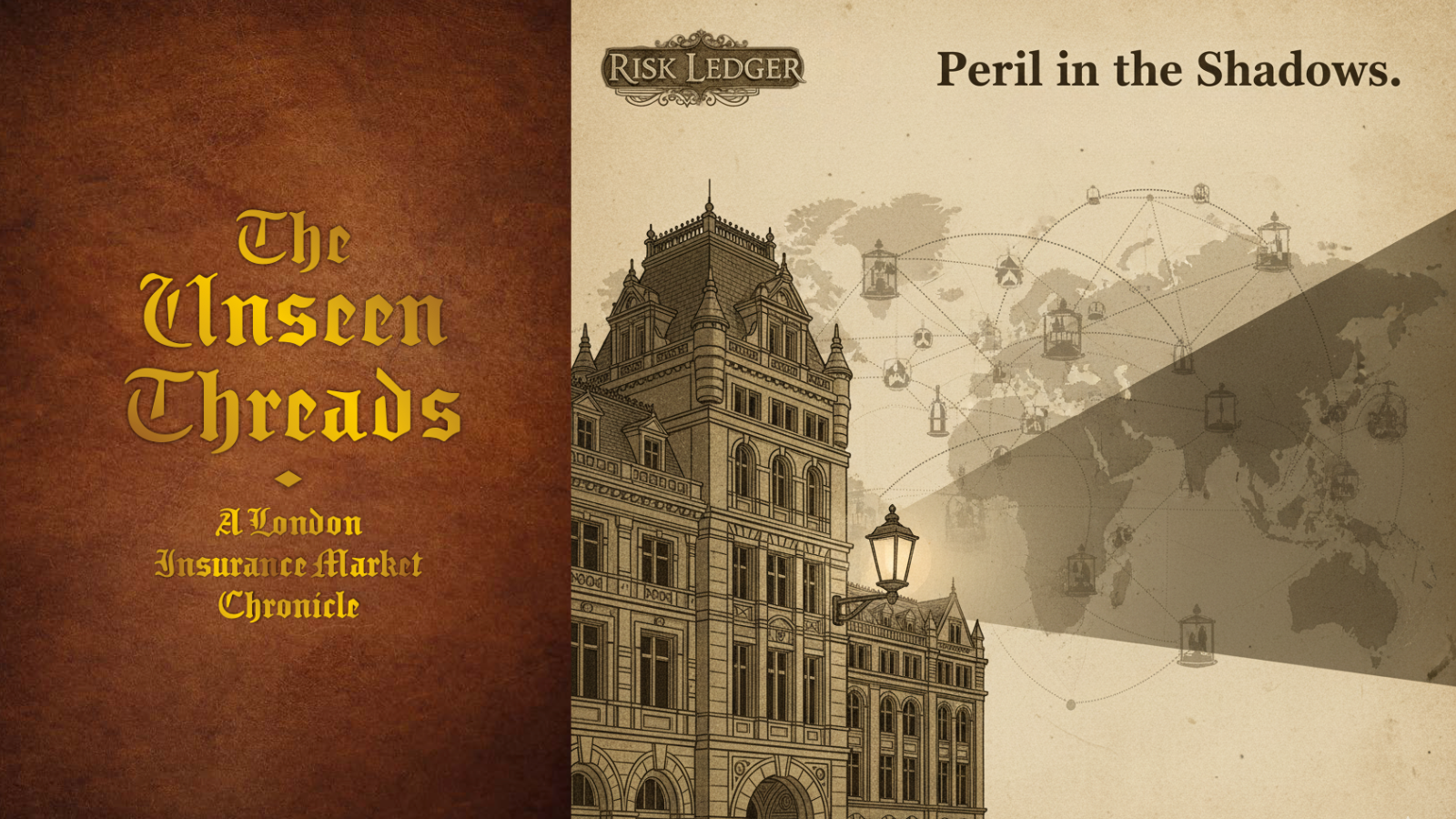
Over the next two weeks, we are opening the Risk Ledger chronicles. This is the story of how the insurance sector moved beyond the "Age of Isolated Fortresses" to embrace a new Fellowship of Light. It is a playful look back at a time of great peril, and a serious reminder of why we must now Defend-as-One to secure our collective supply chains. This is part 1.
In an age now often recalled with a certain wistful reverence, the great Realm of Britannia flourished under a boundless sun of prosperity and peace. Its verdant fields yielded abundant harvests, its artisans crafted wonders, and its industrious populace moved with a quiet confidence, their lives underwritten by a promise of stability as steadfast as the ancient stones of their cathedrals. At the very heart of this enduring prosperity, beating with a steady, powerful rhythm, lay the magnificent London Insurance Market.
It was, by common assent and venerable tradition, the Great Loom of Prosperity itself. From its grand halls and ornate exchanges, the intricate Myriad Threads of Commerce stretched across the known world – insuring argosies laden with exotic spices from distant lands, safeguarding nascent industries against the caprices of fire and flood, and providing succour when the unexpected, as it ever will, cast its shadow upon enterprise or person. Here, risks were meticulously assessed, burdens shared, and futures secured with a sagacity accumulated over centuries. The constant, reassuring hum emanating from its bustling thoroughfares and quiet counting-houses was the very sound of a realm at ease, confident in its economic bedrock.
The Market's defences, therefore, were deemed unassailable. Its venerable Watchmen, men of keen intellect and unblemished reputation, guarded the gates with rigorous charters and intricate ledgers, scrutinizing every proposition and every peril that dared to approach their stout walls. These were the mighty fortresses of certainty, built upon pillars of ancient wisdom and steadfast principle, which had weathered every storm, repelled every brigand, and absorbed every unforeseen calamity that the world had, until then, unleashed. Their methods, refined through generations, were trusted implicitly; their vigilance, though focused on the immediate purview of their grand establishments, was considered absolute. No threat, it was believed, could penetrate the formidable ramparts of such sagacious institutions. The Market stood as an invincible bastion, its self-reliance a testament to its enduring strength.
Yet, as with any grand and flourishing entity, the Market's true reach extended far beyond its visible fortifications. For its intricate machinery to turn, for its Great Loom of Prosperity to weave its endless tapestry, it relied upon a vast, complex, and often unseen network of supporting enterprises. These were the Auxiliary Guilds – the specialised craftsmen who provided crucial components, the diligent scribes who managed distant records, the discreet couriers who carried vital missives, and the myriad of smaller, interdependent operations without whom the central Market could not truly thrive. Their contributions, though often out of sight, were indispensable; their ceaseless endeavours, the very lifeblood of countless Tributary Streams of Service that flowed into the Market's heart. These connections, a vast web of unseen extensions, were simply considered part of the Market’s natural, expansive growth – managed through inherent trust and episodic inspection, not as avenues for profound, systemic peril.
For a long season, this arrangement served well. Yet, towards the twilight of this golden age, a subtle, disquieting change began to manifest. It was not a thunderous declaration of war, nor a visible breach of the Market’s formidable walls. Rather, it presented as a distant murmur, a curious disruption in a minor Tributary Stream, a strange report from a far-off Auxiliary Guild of an unexpected delay or a momentary lapse in trusted communications. Dismissed as isolated incidents, the mere friction of a vast and busy system, these occurrences were catalogued and forgotten. Yet, they were the first, faint whispers of something new, something alien, and profoundly unsettling stirring on the far horizon – a subtle shifting of the sands that would soon engulf the unsuspecting age of isolated fortresses. The sun, though still bright, had begun its slow, imperceptible descent.

Monthly research, case studies and practical guides you won't find anywhere else.
Join thousands of security managers turning their TPRM programmes into success stories.